
Inverted Bucket Steam Trap: Working Principle, Start-up and Features
Learn how the inverted bucket steam trap works, the rules for start-up, and its technical data and applications.
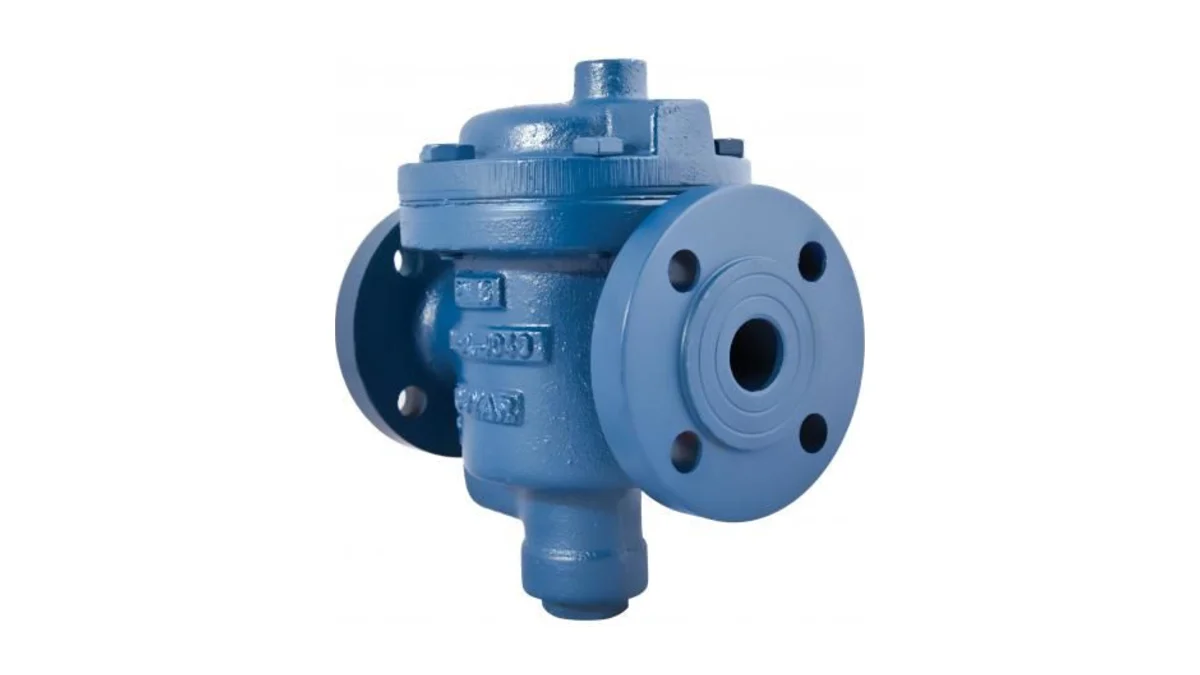
Choosing the right steam trap directly affects energy efficiency and equipment life. An inverted bucket steam trap is a mechanical trap that works on the density difference between steam and condensate; its robust construction makes it resistant to water hammer, and it discharges condensate at close to steam temperature.
This article explains how an inverted bucket trap works, its advantages, start-up rules, technical data and applications.
What Is an Inverted Bucket Steam Trap?
Inside the body of an inverted bucket trap is a bucket with its open end facing down, linked by a lever to a valve. A small vent hole is located at the top of the bucket. The sturdy construction makes the trap resistant to water hammer. Models of the same nominal size are offered with different orifice diameters to suit different pressures and condensate loads.
Working Principle
- Open: When there is condensate inside and around the bucket, its weight keeps it down; the valve is open and condensate is discharged.
- Closing: When steam enters the trap and fills the bucket, the bucket becomes buoyant and rises. The valve linked to the bucket closes the orifice and no steam escapes.
- Re-opening: Steam in the bucket escapes slowly through the small vent hole at the top, and part of it condenses through heat loss. When the bucket fills with condensate and loses buoyancy, it sinks, the valve opens and condensate is discharged.
Condensate is therefore removed without backing up into heat transfer surfaces and at close to steam temperature, preserving the thermal efficiency of the equipment.
Advantages
- No condensate hold-back: Condensate is removed as it forms, preventing water from collecting in heat exchangers.
- Water hammer resistance: The robust construction withstands water hammer and gives long life.
- Adaptable to varying loads: Different orifice options in the same size suit different pressures and loads.
- Durable materials: Ductile iron body, stainless steel internals and a hardened stainless steel orifice and seat.
- Reliable operation: The simple mechanism with sturdy moving parts operates reliably under demanding conditions.
Start-up and Installation Rules
- Priming with water: Before first start-up, the trap body must be filled with water. Without a water seal under the bucket, steam passes straight through and the trap cannot close.
- Strainer: A strainer upstream of the trap is strongly recommended.
- Orientation: Because the bucket moves vertically, install the trap in the orientation specified by the manufacturer, in a horizontal line.
- Isolating valves: Fit isolating valves at the inlet and outlet for maintenance and replacement.
Technical Data
| Feature | Value |
|---|---|
| Body and cover | GGG 40.3 ductile iron |
| Internals | Stainless steel |
| Orifice and seat | Hardened stainless steel |
| Connections | Threaded |
| Nominal size | DN15 (1/2″) – DN25 (1″) |
| Max. pressure | 16 bar |
| Max. operating temperature | 220 °C |
Applications
- Heat exchangers
- Unit heaters
- Radiant panels
- Vulcanisers and tyre presses
- Drying coils
- Main fuel oil tank heaters
- Drainage of horizontal steam lines
Frequently Asked Questions
Why must an inverted bucket trap be primed with water?
The trap can only close if there is a water seal under the bucket. With an empty body, steam passes directly to the outlet, so the trap is filled with water before first start-up.
Why are different orifice sizes offered?
The pressure differential the bucket can open against depends on the orifice size. A small orifice is used at high pressure, a larger one at low pressure and high condensate load; the right orifice is chosen according to operating pressure and load.
Is an inverted bucket trap resistant to water hammer?
Yes. Its robust construction makes it resistant to water hammer, which is why it is preferred under demanding operating conditions.
Conclusion
With robust construction, condensate discharge without hold-back and a choice of orifice sizes, inverted bucket steam traps work reliably in a wide range of applications from heat exchangers to horizontal line drainage. Browse our inverted bucket steam traps product group, or call ORFA at +90 224 444 67 32 for selection support.
Buy inverted bucket steam traps online
Browse products on or-fa.com, our export store, see prices in USD and order online.
Buy Online →Request a QuoteAsk on WhatsAppRelated product group
Inverted Bucket Steam Traps →Technical support
Talk to our team to choose the right product.
+90 224 444 67 32[email protected]
Related Articles
Let’s choose the right product for your project
Buy from our online store or request a project-specific quotation.