
Steam Trap Monitoring: Sensor Chamber and Controller for Detecting Steam Leaks
Failed steam traps leak steam unnoticed. Learn how a conductivity sensor chamber and controller detect steam leakage and where the chamber is installed.
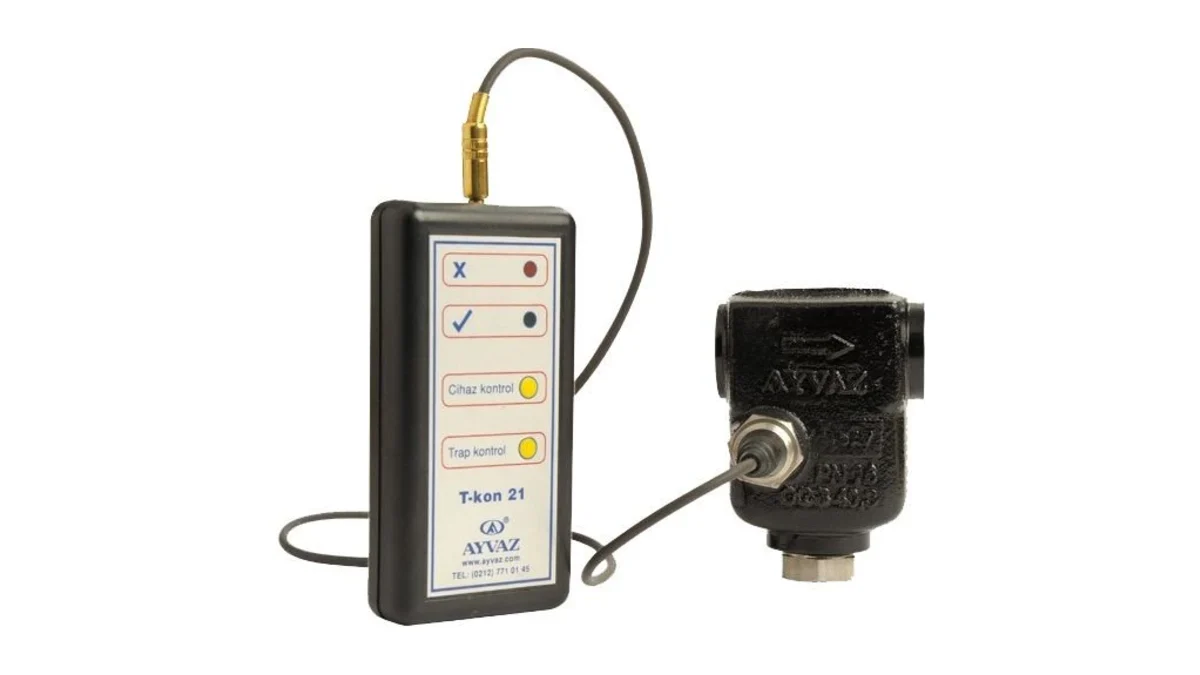
Correct operation of steam traps is critical for efficiency and energy savings in industrial steam systems. A trap that fails open passes live steam straight into the condensate line, and this loss often goes unnoticed for a long time. Steam trap monitoring with a sensor chamber and controller lets you check continuously, without dismantling anything, whether a trap is leaking steam.
This article explains how the monitoring chamber and controller work, where they are installed, their benefits and typical applications.
What Are a Monitoring Chamber and Controller?
The system has two parts: a sensor chamber, installed immediately upstream of the steam trap, which contains a weir and a conductivity sensor; and a controller that evaluates the sensor signal. Based on the difference in conductivity, the controller detects whether the sensor is in condensate or in steam and signals an alarm when steam is leaking.
Operating Principle
- Normal operation: Condensate flows under the weir in the chamber and on to the trap. The sensor on the inlet side of the weir stays immersed in condensate; since condensate conducts electricity, the controller registers normal operation.
- Steam leak: When the trap fails open and passes steam, the steam pushes the condensate level down on the inlet side of the weir, leaving the sensor exposed to steam.
- Alarm: Steam conducts far less than condensate, so the conductivity seen by the sensor drops; the controller interprets this as a steam leak and raises an alarm.
- Action: The operator checks the trap and services or replaces it if necessary.
Benefits
- Energy savings: Early detection of steam leaks prevents unnecessary fuel consumption.
- Checking without dismantling: Trap condition is monitored without opening the line or stopping the system.
- Planned maintenance: Only failed traps are worked on, so maintenance resources are used efficiently.
- Safety: Steam leaking into the condensate line can raise return-line pressure and cause water hammer; early detection reduces these risks.
Installation
- The sensor chamber is fitted directly at the trap inlet, in line with the condensate flow direction.
- The sensor cable is connected to the controller or monitoring system.
- Isolating valves upstream of the chamber and downstream of the trap are recommended for maintenance.
Applications
- Steam main drain points
- Steam heating systems and heat exchangers
- Process equipment in the chemical, textile and food industries
- Hard-to-reach or critical steam traps
Frequently Asked Questions
Is the chamber fitted before or after the steam trap?
Before the trap, at its inlet. At this point the sensor detects whether the flow reaching the trap is condensate or steam.
How does the controller detect a steam leak?
Condensate conducts electricity while steam conducts much less. The sensor, normally immersed in condensate, is exposed to steam when the trap leaks; conductivity drops and the controller raises an alarm.
Does every steam trap need monitoring?
No. Monitoring is usually chosen for critical processes, high-pressure lines and hard-to-reach points. Other traps can be checked periodically by ultrasonic or temperature testing.
Conclusion
A steam trap monitoring chamber and controller detect steam leakage early and without dismantling, reducing energy loss and unexpected failures. See all options in our steam trap control devices product group.
Buy steam trap control devices online
Browse products on or-fa.com, our export store, see prices in USD and order online.
Buy Online →Request a QuoteAsk on WhatsAppRelated product group
Steam Trap Control Devices →Technical support
Talk to our team to choose the right product.
+90 224 444 67 32[email protected]
Related Articles
Let’s choose the right product for your project
Buy from our online store or request a project-specific quotation.