
Deep Well Submersible Pump: Design, Selection and Installation
Deep well submersible pumps use a multistage design to lift groundwater from boreholes to the surface. Learn about their design, selection criteria and the rules for installation and operation.
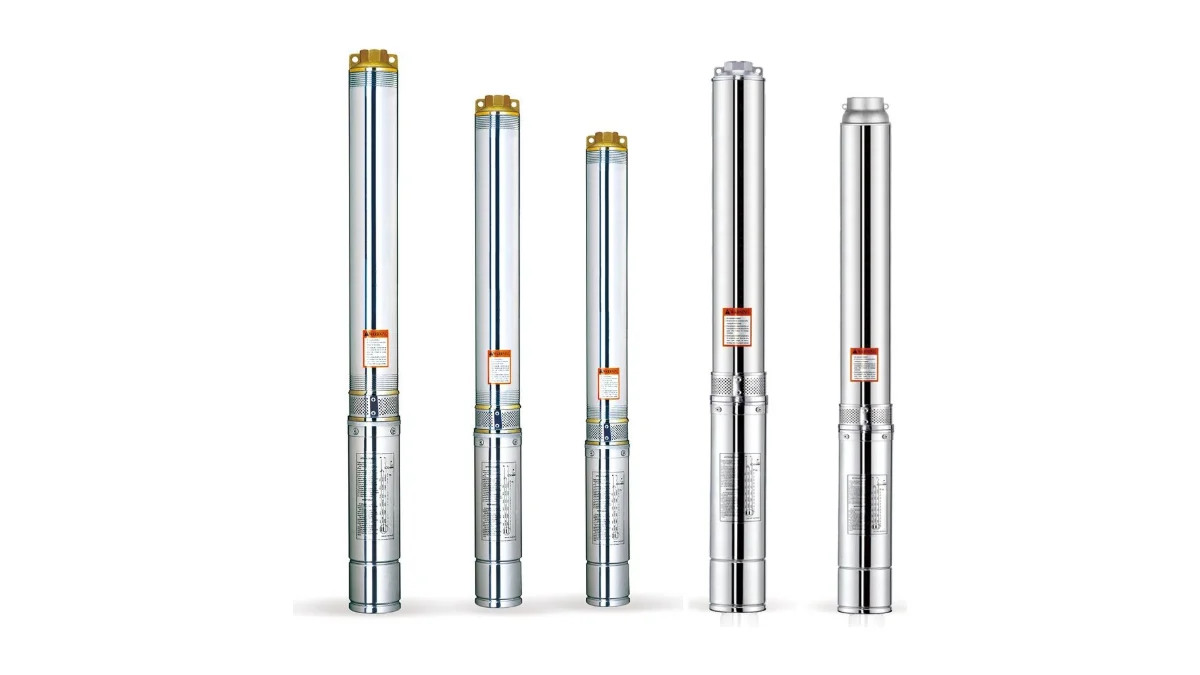
Groundwater is an important resource for irrigation, community water supply and industry. A deep well submersible pump is a slim, multistage submersible pump that is lowered into a borehole and delivers groundwater to the surface or to the required point.
This article covers the design and working principle of deep well submersible pumps, how to select one and the points to watch during installation and operation.
What Is a Deep Well Submersible Pump?
A deep well submersible pump consists of a submersible electric motor with a multistage pump end mounted above it. It is long and slender to fit the narrow bore of a well and is made in different sizes such as 4″, 6″ and 8″ to suit the well diameter. Pump stages and motors can also be supplied separately as required.
How Does It Work?
- Installation: The pump is suspended from the riser pipe and lowered below the water level in the well.
- Intake: Water enters the pump through the inlet screen between the motor and the pump end. On its way to the inlet it flows past the motor and cools it.
- Pressurisation: Impellers in series raise the water pressure stage by stage.
- Discharge: The pressurised water is delivered through the riser pipe to the surface and the installation.
Advantages
- High head: The multistage design provides the high pressure needed to lift water from deep wells.
- Efficiency: Correctly selected, it runs at high hydraulic efficiency.
- Compact design: Fits narrow boreholes and needs no pump room at the surface.
- Durability: Corrosion- and wear-resistant materials provide long service life.
- Wide choice: Options are available for different flow and head requirements.
Applications
- Agricultural irrigation: Irrigating farmland from wells.
- Urban and rural water supply: Pumping from wells to reservoirs and the network.
- Industrial water supply: Process and service water for factories, mines and plants.
- Tank and booster set feed: Filling building, garden and fire water tanks from a well.
Selection Criteria
| Criterion | Explanation |
|---|---|
| Well diameter | The pump and motor outside diameter must suit the inside diameter of the well casing. |
| Well yield | Pump flow must not exceed what the well can supply continuously; otherwise the well is drawn down and the pump runs dry. |
| Dynamic water level | The water level while pumping; the head calculation is based on this level. |
| Total head | Elevation from the dynamic level to the outlet + pipe losses + required outlet pressure. |
| Water quality | Sand-resistant models for sandy water, stainless steel construction for aggressive water. |
Installation and Operation
- Install the pump sufficiently below the dynamic water level but clear of the sand and silt at the bottom of the well.
- The motor needs adequate water flow around it for cooling; if the well is much wider than the motor, a cooling sleeve can be used.
- Fit a check valve on the discharge line and use dry-run protection based on level electrodes or current monitoring.
- Select the submersible cable cross-section for the motor power and cable length; allow for voltage drop on long runs.
- The pump is not maintenance-free; monitor flow, current and pressure regularly and inspect the pump if performance drops.
Frequently Asked Questions
How deep should a deep well pump be installed?
The pump should sit sufficiently below the dynamic water level during operation, but not too close to the bottom of the well to avoid drawing in sand and silt. The exact depth is determined from the well test data.
Does a deep well submersible pump need maintenance?
Yes. Even though it works under water, impellers, bearings and the motor shaft seal wear over time, faster in sandy water. Regular monitoring of current, flow and pressure helps detect faults early.
Can pump stages and motors be bought separately?
Yes. Pump ends and submersible motors can be supplied separately so a faulty section can be replaced on its own. Check motor power and connection size compatibility when replacing.
Conclusion
Deep well submersible pumps make efficient and reliable use of groundwater. Correct selection based on well data and proper installation are the keys to long service life. Explore the different types in our submersible pumps product group.
Buy deep well submersible pumps online
Browse products on or-fa.com, our export store, see prices in USD and order online.
Buy Online →Request a QuoteAsk on WhatsAppRelated product group
Submersible Pumps →Technical support
Talk to our team to choose the right product.
+90 224 444 67 32[email protected]
Related Articles
Let’s choose the right product for your project
Buy from our online store or request a project-specific quotation.