
What Is a Drum Pump? Working Principle, Types and Applications
Drum pumps transfer liquids from drums, containers and IBC totes safely and without spills. Learn how they work, which types exist and which industries use them.
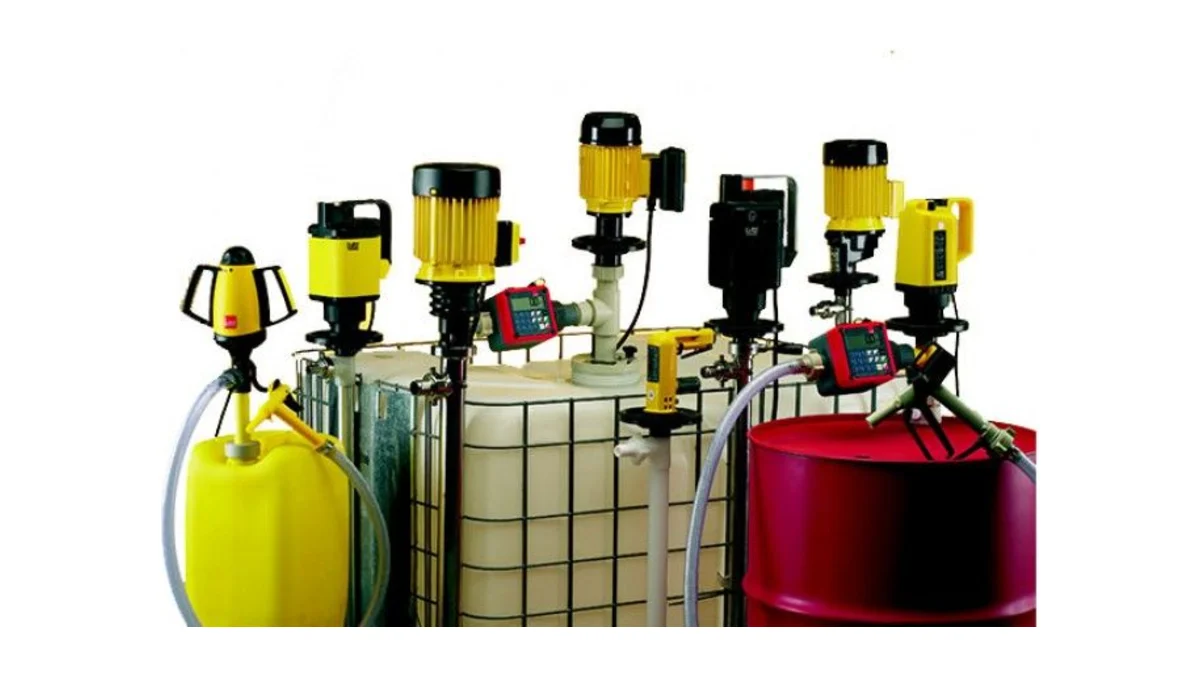
In industrial plants, transferring chemicals, oils, fuels and liquid food products from drums, containers or tanks into other vessels is an everyday task. Tipping the container or using a bucket is slow and carries a high risk of spills, splashes and accidents. A drum pump draws the liquid safely through the top opening of the container, making the job fast, clean and controlled.
This article explains what a drum pump is, how it works, the main types, their advantages and the industries that use them. For a detailed guide on choosing materials and drive types, see our drum pump selection article.
What Is a Drum Pump?
A drum pump is a portable pump designed to transfer liquids from containers such as drums, cans and IBC totes through the container opening. Electric and pneumatic models consist of three main parts: a drive motor on top, a pump tube immersed in the container and a pumping element (impeller or rotor) at the bottom end of the tube. The tube length is chosen to suit the container; different lengths are available for standard drums and IBC totes.
How Does a Drum Pump Work?
- Immersion: The pump tube is inserted through the drum opening into the liquid; the impeller at the bottom end stays submerged.
- Drive: The motor turns the impeller or rotor at the bottom via a shaft running inside the tube.
- Delivery: The impeller, spinning in the liquid, pushes it up the tube.
- Transfer: The liquid leaves through the outlet at the top of the tube and flows through a hose into the receiving container.
Because the pumping element is submerged, the pump does not need to create suction. Thin liquids are usually handled with a centrifugal impeller, while viscous liquids such as oils and syrups use progressive cavity (eccentric screw) pump tubes.
Types of Drum Pumps
- Electric drum pumps: The most common type, providing fast, steady flow for general-purpose transfer. For flammable liquids, an ATEX-certified (explosion-proof) motor is mandatory.
- Pneumatic (air-driven) drum pumps: Driven by a compressed-air motor; ATEX-certified models are preferred in flammable and explosive atmospheres.
- Manual drum pumps: Need no electricity or air; an economical choice for occasional use and small quantities.
- Stainless steel drum pumps: Used for hygienic applications such as food, pharmaceuticals and cosmetics, and for solvents.
- Plastic (PP, PVDF) drum pumps: Designed for acids, alkalis and other corrosive chemicals.
Advantages
- Safe transfer: Reduces spills, splashes and vapour exposure, protecting workers and the environment.
- Efficient transfer: No need to tip heavy drums, saving time and labour.
- Controlled filling: Better control of transferred quantities and less waste; metered filling is possible with a flow meter.
- Flexibility: The same motor can be used with pump tubes of different materials for different liquids.
- Portability: Lightweight and easy to move from one container to the next.
Applications
- Chemical industry: Transfer of acids, alkalis, solvents and other chemicals.
- Fuels and oils: Diesel, motor oil and other petroleum products (with ATEX-certified pumps for flammable liquids).
- Food industry: Liquid foods such as edible oils, syrups and sauces.
- Pharmaceuticals and cosmetics: Liquid raw materials and intermediates.
- Paint industry: Paints, varnishes and thinners.
- Water treatment plants: Transferring treatment chemicals into dosing tanks.
Frequently Asked Questions
Which containers can a drum pump be used with?
Drum pumps can be used with cans, standard drums and IBC totes. The pump tube length must match the container height; IBC totes need longer tubes than standard drums.
Can the same drum pump be used for different liquids?
The motor can stay the same, but the pump tube and seal materials must be compatible with each liquid. Clean the pump thoroughly when switching chemicals, and use separate tubes for liquids that could react with each other.
Which drum pump should be used for flammable liquids?
Use ATEX-certified electric or pneumatic drum pumps and always earth the system. Stainless steel pump tubes are usually preferred.
Conclusion
Drum pumps are practical tools that make liquid transfer safer, faster and cleaner. A pump with the right material and drive type for the liquid improves both workplace safety and productivity. Browse suitable pumps for chemical transfer in our acid and chemical pumps product group, or contact ORFA at +90 224 444 67 32 or [email protected] for selection support.
Buy drum pumps online
Browse products on or-fa.com, our export store, see prices in USD and order online.
Buy Online →Request a QuoteAsk on WhatsAppRelated product group
Acid and Chemical Pumps →Technical support
Talk to our team to choose the right product.
+90 224 444 67 32[email protected]
Related Articles
Let’s choose the right product for your project
Buy from our online store or request a project-specific quotation.