
Drum Pump Selection: Drive Type, Materials and Safety Guide
A poorly chosen drum pump can corrode quickly or create a serious hazard with flammable liquids. Choose the right pump based on drive type, materials and safety criteria.
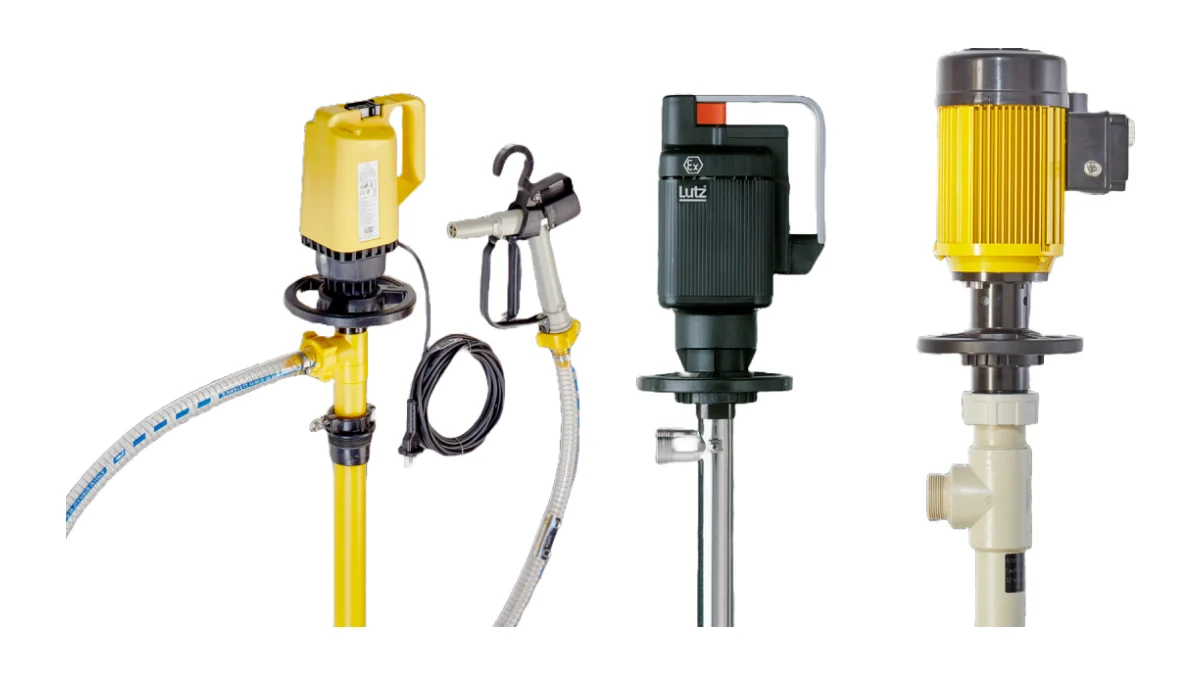
Drum pumps are portable pumps used to transfer chemicals, solvents, oils, viscous liquids and food products safely, cleanly and ergonomically from standard drums (typically 200 litres) or IBC totes. But there is no single right pump for every liquid. Correct drum pump selection considers the drive type, the wetted materials, the viscosity of the liquid and the explosion risk of the environment together.
This guide walks you through the criteria to evaluate step by step when choosing a drum pump.
Why the Right Choice Matters
Tipping drums or using scoops carries a serious risk of leaks, splashes and accidents; a correctly selected drum pump greatly reduces these risks. A poorly selected pump, however, may corrode quickly because of incompatible materials, start leaking, or become an ignition source with flammable liquids.
1. Choose the Drive Type
| Drive type | Advantages | Points to watch |
|---|---|---|
| Electric | High efficiency, steady flow, easy to use; the most common type | For flammable liquids (solvents, petrol, etc.) an ATEX-certified explosion-proof motor is mandatory. |
| Pneumatic (air-driven) | No electrical spark risk; suited to continuous, demanding use | Requires a compressed-air supply; in explosive atmospheres the complete pump must be ATEX-certified. |
| Manual | Needs no electricity or air; economical for occasional use | Not practical for high flow rates or viscous liquids. |
2. Select the Wetted Material
The most important decision is the material of the pump tube, shaft and internal parts that contact the liquid:
- Polypropylene (PP): An economical choice for dilute and medium-concentration acids (e.g. hydrochloric acid), alkalis and salt solutions. Its temperature limit is low; for example, Jessberger PP pump tubes are rated for a maximum fluid temperature of 50 °C.
- PVDF (polyvinylidene fluoride): Offers superior resistance at higher temperatures and with very aggressive chemicals such as nitric acid where PP falls short; resistance to some strong alkalis is limited.
- Stainless steel (AISI 316): Ideal for solvents, thinners, flammable liquids, petroleum products, oils and hygienic food and cosmetic products. Not suitable for chloride-containing acids such as hydrochloric acid.
- Aluminium: Can be used for light oils and petroleum derivatives; not resistant to acids and alkalis.
Always confirm the material choice against a chemical resistance chart, taking the concentration and temperature of the liquid into account.
3. Check the Seal Material
Seals must be as compatible with the liquid as the pump body. PTFE is widely used for aggressive chemicals thanks to its broad chemical resistance, and FKM (Viton) for oils, fuels and many acids. An incompatible seal will soon leak even if the body is sound.
4. Match the Pump Tube to the Viscosity
- Low-viscosity liquids (water-like): Centrifugal impeller pump tubes deliver high flow rates.
- High-viscosity liquids (oils, syrups, creams, etc.): Progressive cavity (eccentric screw) pump tubes move viscous liquids steadily and gently.
5. Define Container, Flow and Duty
- Tube length: Standard drums and IBC totes require different tube lengths; the tube should reach close to the bottom of the container.
- Flow rate: Determined by the quantity and time available; add a flow meter for metered filling.
- Frequency of use: Motor power and duty cycle matter for continuous use.
Frequently Asked Questions
Which drum pump material is suitable for hydrochloric acid?
PP or PVDF pump tubes are generally used for hydrochloric acid. Stainless steel is not suitable because it corrodes in chloride-containing acids. Confirm the final choice with a resistance chart for the specific concentration and temperature.
Is a pneumatic drum pump always suitable for explosive atmospheres?
No. An air motor has no electrical spark risk, but in explosive atmospheres the complete pump must be ATEX-certified and the system must be earthed.
Which drum pump should be chosen for viscous liquids such as oil?
Centrifugal impeller tubes are inefficient with viscous liquids. Progressive cavity (eccentric screw) pump tubes should be chosen instead.
Conclusion
The right drum pump is selected by evaluating drive type, wetted materials, seals, viscosity and safety requirements together. A pump chosen on these criteria protects workers and lasts longer. Browse suitable pumps for chemical transfer in our acid and chemical pumps product group, or contact the ORFA technical team at +90 224 444 67 32 or [email protected] for a model matched to your liquid.
Buy drum pumps online
Browse products on or-fa.com, our export store, see prices in USD and order online.
Buy Online →Request a QuoteAsk on WhatsAppRelated product group
Acid and Chemical Pumps →Technical support
Talk to our team to choose the right product.
+90 224 444 67 32[email protected]
Related Articles
Let’s choose the right product for your project
Buy from our online store or request a project-specific quotation.