
Pump Cavitation: Causes, Symptoms and How to Prevent It
We explain how cavitation forms, how it relates to NPSH, how to recognise it and how to prevent the performance loss, noise and impeller damage it causes.
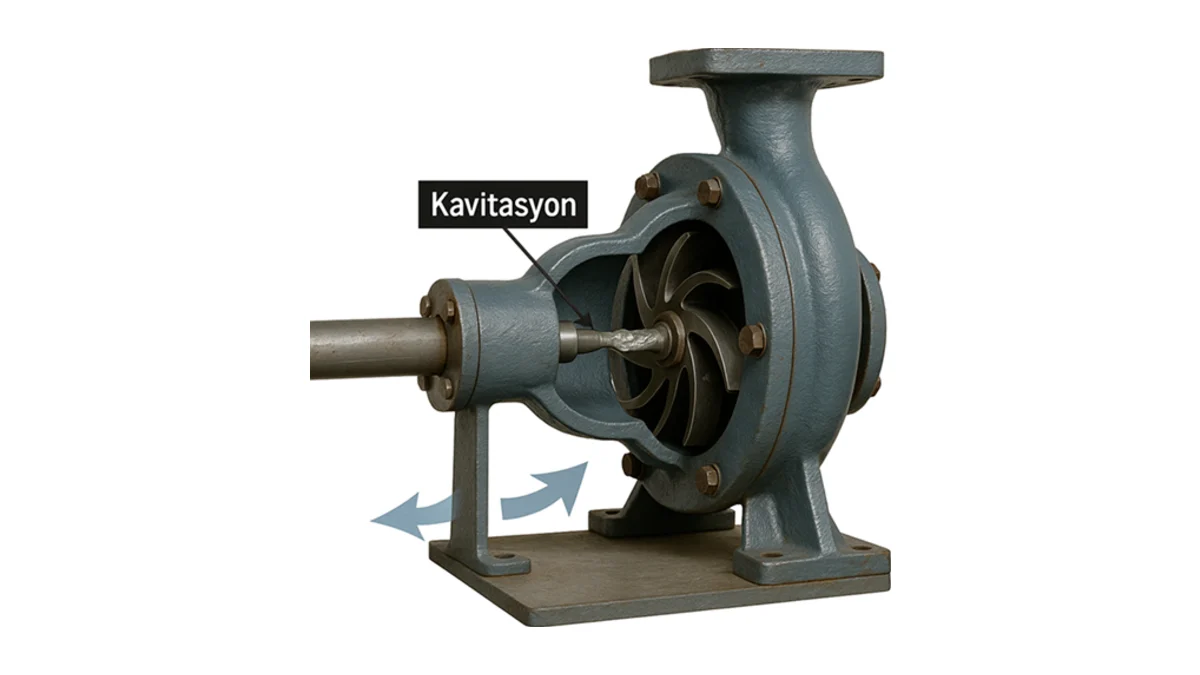
If a pump sounds as if it is full of gravel, the discharge pressure fluctuates or the impeller is pitted after a short time, the cause is most likely cavitation. Pump cavitation reduces performance, creates vibration and noise and, over time, causes permanent damage to the impeller and casing – but it can be prevented with correct system design.
This article explains how cavitation forms, how it relates to NPSH, what its symptoms and consequences are and how to prevent it.
What Is Cavitation and How Does It Form?
Cavitation is the formation of vapour bubbles in a liquid when the local pressure falls below the vapour pressure at that temperature, followed by the violent collapse of these bubbles where the pressure rises again.
- Bubble formation: The lowest pressure in a pump occurs at the impeller inlet (the eye and the leading edges of the vanes). If the pressure here drops below the vapour pressure, the liquid vaporises locally.
- Bubble collapse: As the bubbles travel with the liquid through the impeller passages, the pressure rises and they implode.
The extremely short, high-pressure micro-jets and shock waves produced by the collapse hammer the metal surface again and again. Over time, sponge-like pits and material loss appear on the impeller vanes.
NPSH: The Key to Understanding Cavitation
Cavitation risk is assessed by comparing two values:
- NPSHa (NPSH available): The net suction energy above the vapour pressure that the system provides at the pump inlet. It depends on the absolute pressure in the suction tank, the height of the liquid level relative to the pump, suction line losses and the vapour pressure of the liquid.
- NPSHr (NPSH required): The value the pump needs to operate without cavitation. It is determined by the manufacturer through testing, usually at the point where the head drops by 3%. NPSHr increases with flow.
For safe operation, NPSHa must exceed NPSHr by a safety margin. Because NPSHr by definition already corresponds to slight cavitation, this margin must not be neglected; in practice a margin of at least 0.5 m is common, and larger margins are preferred for critical applications.
Causes of Cavitation
- Insufficient suction pressure: High suction lift (pump far above the liquid level) or suction from tanks under vacuum.
- High liquid temperature: Vapour pressure rises with temperature, reducing NPSHa.
- Excessive suction line losses: Long or narrow suction lines, many bends, partly closed valves or clogged strainers.
- Operating far to the right of the curve: NPSHr rises with flow; running above design flow increases the risk.
- High speed: NPSHr increases with pump speed.
- Wrong pump selection: Choosing a pump without considering the system NPSHa is one of the most common causes.
| Water temperature | Approximate vapour pressure |
|---|---|
| 20 °C | 2.3 kPa (0.023 bar) |
| 60 °C | 19.9 kPa (0.20 bar) |
| 80 °C | 47.4 kPa (0.47 bar) |
| 100 °C | 101.3 kPa (1.01 bar) |
The table shows clearly why pumps handling hot water need more pressure on the suction side, for example by installing the pump below the tank level.
Symptoms and Damage
| Effect | Symptom |
|---|---|
| Loss of performance | Flow and head drop, pressure fluctuates. |
| Efficiency and energy | Hydraulic efficiency falls; more energy is used for the same duty. |
| Noise and vibration | Crackling noise as if gravel were passing through the pump, increased vibration. |
| Material damage | Pitting and material loss at the vane inlets and in the casing. |
| Shorter life | Bearing and mechanical seal failures due to vibration, early pump replacement. |
How to Prevent Cavitation
System Design Measures
- Increase NPSHa: Install the pump as close as possible to, or below, the liquid level of the suction tank and reduce suction lift.
- Improve the suction line: Use a short, large-diameter suction line with few bends; never throttle on the suction side and keep strainers clean.
- Account for liquid temperature: Calculate NPSHa with the vapour pressure at operating temperature; where possible, place the pump on the cold side.
- Throttle on the discharge side: If flow is controlled by throttling, do it on the discharge side. The suction valve must always be fully open.
Choosing the Right Equipment
- Low-NPSHr pump: Compare the NPSHr at operating flow with the system NPSHa during selection.
- Correct duty point: Select the pump so that it operates around its best efficiency point (BEP).
- Resistant materials: Materials such as stainless steel resist cavitation erosion better than cast iron and slow the damage, but they do not remove the cause.
Frequently Asked Questions
How can you recognise cavitation noise?
A crackling, irregular noise as if gravel or sand were passing through the pump, usually accompanied by increased vibration and pressure fluctuations.
What is the difference between NPSHa and NPSHr?
NPSHa is provided by the system at the pump inlet and depends on the installation design. NPSHr is required by the pump and is given by the manufacturer. For cavitation-free operation, NPSHa must exceed NPSHr by a safety margin.
Does a stainless steel impeller prevent cavitation?
No. Stainless steel slows cavitation damage but does not prevent cavitation itself. The permanent solution is an adequate margin between NPSHa and NPSHr.
Conclusion
If neglected, pump cavitation seriously shortens pump life and reduces system efficiency. Correct suction line design, an NPSH calculation at operating temperature and a pump running around its best efficiency point prevent cavitation in most cases. Browse our pumps and systems page for suitable pumps, or ask the ORFA sales team for help with NPSH calculations and pump selection.
Buy pumps online
Browse products on or-fa.com, our export store, see prices in USD and order online.
Buy Online →Request a QuoteAsk on WhatsAppRelated product group
Pumps and Systems →Technical support
Talk to our team to choose the right product.
+90 224 444 67 32[email protected]
Related Articles
Let’s choose the right product for your project
Buy from our online store or request a project-specific quotation.