
What Is a Hot Oil Pump? Design and Selection for Thermal Oil Systems
Hot oil pumps circulate thermal oil at up to 350 °C in heating systems, using an air-cooled bearing and seal design. Learn how they are built and how to select and install them.
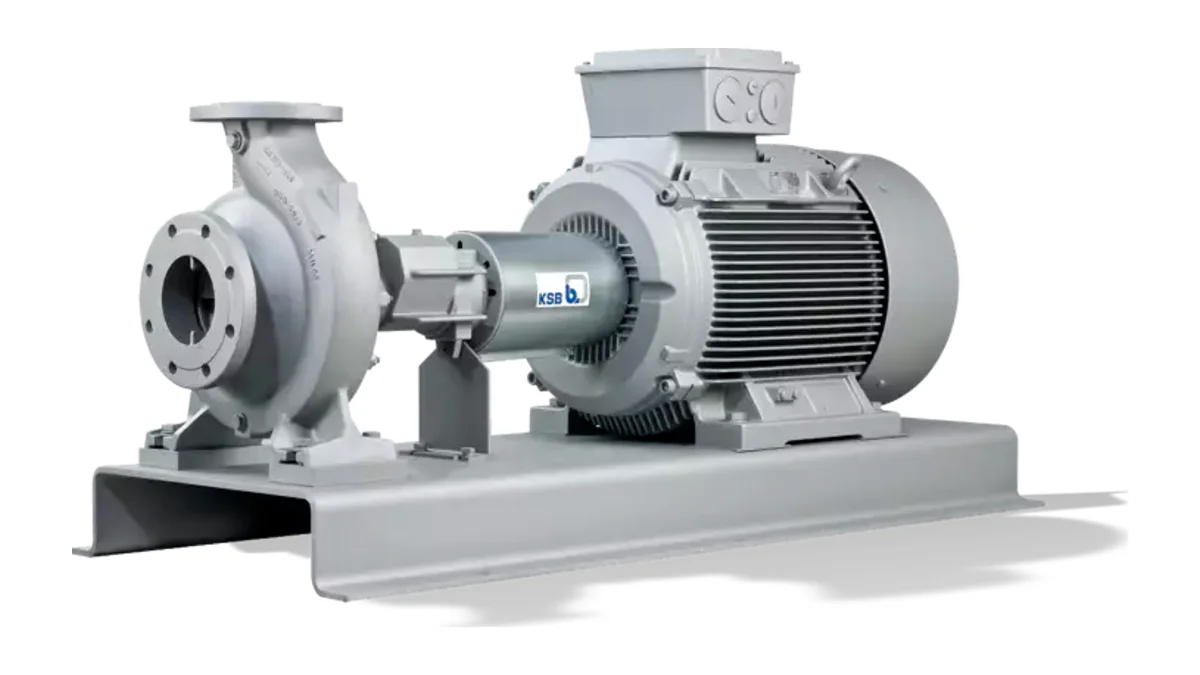
When industrial processes need temperatures far above the boiling point of water, thermal oil (hot oil) systems are used. Water can only reach such temperatures at high pressure, whereas thermal oil can operate at these temperatures in a low-pressure system. The heart of the system, the hot oil pump, is a centrifugal pump specially designed to circulate oil at up to 350 °C safely between the heater and the consumers.
This article summarises how hot oil pumps are built, how they differ from standard pumps, where they are used and what to watch for in installation and operation.
What Sets a Hot Oil Pump Apart from a Standard Pump
Air-Cooled Bearing and Seal Zone
The high temperature of the pump casing must not reach the bearings, seal or motor. In hot oil pumps, a cooling zone between the casing and the bearing housing dissipates heat to the ambient air, protecting these parts. Thanks to this air-cooled design, no external cooling water connection is needed, which simplifies the installation and lowers operating costs.
Sealing Suitable for High Temperatures
The shaft is sealed with a mechanical seal suitable for high temperatures and thermal oil. Because leaking hot oil is a fire hazard, sealing is the most critical feature of these pumps.
Casing Resistant to Thermal Shock
The casing is made of ductile (nodular) cast iron or cast steel that withstands thermal expansion and thermal shock. Using ductile rather than brittle materials is important for safety in high-temperature oil circuits.
Applications
- Dyeing machines and stenters in the textile industry
- Plastic extrusion lines and mould heating
- Fryers and cooking systems in the food industry
- Drying cylinders in the paper industry
- Reactor and tank heating in the chemical industry
- Presses and other high-temperature heating processes
Benefits
- High temperature resistance: Circulation of mineral and synthetic thermal oils up to 350 °C.
- No external cooling: The air-cooled design eliminates the need for cooling water piping.
- Reliable sealing: Seals suited to high temperatures reduce the risk of leaks and fire.
- Process continuity: A robust design ensures safe operation in lines that require uninterrupted heating.
Selection Criteria
- Flow: Determined by heater capacity, the specific heat of the oil and the supply-return temperature difference.
- Head: Must overcome the total pressure loss in the heater, pipework and consumers.
- Maximum operating temperature: The pump’s permitted temperature must exceed the highest oil temperature in the system.
- Oil type and viscosity: Thermal oil is much more viscous when cold. Cold start-up conditions should be considered in motor sizing according to the manufacturer’s recommendations.
Installation and Operation
- Never insulate the pump’s cooling zone and bearing housing; otherwise air cooling cannot work.
- Absorb thermal expansion of the pipework with expansion joints and proper supports so that no loads are transferred to the pump flanges.
- Heat the system up gradually from cold; remove moisture and air from the installation at low temperature.
- Check the seal area regularly for leaks.
- Never run the pump dry; fill it with oil and vent it before the first start.
Frequently Asked Questions
Does a hot oil pump need cooling water?
Not with air-cooled designs. The cooling zone between the casing and the bearing housing dissipates heat to the ambient air, protecting the bearings and seal.
Up to what temperature can a hot oil pump be used?
Air-cooled hot oil pumps are used to circulate thermal oil at up to 350 °C. Check the permitted temperature of each model in its product data.
Can the pump be insulated?
The pump casing can be insulated if necessary, but the cooling zone and bearing housing must be left exposed. If these are insulated, the bearings and seal overheat.
Conclusion
Hot oil pumps are key to safe, uninterrupted circulation in high-temperature heating systems where there is very little margin for error. Selecting the right flow and head, suitable materials and sealing, and installing the pump correctly have a direct impact on plant safety and equipment life. Explore other industrial pump solutions in our Pumps and Systems product group.
Buy pumps online
Browse products on or-fa.com, our export store, see prices in USD and order online.
Buy Online →Request a QuoteAsk on WhatsAppRelated product group
Pumps and Systems →Technical support
Talk to our team to choose the right product.
+90 224 444 67 32[email protected]
Related Articles
Let’s choose the right product for your project
Buy from our online store or request a project-specific quotation.