
Explosion-Proof Horizontal Magnetic Float Switch and ATEX Zones
Learn the working principle of explosion-proof horizontal magnetic float switches, ATEX zones, Ex marking and the selection criteria for hazardous areas.
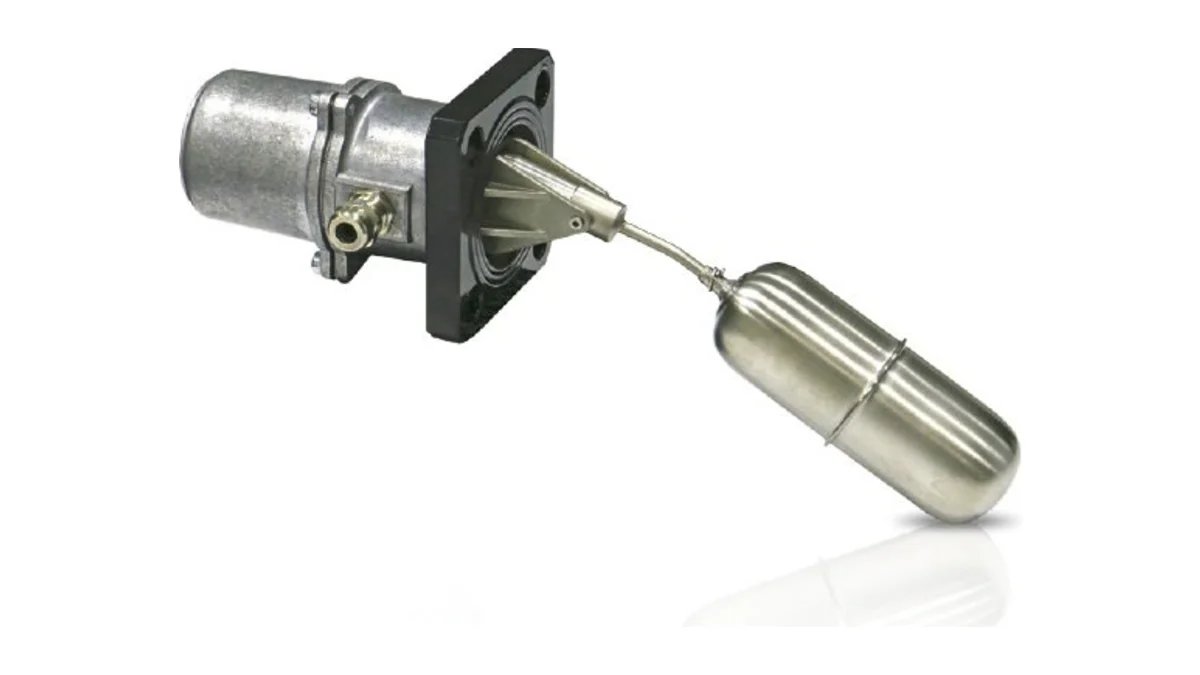
In areas where flammable gas, vapour or dust may be present, such as fuel tanks, solvent stores and paint or chemical processes, every electrical device is a potential ignition source. Using equipment certified for explosive atmospheres for level control in these areas is therefore a legal requirement. An explosion-proof horizontal magnetic float level switch is a level switch certified for hazardous areas that mounts on the side wall of a tank and transfers float movement through a magnetic coupling to a switch mechanism with no contact with the process.
This article explains how these switches work, the ATEX zone and marking concepts, selection criteria and typical applications.
What Is an Explosion-Proof Horizontal Magnetic Float Switch?
A horizontal float switch consists of a body bolted to a flange on the tank side wall, a stainless steel float on a pivoting arm extending into the tank, and a switch housing outside the tank. “Explosion-proof” (Ex-protected) means the device has been tested and certified to the relevant standards for use in explosive atmospheres.
Working Principle
- Float movement: As the liquid level rises or falls, the float pivots up or down.
- Magnetic coupling: A magnet at the end of the float arm moves a second magnet or switch mechanism on the other side of a non-magnetic barrier wall. There is no mechanical feed-through or dynamic seal between the process liquid and the electrical part.
- Contact change: The mechanism operates a microswitch, changing the state of the NO (normally open) or NC (normally closed) contact.
- Ex protection: The switch housing is designed to its certified type of protection; for example, a flameproof (Ex d) enclosure prevents an internal ignition from spreading to the explosive atmosphere outside.
- Control: The contact signal controls pumps, solenoid valves, alarms or a PLC.
Hazardous Area Zones and ATEX
In Europe and Turkey, equipment for explosive atmospheres is assessed under legislation based on Directive 2014/34/EU (ATEX), while the classification of these areas into zones is based on Directive 1999/92/EC. Hazardous areas are classified by the likelihood of an explosive atmosphere being present:
| Gas/vapour zone | Dust zone | Explosive atmosphere | Required equipment category |
|---|---|---|---|
| Zone 0 | Zone 20 | Present continuously or for long periods | Category 1 (EPL Ga / Da) |
| Zone 1 | Zone 21 | Likely to occur occasionally in normal operation | Category 2 or 1 (EPL Gb / Db) |
| Zone 2 | Zone 22 | Not likely in normal operation; if it occurs, only briefly | Category 3, 2 or 1 (EPL Gc / Dc) |
How to Read an Ex Marking
In the marking “II 2G Ex db IIC T6 Gb”: II means surface (non-mining) applications, 2G category 2 for gas atmospheres, Ex db the flameproof enclosure type of protection, IIC the gas group (the most demanding of IIA, IIB and IIC, including hydrogen and acetylene), T6 the temperature class (maximum surface temperature 85 °C) and Gb the equipment protection level. The switch marking must meet the requirements of the zone, gas group and temperature class where it is installed.
Benefits
- Suitable for hazardous areas: The certified type of protection allows legal and safe use in classified zones.
- Magnetic coupling: No direct connection between process and electrics gives high tightness and reliability.
- Side mounting: Ideal where top access is difficult or a specific level point must be monitored.
- Robust construction: Stainless steel float and flange with a metal enclosure suit harsh industrial conditions.
- Flexible use: Several switches can be fitted along the tank height to monitor different levels.
Selection Criteria
- Ex certificate and marking: Zone, gas/dust group and temperature class must match the plant’s explosion risk assessment.
- Process conditions: Liquid temperature, pressure and density; the density must be sufficient for the float to float.
- Material compatibility: Float and wetted parts (usually AISI 316L) must be compatible with the liquid.
- Electrical ratings: Contact rating must suit the control circuit voltage and current.
- Cable entry: On Ex d enclosures, cable entries must also use certified Ex cable glands.
Applications
- Oil, gas and fuel facilities
- Chemical and petrochemical plants
- Paint, varnish and solvent production
- Flammable liquid storage tanks
- Areas of wastewater plants where gas may form
Frequently Asked Questions
Does an explosion-proof switch never produce sparks?
That depends on the type of protection. In a flameproof (Ex d) enclosure, sparks may occur inside, but the enclosure withstands an internal explosion and prevents the flame reaching the explosive atmosphere outside. In intrinsically safe (Ex i) circuits, the energy is limited to a level that cannot cause ignition.
Which equipment category is required for Zone 1?
For gas atmospheres, Zone 1 requires at least category 2G (EPL Gb) equipment. Category 1G equipment may also be used in Zone 1.
What does temperature class T6 mean?
No surface of the device will exceed 85 °C. The selected temperature class must be below the ignition temperature of the gas or vapour present.
Conclusion
Explosion-proof horizontal magnetic float level switches are a correctly certified, leak-tight and robust solution for safe liquid level control in hazardous areas. With the right Ex marking, suitable materials and compliant installation, they operate safely for many years. Explore other level solutions on our Level Control Devices page.
Buy float level switches online
Browse products on or-fa.com, our export store, see prices in USD and order online.
Buy Online →Request a QuoteAsk on WhatsAppRelated product group
Level Control Devices →Technical support
Talk to our team to choose the right product.
+90 224 444 67 32[email protected]
Related Articles
Let’s choose the right product for your project
Buy from our online store or request a project-specific quotation.