
Fire Protection Valves: Types, Functions and Selection
Explore the valve types used in sprinkler, hydrant and fire pump systems, their functions, typical locations and the key points for selecting them.
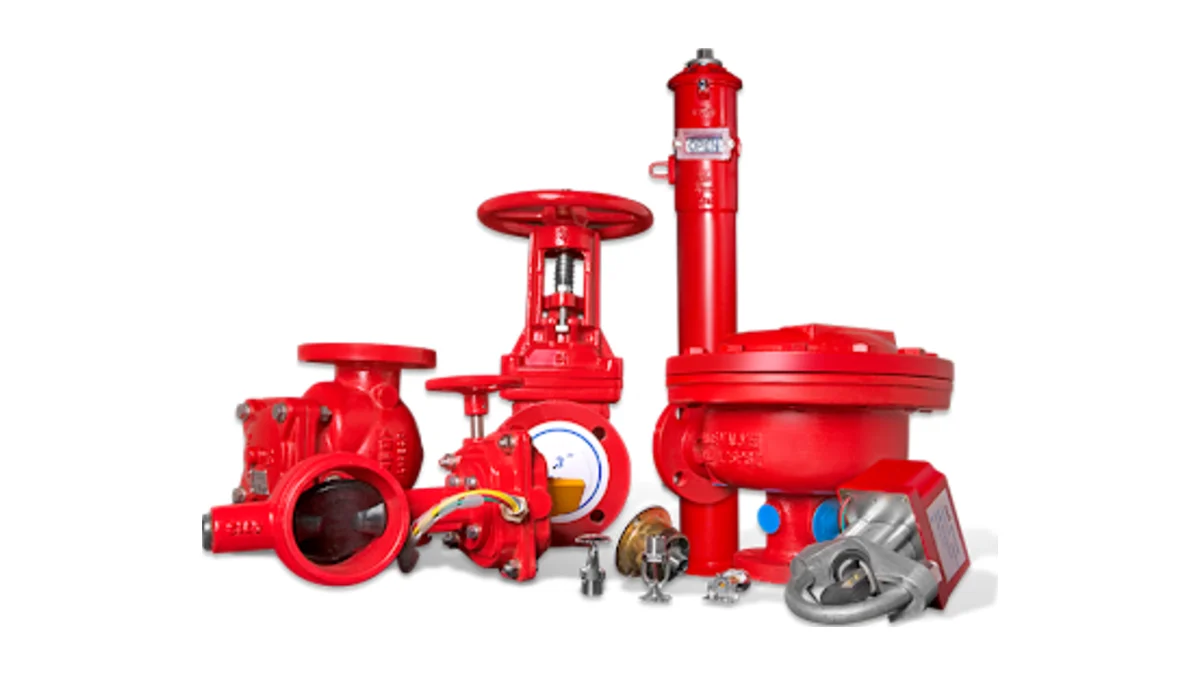
In fire suppression systems, valves decide when, where and at what pressure water flows. An isolation valve left closed by mistake or an uncontrolled pressure rise can prevent the system from doing its job in a fire. Fire protection valves are valves specifically designed, and usually UL/FM approved, to shut off and direct flow, regulate pressure, prevent backflow and allow the system to be tested.
This article covers the main valve types used in fire protection installations, their functions and the key selection points.
Types of Fire Protection Valves
Butterfly Valve with Supervisory Switch
Used as a zone control and isolation valve. Its supervisory (tamper) switch reports the open/closed position to the fire alarm panel; if the valve is partially or fully closed, a fault signal appears at the panel. Its compact body makes it popular in tight spaces and large sizes.
OS&Y Rising Stem Valve
On an OS&Y (Outside Screw & Yoke) valve, the stem rises as the valve opens. The visible stem length shows at a glance, even from a distance, whether the valve is open. It is widely used on pump suction and discharge lines, main supply lines and zone inlets.
OS&Y Valve Supervisory Switch
Mounted on the yoke of an OS&Y valve, it senses the stem position and sends the open/closed status to the fire alarm panel, so the valve is monitored both visually and electrically.
Fire Check Valve
Allows flow in one direction only. At pump discharges, fire department connections and points where different water supplies meet, it prevents backflow and protects equipment and the water supply.
Pressure Reducing Valve
In high-rise buildings, on lower floors or wherever pump pressure is excessive, it reduces inlet pressure to the value allowed for system components and hydrant/hose valve outlets. This protects equipment from overpressure and gives a safe outlet pressure for hose use.
Pressure Relief Valve
Installed on the fire pump discharge, it releases excess water when system pressure exceeds its set point, protecting pipes and components. Under NFPA 20 it is required where the maximum pump discharge pressure could exceed the rating of system components. This applies especially to diesel engine-driven pumps (because of possible overspeed, about 121% of churn pressure plus suction pressure is considered) and to variable speed pumps. A relief valve is a safety device and must not be used to regulate pressure in normal operation.
Test and Drain Valve
Simulates the flow of a single sprinkler to test the alarm valve and flow switches, and drains the line during maintenance. It is usually combined with a sight glass to show flow.
Flow Meter (Fire Pump Test Meter)
Measures fire pump flow for periodic performance tests. With a flow meter on the pump test line, pressures are checked at churn, rated flow and 150% of rated flow. NFPA 20 requires the metering device to be capable of measuring at least 175% of the pump’s rated flow.
Valve Types at a Glance
| Valve | Main function | Typical location |
|---|---|---|
| Butterfly valve with supervisory switch | Isolation, position monitoring | Zone inlets, mains |
| OS&Y valve | Isolation, visual position indication | Pump suction/discharge, main supply |
| Fire check valve | Backflow prevention | Pump discharge, fire department connection |
| Pressure reducing valve | Limiting outlet pressure | Lower zones of high-rise buildings, hydrant outlets |
| Pressure relief valve | Relieving overpressure | Fire pump discharge |
| Test and drain valve | Alarm test, draining | Alarm valve station, end of zones |
| Flow meter | Measuring pump flow | Pump test line |
Selection Criteria
- Material: Cast iron, ductile iron, brass/bronze or stainless steel, depending on water quality and environment.
- Connection: Flanged, grooved or threaded, matching the piping system.
- Pressure rating: Determined by pump churn pressure and static pressure.
- Approvals: UL, FM or VdS approved products according to the project specification and insurer.
- Supervision: The position of every isolation valve in the system must be monitorable.
Applications
- Sprinkler systems
- Hydrant and hose cabinet systems
- Fire pump stations
- Foam suppression systems
Frequently Asked Questions
Why are supervised valves used in fire protection systems?
A closed or partly closed valve stops water reaching the sprinklers in a fire. The supervisory switch continuously reports the valve position to the fire alarm panel and warns if it is closed by mistake.
Is a pressure relief valve the same as a pressure reducing valve?
No. A pressure reducing valve regulates outlet pressure during flow; a relief valve is a safety device that discharges water when pressure exceeds its set point.
What is a fire pump flow meter used for?
It measures flow during periodic pump performance tests, so you can verify that the pump delivers the required pressure at churn, rated flow and 150% of rated flow.
Conclusion
Fire protection valves keep a suppression system available, controllable and testable. Valves selected with the right type, pressure rating and approvals directly increase system reliability. Explore our products for water-based systems on the Water Fire Suppression Systems page.
Buy fire valves online
Browse products on or-fa.com, our export store, see prices in USD and order online.
Buy Online →Request a QuoteAsk on WhatsAppRelated product group
Water Fire Suppression Systems →Technical support
Talk to our team to choose the right product.
+90 224 444 67 32[email protected]
Related Articles
Let’s choose the right product for your project
Buy from our online store or request a project-specific quotation.