
Float Level Control Valve: Automatic Tank Filling Without Power
Learn the operating principle, installation and adjustment of float level control valves that maintain tank levels automatically using mains water pressure, with no electricity.
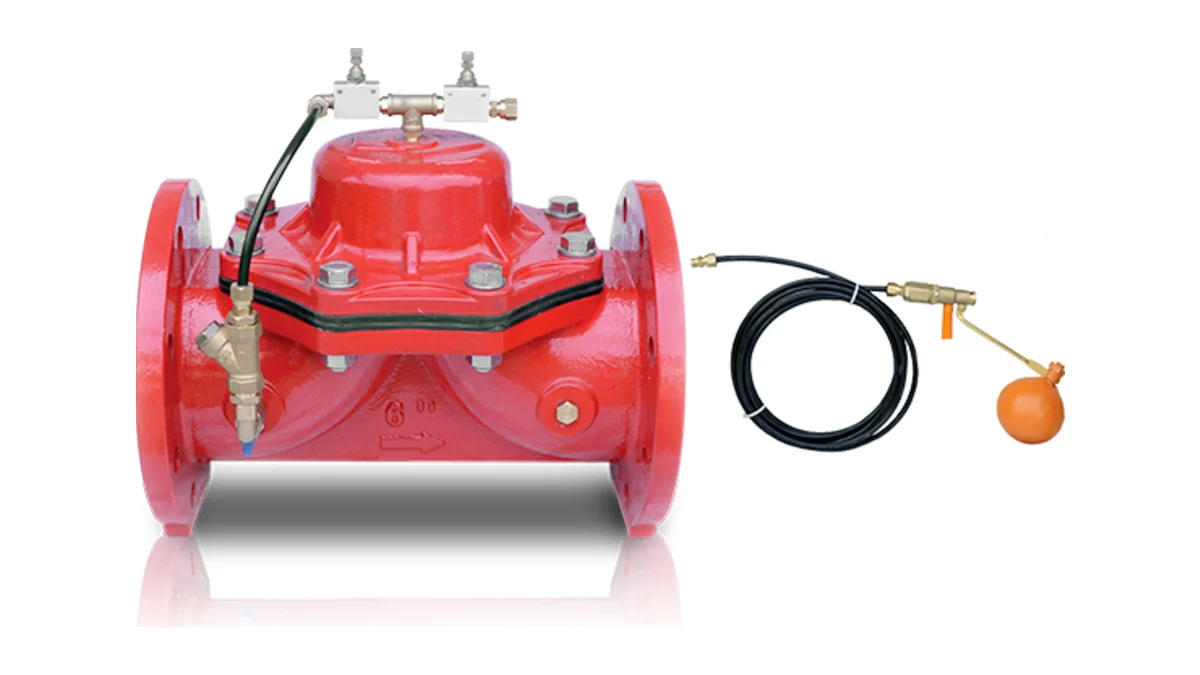
Maintaining the level in water tanks automatically prevents water losses and overflows and keeps the system running without interruption. Where there is no electrical supply, or where one is not wanted, one of the most practical solutions is the float level control valve. This hydraulic control valve is operated by mains water pressure and needs no external energy source.
This article explains how a float level control valve works, its benefits, applications and installation and adjustment steps.
How It Works
A float level control valve consists of a main valve driven by line pressure and a hydraulic pilot float installed in the tank. The control chamber of the main valve is connected to the float by a hose.
- When the level falls: As the water level drops, the float moves down, pressure in the control chamber is released and the main valve opens under line pressure to fill the tank.
- When the level reaches maximum: The float rises and closes the control line; pressure builds up in the control chamber and the main valve closes smoothly, without shock.
In the modulating version, the valve opens and closes gradually in proportion to changes in water level, keeping the level more stable. The opening and closing speed of the main valve can be adjusted with a needle valve in the control circuit.
Benefits
- No electricity required: Operates on mains pressure alone, with no energy costs, and can be used where there is no electrical supply.
- Automatic level control: Maintains the tank level without operator intervention.
- Shock-free closing: Controlled closing limits sudden pressure surges (water hammer).
- Adjustable opening and closing speed: A needle valve sets the valve speed to suit the system.
- Flexible installation: The main valve can be installed horizontally or vertically.
- Easy maintenance: The simple design makes service straightforward.
Applications
- Water tanks: Automatic filling and level control in all types of tanks.
- Reservoirs: In industrial plants, irrigation systems and residential buildings.
- Pressure break chambers: Network structures where the water level must be kept under control.
- Transmission lines: Level control of tanks in water distribution systems.
Installation and Adjustment Steps
- Valve installation: Install the main valve at the tank inlet, horizontally or vertically, following the flow arrow on the body.
- Float installation: Fix the float supplied with the valve in the tank at the maximum water level required.
- Connection: Run a suitable hose between the float and the control chamber of the main valve.
- Speed adjustment: Use the needle valve on the valve to set the opening and closing speed of the main valve to suit the system.
Frequently Asked Questions
Does a float level control valve work without electricity?
Yes. Both the valve and the float operate hydraulically, taking the energy needed to open and close from the mains water pressure.
How does it differ from a conventional ball float valve?
In a conventional ball float valve the float opens and closes the valve directly by mechanical linkage. In a float level control valve the float only controls the pilot circuit; large flows are handled by the main valve, which is driven by line pressure and closes without shock.
When is an electric float model preferred?
Electric float level control valves can be preferred when the float must be located away from the valve, when the level range must be set flexibly, or when a connection to an automation system is required.
Conclusion
A float level control valve is an economical way to control tank levels automatically and without shock, with no electricity required. Its easy installation and adjustable design simplify water management. Explore level control and other hydraulic control valves in our hydraulic control valves product group.
Buy hydraulic control valves online
Browse products on or-fa.com, our export store, see prices in USD and order online.
Buy Online →Request a QuoteAsk on WhatsAppRelated product group
Hydraulic Control Valves →Technical support
Talk to our team to choose the right product.
+90 224 444 67 32[email protected]
Related Articles
Let’s choose the right product for your project
Buy from our online store or request a project-specific quotation.