
Kitchen Hood Fire Suppression Systems: How They Work and Standards
Learn how hood suppression systems detect grease fires in commercial kitchens and extinguish them with wet chemical, their components and maintenance rules.
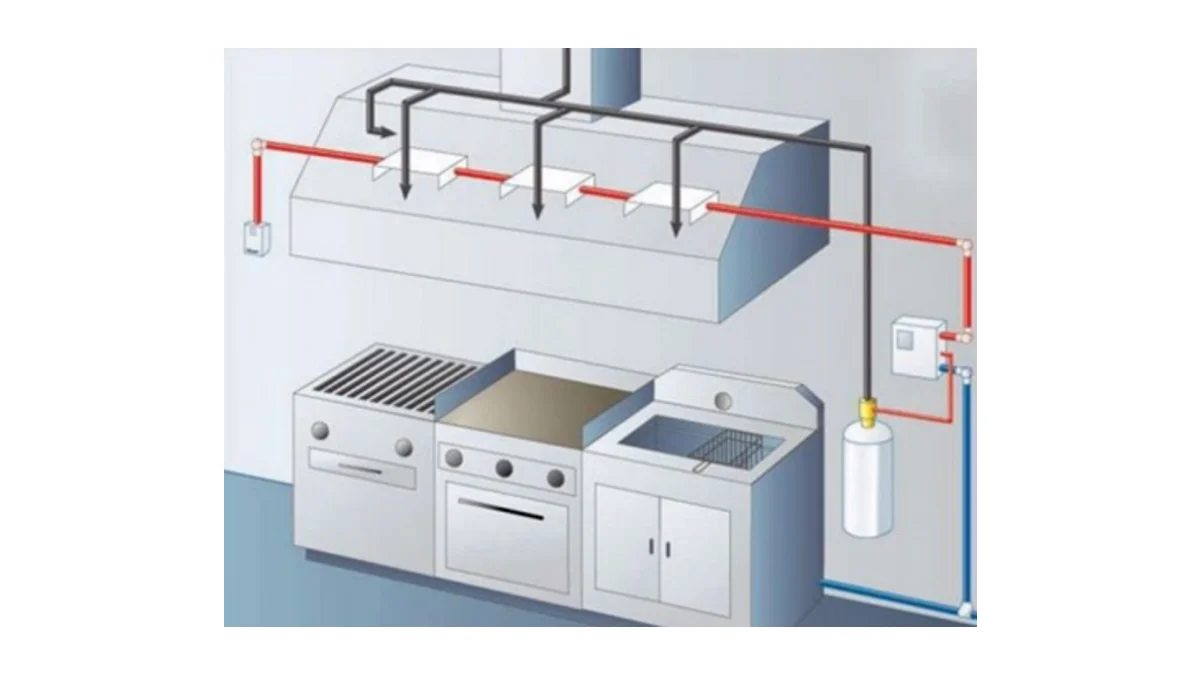
Commercial kitchens are among the highest fire-risk areas because of hot-running ranges, fryers and grills and the build-up of grease vapour in hoods and ducts. Hot cooking-oil fires cannot be extinguished with water; water actually makes burning oil splatter and spread. Kitchen hood fire suppression systems are fixed systems that protect cooking appliances, hoods and exhaust ducts by detecting a fire automatically and extinguishing it with a special wet chemical agent.
This article explains how these systems work, their components, the relevant standards and maintenance requirements.
Why Is Fire Risk High in Kitchen Hoods?
- Grease deposits: Grease vapour from cooking condenses on hood filters, in the plenum and on duct surfaces, forming an easily ignited layer.
- High temperatures: Vegetable oils in fryers can reach their auto-ignition temperature; in modern high-efficiency appliances oil burns hotter and is more prone to re-ignite after knockdown.
- Rapid spread in ducts: A fire reaching the duct can travel through concealed areas and spread to other parts of the building.
How Does It Work?
- Detection: Fusible links or a heat-sensitive detection tube in the hood and duct trigger the system when a set temperature is reached.
- Discharge: Wet chemical agent from a pressurised tank is sprayed through piping and nozzles onto cooking surfaces, into the hood plenum and into the duct.
- Extinguishment: The wet chemical reacts with the burning oil surface, forming a foamy layer by saponification. This layer cuts off contact between the oil and air and cools the oil, preventing re-ignition.
- Energy shut-off: When the system operates, gas and electrical supply to the protected cooking appliances is shut off automatically and cannot be restored without a manual reset.
- Alarm: System operation is indicated audibly or visually and can be connected to the building fire alarm system.
The system can also be operated manually with a pull station located at an easily accessible point on the exit route from the kitchen.
System Components
| Component | Function |
|---|---|
| Agent tank and actuation unit | Stores the wet chemical agent and pressurises and discharges it when triggered |
| Detection elements | Detect fire using fusible links or a heat-sensitive detection tube |
| Distribution piping and nozzles | Direct the agent onto cooking appliances, plenum and duct |
| Manual pull station | Allows manual activation of the system |
| Gas shut-off valve and electrical cut-off | Shut off energy to cooking appliances on discharge |
Standards and Regulations
- UL 300: The fire test standard for extinguishing systems protecting commercial cooking areas, developed with hotter-burning vegetable oils and high-efficiency appliances in mind.
- NFPA 17A and NFPA 96: Set the design, installation and maintenance rules for wet chemical extinguishing systems and for commercial kitchen ventilation and fire protection.
- Regulations in Türkiye: The Regulation on Fire Protection of Buildings and local fire brigade rules require fire safety measures in commercial kitchens. Whether a kitchen needs a hood suppression system should be determined at the design stage according to the building’s occupancy class and applicable regulations.
Advantages
- Fast, automatic response: Fire is detected and extinguished at an early stage, even before staff notice it.
- Protection against re-ignition: The saponified layer and cooling effect stop the oil from re-igniting.
- Duct and plenum protection: Prevents fire from spreading into the building through the exhaust duct.
- Easy clean-up: Wet chemical residues can be cleaned with water, so the kitchen can be returned to service quickly.
Inspection and Maintenance
- The system should be inspected and serviced at least every six months by the manufacturer or an authorised company.
- Metal alloy fusible links should be replaced periodically according to the manufacturer’s instructions (typically every six months).
- When cooking appliances are moved or changed, nozzle layout and coverage must be re-evaluated.
- Check that nozzle caps are in place and nozzles are not blocked with grease.
Frequently Asked Questions
Why can’t kitchen oil fires be put out with water?
When water enters hot oil it flashes to steam instantly, throwing burning oil around and enlarging the fire. That is why wet chemical agents are used for oil fires.
What happens when a hood suppression system operates?
Wet chemical is sprayed onto cooking surfaces, the hood and the duct; at the same time gas and electrical supply to the cooking appliances is cut off automatically and an alarm is given.
How often should the system be serviced?
International practice requires the system to be inspected by an authorised company at least every six months, and metal alloy fusible links to be replaced periodically.
Conclusion
Kitchen hood fire suppression systems detect and extinguish grease fires in commercial kitchens at an early stage and prevent re-ignition by shutting off energy to the appliances. Choosing an approved system, designing it correctly and maintaining it regularly are essential for it to work. Explore other fire protection products in our Fire Protection System Equipment product group.
Buy fire protection equipment online
Browse products on or-fa.com, our export store, see prices in USD and order online.
Buy Online →Request a QuoteAsk on WhatsAppRelated product group
Fire Protection System Equipment →Technical support
Talk to our team to choose the right product.
+90 224 444 67 32[email protected]
Related Articles
Let’s choose the right product for your project
Buy from our online store or request a project-specific quotation.