
Pool Heating Systems with Plate Heat Exchangers: Operating Principle and Correct Installation
Learn the operating principle, correct connection, material selection and automatic temperature control of heating swimming, spa and thermal pool water with a plate heat exchanger.
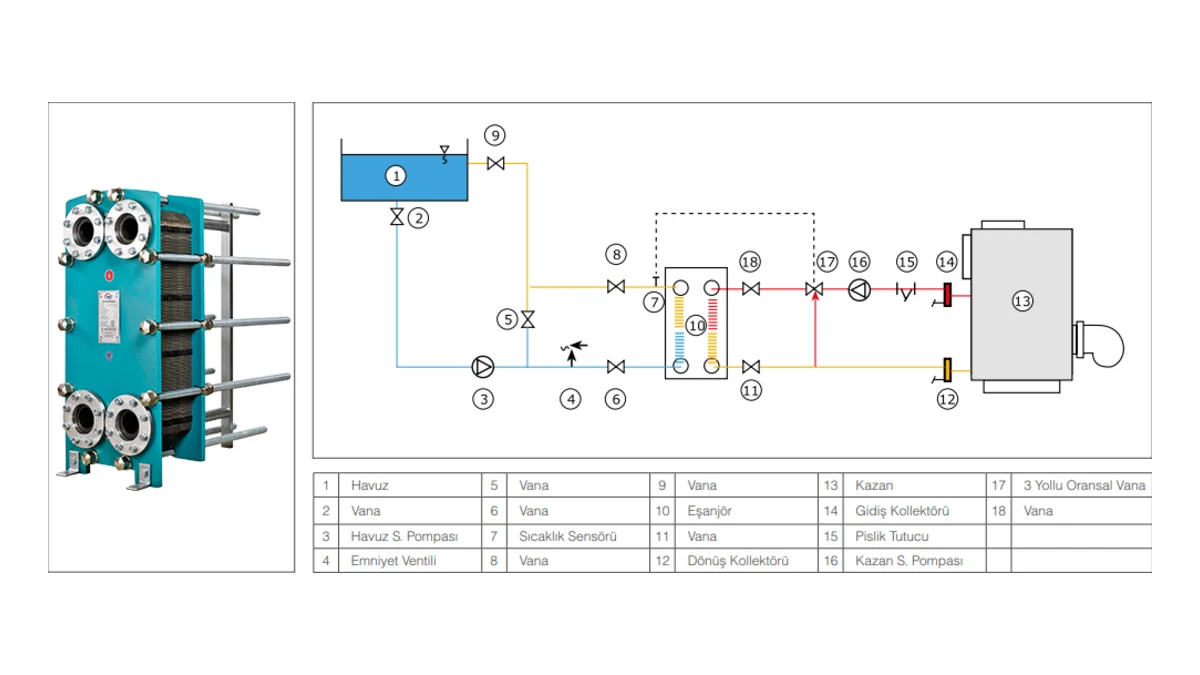
Swimming pools, spa and wellness pools, thermal pools or children’s pools: whatever the use, every pool must be kept at a certain temperature to be comfortable and healthy. Pool water constantly loses heat through surface evaporation, overflow channels and fresh water make-up. To cover this loss safely from an existing boiler or steam system, a modern pool heating system is usually built around a plate heat exchanger.
This article covers the operating principle of plate heat exchanger pool heating, the correct connection, material selection and automatic temperature control.
What Temperature Should Pool Water Be?
A comfortable temperature for swimming pools is generally 26–28 °C. For spas, hot tubs and thermal pools, temperatures of roughly 30–38 °C are used depending on the purpose. Heating capacity is calculated from pool volume, surface area, whether the pool is indoor or outdoor, and the target initial heat-up time.
Why Use a Plate Heat Exchanger?
A plate heat exchanger transfers heat from the boiler circuit’s hot water (or steam) to the pool water without mixing the two fluids. Because pool water is chlorinated and chemically treated, it should not be passed directly through a boiler; the heat exchanger separates the two circuits.
- High heat transfer efficiency: pool water is heated quickly and under control.
- Compact design: takes up little space in the pool plant room.
- Circuit separation: boiler water and chlorinated pool water never mix, protecting the boiler from corrosion.
- Easy maintenance: gasketed units can be opened for cleaning.
- Energy efficiency: the existing heat source is used only as needed.
Operating Principle and Connection
- Hot water (or steam) from the boiler passes through the primary side of the heat exchanger.
- Part of the pool circulation flow, taken after the filter, is diverted through a bypass line to the secondary side.
- Heat passes through the plates to the pool water, and the heated water rejoins the main line.
- Chlorine and other chemicals are dosed after the heat exchanger, so highly concentrated chemicals do not contact the plates.
- A sensor and controller measuring pool water temperature manage the primary control valve or circulation pump to hold the target temperature.
Plate Material Selection
Since pool water contains chlorides and disinfectants, the plate material directly determines the life of the heat exchanger.
| Pool type | Recommended plate material |
|---|---|
| Fresh water pools with controlled chlorine levels | AISI 316 stainless steel (chloride and chlorine values within the manufacturer’s limits) |
| Salt water, seawater and high-chloride thermal water pools | Titanium |
The gasket material must also suit the pool chemicals and operating temperature.
The Role of Automation
- Pool water temperature is measured continuously.
- The primary control valve opens or closes according to heat demand.
- Unnecessary heating is avoided, saving energy.
- Temperature is kept constant, maintaining user comfort.
Applications
- Hotel, sports centre and residential complex pools
- Water parks and leisure pools
- Indoor swimming pools
- Thermal and spa pools, hot tubs
- Physiotherapy and rehabilitation pools
Frequently Asked Questions
Should all the pool water pass through the heat exchanger?
Usually not. Part of the flow taken after the filter is diverted to the heat exchanger through a bypass line and rejoins the main line after heating. The flow through the exchanger is set with a regulating valve.
Which heat exchanger should be used for salt water pools?
For salt water, seawater and high-chloride thermal water, titanium plate heat exchangers are preferred because stainless steel plates may corrode.
Why is chlorine dosed after the heat exchanger?
Chemical concentration is high immediately downstream of the dosing point. Dosing after the heat exchanger keeps concentrated chemicals away from the plates and reduces the risk of corrosion.
Conclusion
Plate heat exchanger pool heating is a safe, efficient and easily controlled solution that separates the boiler circuit from the pool water. Consult the ORFA technical team to select the right capacity and plate material for your pool, and explore our heat exchangers product group.
Buy heat exchangers online
Browse products on or-fa.com, our export store, see prices in USD and order online.
Buy Online →Request a QuoteAsk on WhatsAppRelated product group
Heat Exchangers →Technical support
Talk to our team to choose the right product.
+90 224 444 67 32[email protected]
Related Articles
Let’s choose the right product for your project
Buy from our online store or request a project-specific quotation.