
Rubber Expansion Joint: Construction, Types and Selection Criteria
Learn about the construction, types and selection criteria of rubber expansion joints that dampen vibration, noise and small movements at pumps and equipment.
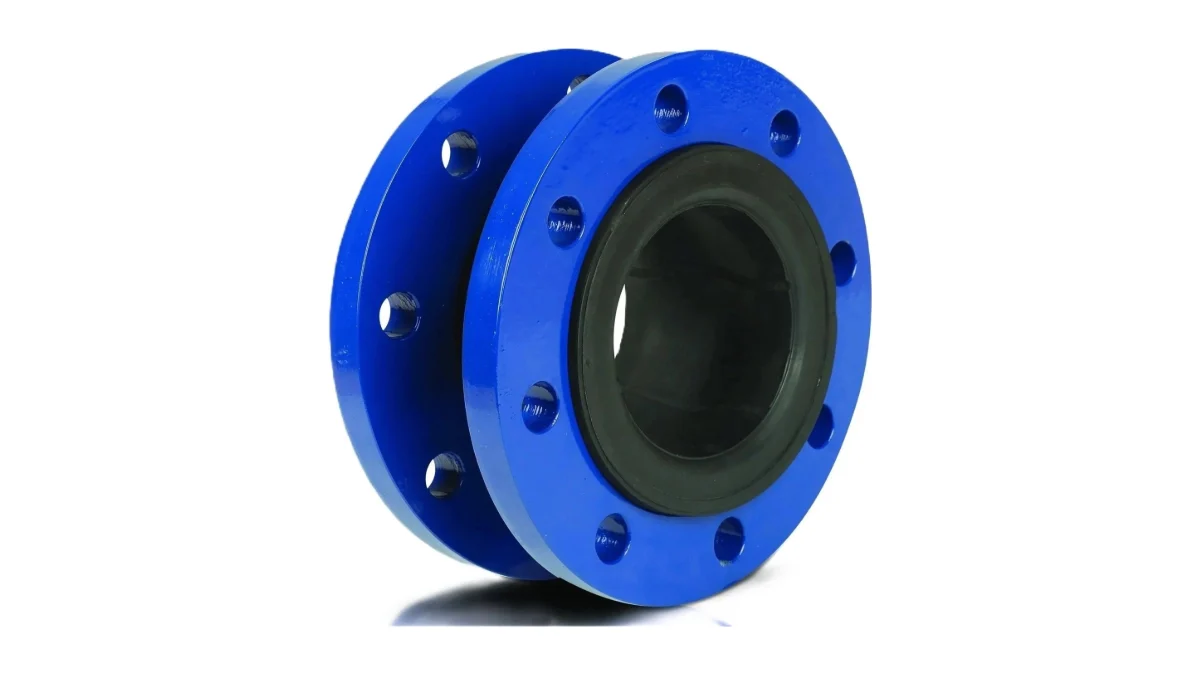
In industrial plants and building services, pipelines are constantly stressed by pump vibration, small thermal movements and pressure fluctuations. Over time this leads to leaking joints, equipment failures and disturbing noise. A rubber expansion joint is a connector whose flexible body dampens these movements and vibrations, protecting the pipeline and connected equipment.
This article covers the construction, types, benefits and selection criteria of rubber expansion joints.
What Is a Rubber Expansion Joint?
A rubber expansion joint consists of a multi-layer flexible rubber body and end connections. The body may contain textile cord and/or steel wire reinforcement for pressure resistance. The flexible body absorbs vibration, limited axial, lateral and angular movement, and minor installation misalignment.
Types of Rubber Expansion Joints
- Flanged rubber expansion joints: Connected with rotating or fixed flanges; common in medium and large sizes.
- Threaded rubber expansion joints: Connected with union or threaded ends; allow quick installation on small-bore lines.
- Marine type rubber expansion joints: Models used in ship and offshore piping.
Benefits
- Vibration and noise damping: Reduces transmission of vibration and noise from pumps, compressors and fans into the pipework.
- Stress reduction: Absorbs small movements and pressure fluctuations, lowering stress on pipes and joints.
- Flexibility: Compensates for installation tolerances and minor misalignment.
- Corrosion-resistant body: The rubber body does not rust and electrically separates two metal lines.
- Easy installation: Light weight and standard end connections make installation simple.
Selection Criteria
| Criterion | What to check |
|---|---|
| Fluid | The rubber type must be compatible with the fluid (e.g. EPDM for water, NBR for oil and fuel). |
| Temperature | Do not exceed the elastomer’s permitted temperature range. |
| Pressure | The pressure rating must cover the system’s operating and test pressures; specify any vacuum. |
| Movement | Expected axial, lateral and angular movements must be within the product’s capacity. |
| Connection | Flange standard or thread type must match the pipeline. |
Installation and Maintenance
- Install the joint as close as possible to the vibration source, for example the pump suction and discharge.
- Support and anchor the pipework separately; the joint must not carry pipe weight.
- If the pipework cannot be anchored, use models with limit rods to prevent pressure thrust from overextending the joint.
- Do not paint the rubber body; protect it from weld spatter and sharp objects, and inspect it periodically for cracks and swelling.
Frequently Asked Questions
What is the difference between rubber and metal bellows expansion joints?
Rubber joints are mainly used for vibration and noise isolation and small movements. Metal bellows joints are preferred for absorbing large thermal expansion at higher temperatures and pressures.
Which fluids can rubber expansion joints handle?
With the right elastomer they can be used with water, hot water, seawater, wastewater, oil and some chemicals. Fluid and temperature data must always be considered during selection.
When should a rubber expansion joint be replaced?
Replace it when cracks, swelling, hardening or permanent deformation appear on the body.
Conclusion
Rubber expansion joints are economical solutions that dampen vibration, noise and small movements, extending the life of pipelines and equipment. With a suitable elastomer and correct installation, they perform reliably for a long time. See all models on our rubber expansion joints page.
Buy rubber expansion joints online
Browse products on or-fa.com, our export store, see prices in USD and order online.
Buy Online →Request a QuoteAsk on WhatsAppRelated product group
Rubber Expansion Joints →Technical support
Talk to our team to choose the right product.
+90 224 444 67 32[email protected]
Related Articles
Let’s choose the right product for your project
Buy from our online store or request a project-specific quotation.