
Single Orifice Air Valve: Kinetic and Automatic Types, Selection and Installation
Learn the kinetic and automatic types of single ball air valves that vent air from pipelines and pump discharges, how they differ from double orifice valves and where to install them.
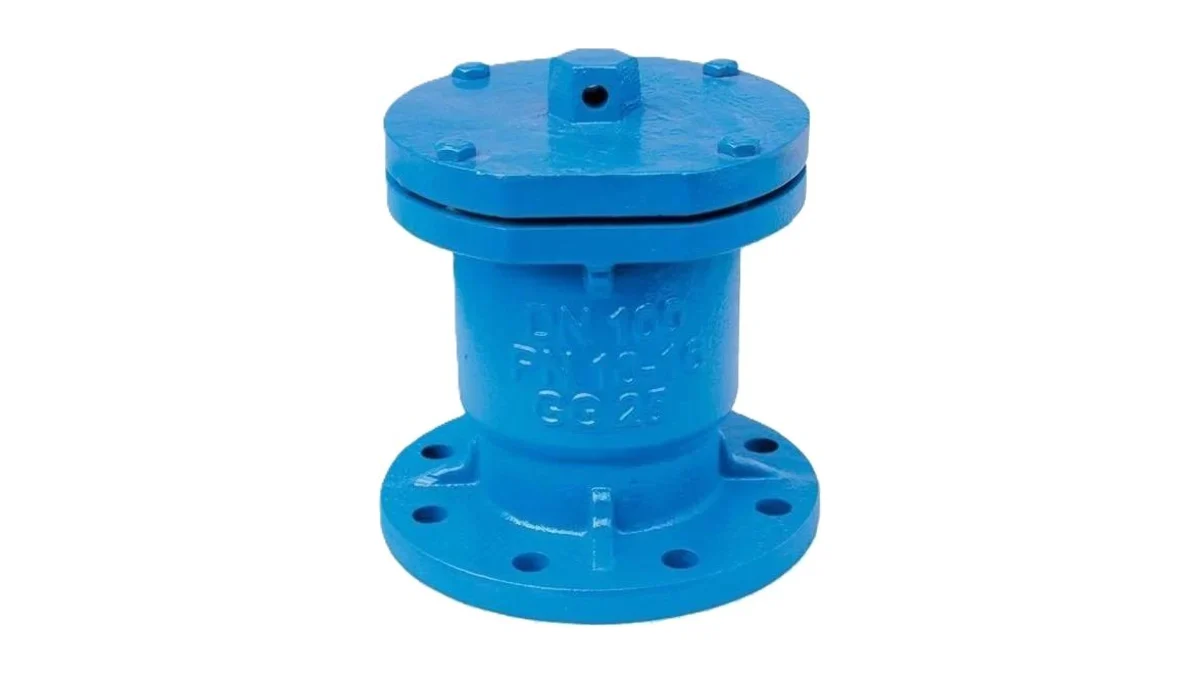
Air accumulates in pipelines when they are filled, when pumps start and during operation as dissolved air comes out of the water. Collecting at high points and pump discharges, this air narrows the flow area, reduces capacity, increases energy consumption, and sudden compression of air pockets can cause water hammer. A single orifice air valve (single ball air valve) is an air release valve with a single float (ball) and a single orifice that vents this air automatically.
Single ball air valves are made in two main types according to their duty. Putting the right type in the right place is decisive for both the efficiency and the safety of the line.
How Does a Single Ball Air Valve Work?
Inside the valve body there is a ball (float) that rises and falls with the water:
- When there is air in the body, the ball is down and the orifice is open; air is discharged.
- As the air is vented, water fills the body and pushes the ball up.
- The ball seats against the orifice and closes the valve; no water escapes.
- When air collects in the body again, the water level drops, the ball falls and the air is vented again.
Types of Single Ball Air Valve
| Type | Orifice | Duty | Typical location |
|---|---|---|---|
| Kinetic (air/vacuum) type | Large | Discharges large volumes of air while the line fills; admits air when the line drains or vacuum forms. Stays closed while the line is pressurised. | Filling/draining points, changes of gradient, areas at risk of vacuum |
| Automatic (air release) type | Small | Continuously releases small air pockets that accumulate while the line operates under pressure. | High points, pump discharges, long flat sections |
Where both duties are needed at the same point, double orifice (combination) air valves that combine the kinetic and automatic functions in one body are used. Some models also have an integrated isolating valve.
Advantages
- Capacity is maintained: Air pockets are vented, so the full pipe cross-section is used.
- Energy savings: Additional friction losses caused by air are reduced and the pump runs more efficiently.
- Protection against air locks: Air collecting at high points is prevented from blocking the flow.
- Vacuum protection (kinetic type): Admits air when the line drains or the pump stops, preventing pipes from collapsing under vacuum.
- Lower water hammer risk: Pressure surges caused by sudden movement of trapped air are reduced.
Where Should It Be Installed?
- At pump discharges (to vent air between the pump and the line at start-up)
- At all high points of the line
- At changes of gradient (where an upward slope decreases or a downward slope increases)
- At intervals along long, flat or gently sloping sections (design guides typically recommend about 400–800 m)
Selection Points
- Duty: Is the requirement large volumes of air/vacuum, small air pockets during operation, or both? Choose kinetic, automatic or double orifice accordingly.
- Pressure rating: The valve’s pressure rating (e.g. PN10, PN16, PN25) must suit the line’s maximum pressure. For automatic types, the orifice size is chosen according to working pressure.
- Size: The size of a kinetic valve is determined by the line’s filling and draining flows and the allowable vacuum.
- Medium: Clean water and wastewater air valves have different designs; use valves designed for wastewater on sewage lines.
Frequently Asked Questions
What is the difference between single and double orifice air valves?
A single ball air valve performs one duty: the kinetic type vents large volumes of air during filling and draining, the automatic type releases small air pockets under pressure. A double orifice valve combines both duties in one body.
Can a kinetic air valve release air at working pressure?
No. The large orifice of a kinetic valve stays closed while the line is pressurised. An automatic or double orifice valve is needed to release air that accumulates during operation.
Why does an air valve leak water?
The most common cause is dirt and deposits between the ball and the seat. Close the isolating valve, remove and clean the air valve, and replace a worn seal or ball.
Conclusion
Single ball air valves are simple but critical devices that vent air from pipelines and prevent capacity loss, wasted energy and air-related surges. Choosing the right type for the duty (kinetic or automatic) and installing it at the right points keeps the line efficient and safe. See all air valve options on our Air Release Valves page.
Buy air release valves online
Browse products on or-fa.com, our export store, see prices in USD and order online.
Buy Online →Request a QuoteAsk on WhatsAppRelated product group
Air Release Valves →Technical support
Talk to our team to choose the right product.
+90 224 444 67 32[email protected]
Related Articles
Let’s choose the right product for your project
Buy from our online store or request a project-specific quotation.