
Single-Stage Centrifugal Pumps: Design, Operation and Applications
With a single impeller, single-stage centrifugal pumps are simple, efficient and easy to maintain, making them the most common pump type in industry. Learn about their design, operation and uses.
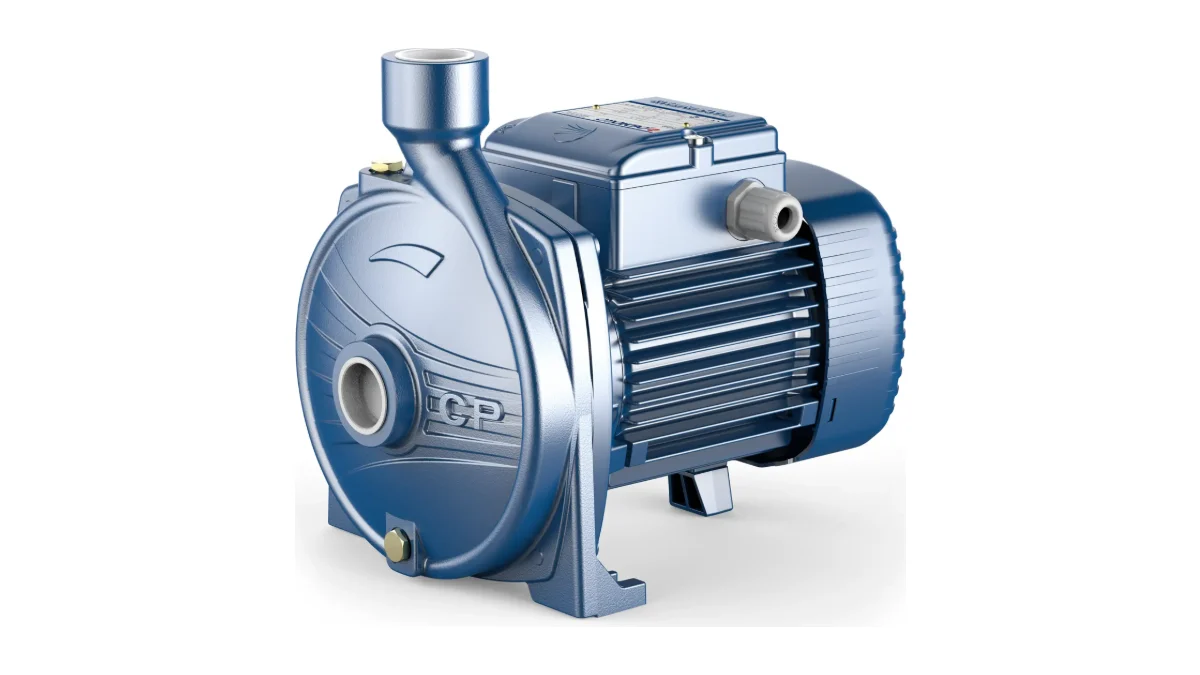
Most liquid transfer in industrial plants, buildings and agriculture is done with centrifugal pumps. The most common and simplest of them, the single-stage centrifugal pump, works with a single impeller; its simple design, wide flow range and easy maintenance make it the first choice for many applications.
This article covers the design and working principle of the single-stage centrifugal pump, how it differs from multistage pumps and when it is the right choice.
What Is a Single-Stage Centrifugal Pump?
A single-stage centrifugal pump has only one impeller on its shaft and transfers energy to the liquid by centrifugal action. The motor’s rotational energy is passed to the liquid through the impeller, increasing its velocity and pressure; the pump casing then converts the velocity energy into pressure.
Main Components
- Impeller: The rotating part that imparts energy to the liquid. Closed impellers are used for clean liquids; semi-open or open impellers for liquids containing solids.
- Volute casing: Collects the liquid leaving the impeller and converts its velocity into pressure.
- Shaft and bearings: Connect the impeller to the motor and carry the rotation.
- Mechanical seal: Seals the point where the shaft leaves the casing.
- Motor: Directly attached on close-coupled (monoblock) types; connected via a coupling on a baseplate on long-coupled types.
Working Principle
- Inlet: Liquid enters through the suction nozzle into the eye of the impeller.
- Energy transfer: The impeller, driven by the motor, throws the liquid between its vanes outward by centrifugal action.
- Velocity and pressure rise: The liquid leaves the impeller with increased velocity and pressure.
- Conversion to pressure: As the volute widens, the liquid slows down and velocity energy is converted into pressure energy.
- Discharge: The pressurised liquid leaves through the discharge nozzle into the pipeline.
The low-pressure zone at the impeller eye draws fresh liquid continuously from the suction line. Standard centrifugal pumps are not self-priming; the pump and suction line must be filled with liquid before start-up.
Single-Stage vs. Multistage Pumps
| Feature | Single-stage | Multistage |
|---|---|---|
| Number of impellers | One | Two or more in series |
| Head | Low to medium | High (increases with stages) |
| Flow | Wide range, from low to very high | Usually low to medium |
| Design and maintenance | Simple, few parts | More parts |
| Typical use | Transfer, circulation, irrigation | Pressure boosting, boiler feed |
In short, single-stage pumps suit high flow at moderate pressure, while multistage pumps suit low to medium flow at high pressure.
Advantages
- Wide performance range: Different impeller diameters and motor powers cover a wide range of flow and head.
- High efficiency: Uses energy efficiently when operated near its best efficiency point.
- Durability: Few moving parts mean a long service life.
- Easy maintenance: Seal and bearing replacement is straightforward thanks to the simple design.
- Material options: Cast iron or stainless steel casings and impellers adapt the pump to different liquids.
Applications
- HVAC systems and air-conditioning circuits
- Industrial cooling and heating applications
- Water supply and distribution
- General industrial liquid transfer
- Agricultural irrigation
- Clean or treated water transfer in treatment plants (wastewater with solids requires open-impeller or dedicated sewage pumps)
- Fire-fighting systems (as approved fire pump sets complying with the relevant standards)
Frequently Asked Questions
When is a single-stage centrifugal pump not enough?
The head a single impeller can generate is limited. For high-pressure duties such as pressure boosting in tall buildings or boiler feed, multistage pumps with impellers in series are preferred.
Is a single-stage centrifugal pump self-priming?
Standard centrifugal pumps are not self-priming. If the pump is above the liquid level, the pump and suction line must be filled before start-up and a foot valve fitted at the suction end.
What is the difference between a closed and an open impeller?
In a closed impeller the vanes sit between two shrouds, giving higher efficiency with clean liquids. Open or semi-open impellers are more resistant to clogging with liquids containing solids and fibres.
Conclusion
Single-stage centrifugal pumps, with their simple design, wide performance range and easy maintenance, are core equipment for industrial liquid transfer. A pump selected for the right flow, head and material will run efficiently for many years. Browse the models in our centrifugal pumps product group, or contact ORFA at +90 224 444 67 32 or [email protected] for selection support.
Buy centrifugal pumps online
Browse products on or-fa.com, our export store, see prices in USD and order online.
Buy Online →Request a QuoteAsk on WhatsAppRelated product group
Centrifugal Pumps →Technical support
Talk to our team to choose the right product.
+90 224 444 67 32[email protected]
Related Articles
Let’s choose the right product for your project
Buy from our online store or request a project-specific quotation.