
Solenoid Controlled Hydraulic Control Valve: Electric On-Off for Water Lines
Learn how line-pressure-operated diaphragm control valves with a solenoid pilot work, which options exist and where they are used.
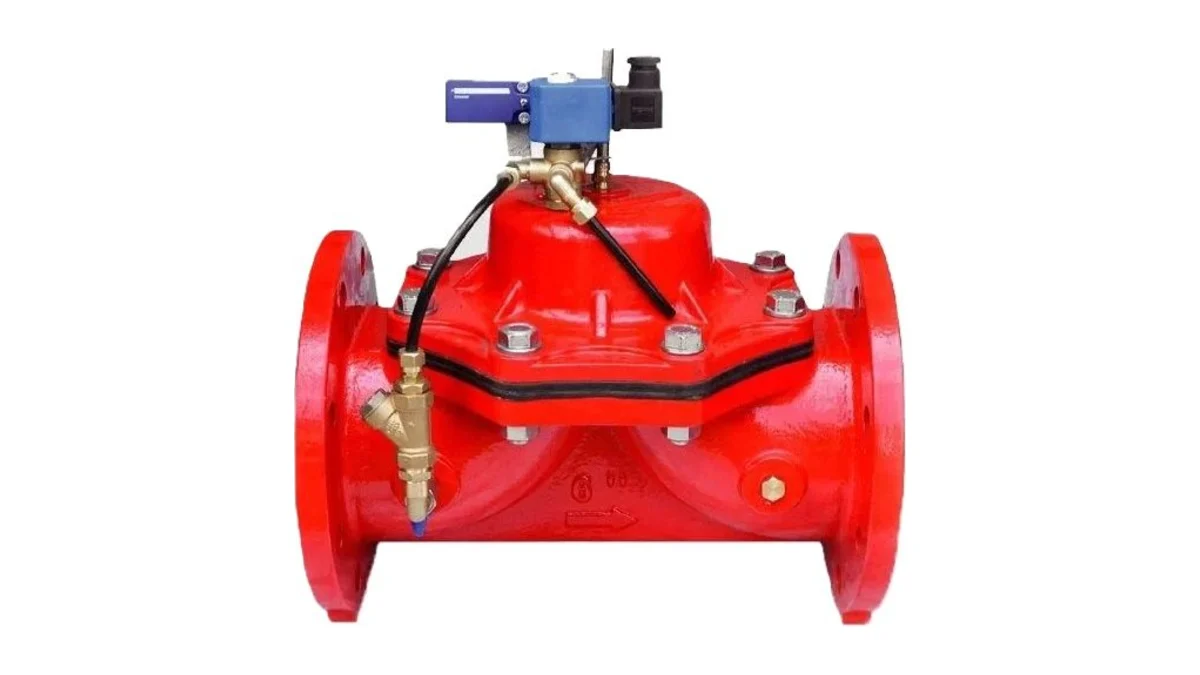
Using a large electric motor or a high-power solenoid to open and shut large-diameter water lines is both costly and energy-intensive. A solenoid controlled hydraulic control valve does the job with the pressure of the water in the line itself: a small solenoid pilot controls the opening and closing of a large main valve.
This article covers diaphragm (line-pressure-operated) hydraulic control valves used on water and similar clean liquid lines. Oil-hydraulic directional control valves used on construction machinery and presses are a different product group and are outside the scope of this article.
What Is a Solenoid Controlled Hydraulic Control Valve?
The valve has two main parts:
- Main valve: Usually a flanged valve with a ductile iron body, operated by a diaphragm or piston. Above the diaphragm is a control chamber.
- Solenoid pilot: A small electric valve that controls the water entering and leaving the control chamber. The pilot circuit may also include a filter, needle valves and a manual selector.
Operating Principle
- Closing: The solenoid pilot directs inlet line pressure into the control chamber. Because the upper surface of the diaphragm is larger than the lower one, the resulting force difference closes the valve tightly.
- Opening: The solenoid pilot switches and vents the water from the control chamber. Line pressure lifts the diaphragm and the valve opens.
- Speed control: Needle valves in the pilot circuit set the opening and closing speeds; slow closing helps prevent water hammer.
Because the main valve is moved entirely by line pressure, electricity consumption is limited to a small solenoid coil even on large sizes. For the same reason a certain minimum line pressure is required for the valve to operate; this value is given in the manufacturer’s catalogue.
Solenoid and Pilot Options
| Option | Description |
|---|---|
| Normally closed (NC) | Valve closed with the solenoid de-energised; opens when energised. |
| Normally open (NO) | Valve open with the solenoid de-energised; closes when energised. |
| Latching (permanent magnet) solenoid | Changes position with a short DC pulse and holds it without power; suitable for battery-operated controllers. |
| 2-way / 3-way pilot circuit | Determines how the control chamber is fed and vented; a 3-way circuit gives faster, full opening. |
| AC / DC coil | Selected to match the controller’s output voltage. |
Advantages
- Remote control: Can be operated from a PLC, timer relay, irrigation controller, level switch or SCADA system.
- Low energy consumption: Large lines are controlled with a small solenoid.
- Controlled opening and closing: Adjustable speeds prevent sudden pressure surges.
- Expandable design: The same main valve can be combined with pressure reducing, pressure sustaining, flow control or level control pilots for multi-function operation.
- Easy maintenance: The diaphragm and seals can be replaced by removing the cover, without taking the valve out of the line.
Applications
- Water distribution networks and reservoir inlets/outlets
- Zone valves in agricultural irrigation
- Filter backwash and process lines in water treatment plants
- Pump stations and booster systems
- Water and cooling water lines in industrial plants
- Water supply and filling lines of HVAC systems
Installation Recommendations
- Fit a strainer upstream and isolating valves on both sides.
- Clean the pilot circuit filter at regular intervals; a clogged filter can prevent the valve from opening or closing.
- Install according to the flow arrow on the body; on horizontal lines it is recommended to keep the cover on top.
- Coil voltage and wiring must match the control panel; use connectors with a suitable protection rating against water and moisture on site.
Frequently Asked Questions
How does this valve differ from an ordinary solenoid valve?
In a direct-acting solenoid valve the coil itself opens and closes the flow, which is not possible on large sizes. In a solenoid controlled hydraulic control valve the solenoid only controls the pilot circuit; line pressure moves the large main valve.
Does the valve work without line pressure?
No. Since the main valve is driven by line pressure, the minimum operating pressure specified by the manufacturer must be available.
Which position does the valve take on power failure?
NC valves close, NO valves open, and valves with latching solenoids keep their last position.
Conclusion
Solenoid controlled hydraulic control valves are an economical way to open and shut large water lines remotely and in a controlled manner with very little energy. With the right solenoid type, suitable speed settings and regular filter maintenance, they provide long and reliable service. Find models with other pilot functions on our Hydraulic Control Valves page.
Buy hydraulic control valves online
Browse products on or-fa.com, our export store, see prices in USD and order online.
Buy Online →Request a QuoteAsk on WhatsAppRelated product group
Hydraulic Control Valves →Technical support
Talk to our team to choose the right product.
+90 224 444 67 32[email protected]
Related Articles
Let’s choose the right product for your project
Buy from our online store or request a project-specific quotation.