
Stainless Steel Monoblock Pump: Material Selection, Benefits and Applications
We explain pumps that combine the corrosion resistance of stainless steel with a compact monoblock design, the difference between 304 and 316L, and where they are used.
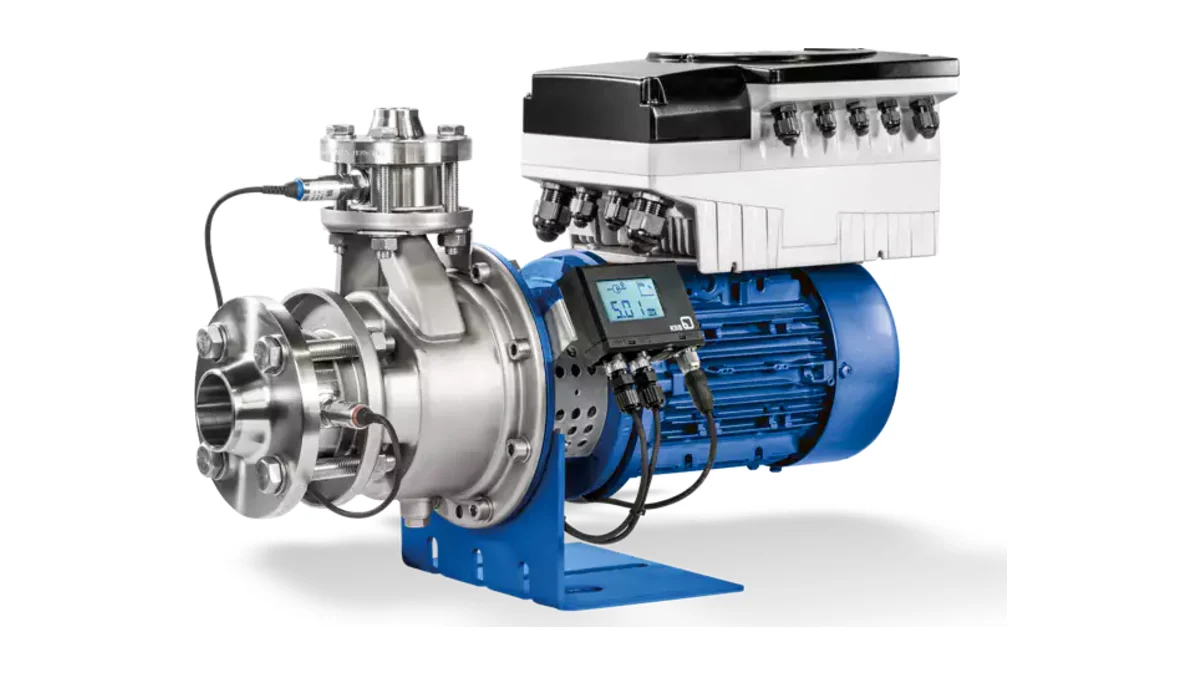
In sectors such as food, beverages, chemicals and water treatment, a pump must do more than move liquid: it must not contaminate it, it must resist corrosion and it must be easy to clean. A stainless steel monoblock pump is a compact centrifugal pump whose wetted parts are made of stainless steel and whose motor and pump form a single unit. It combines the corrosion resistance and cleanability of stainless steel with the space-saving monoblock design.
This article covers how stainless steel monoblock pumps are built, how to choose the stainless steel grade, and their benefits and applications.
What Is a Stainless Steel Monoblock Pump?
In a monoblock pump the pump casing is mounted directly on the electric motor, with no separate coupling or baseplate. The pump therefore takes up less space, needs no motor–pump shaft alignment and is easy to install. “Stainless” means that the casing, impeller and other wetted parts are made of stainless steel.
Stainless Steel Grade: 304 or 316L?
The most common grades in stainless steel monoblock pumps are AISI 304 and AISI 316/316L. The choice should be based on the chemistry of the pumped liquid. For example, the LEO XZS series stainless centrifugal pumps listed on orfa.com.tr have an AISI 304 casing; for applications requiring 316/316L, consult the ORFA technical team.
| Grade | Property | Typical use |
|---|---|---|
| AISI 304 | General-purpose austenitic stainless steel with good corrosion resistance | Clean water, drinking water, many food products, mild chemicals |
| AISI 316 | Contains molybdenum; better resistance to chlorides and pitting corrosion | Salt or chlorinated water, more aggressive chemicals |
| AISI 316L | Low-carbon version of 316; better resistance to intergranular corrosion at welds | Welded stainless casings, pharmaceutical and sensitive process applications |
Applications
- Food and beverage: Transfer of dairy products, fruit juices, alcoholic and soft drinks.
- Chemical processing: Pumping chemicals that are compatible with stainless steel.
- Pharmaceuticals: Transfer of process water and liquid raw materials.
- Water supply and treatment: Pressure boosting and transfer of clean water, pumping various liquids in treatment plants.
- Heating and cooling: Their compact design saves space when used as circulation pumps.
Technical Features and Benefits
- Corrosion resistance: With the right grade, stainless steel offers long-term resistance to water and many chemicals.
- Hygienic surface: The smooth stainless steel surface is easy to clean and reduces bacterial adhesion, helping to protect product quality.
- Compact monoblock design: Minimal space requirement and easy installation.
- Wide performance range: Many models are available for different flow and pressure needs.
- Energy efficiency: Efficient hydraulics and motors keep energy consumption low at the right duty point.
- Easy maintenance: The simple design makes seal and impeller inspection easy.
Frequently Asked Questions
What is the difference between a stainless steel and a cast iron monoblock pump?
Both have the motor and pump combined in one unit. The difference is the material: the stainless steel version is more corrosion-resistant, easier to clean and suitable for food, drinking water and chemical applications.
Which stainless steel grade should be used for salt or chlorinated water?
For chloride-containing water, molybdenum-alloyed AISI 316 or 316L resists pitting corrosion better than 304. At high chloride concentrations, material suitability should be assessed separately.
Can a stainless steel monoblock pump be used for hot water?
Yes, it can be used in heating and cooling circuits. The maximum liquid temperature depends on the model and the mechanical seal material; check the product data sheet.
Conclusion
Stainless steel monoblock pumps combine corrosion resistance, cleanability and a compact design, making them a reliable choice for food, chemical, water treatment and HVAC applications. Choosing the right stainless steel grade and seal is the key step in determining pump life. Browse our stainless steel monoblock pumps page for available models, or ask the ORFA sales team for advice on your application.
Buy stainless monoblock pumps online
Browse products on or-fa.com, our export store, see prices in USD and order online.
Buy Online →Request a QuoteAsk on WhatsAppRelated product group
Stainless Steel Monoblock Pumps →Technical support
Talk to our team to choose the right product.
+90 224 444 67 32[email protected]
Related Articles
Let’s choose the right product for your project
Buy from our online store or request a project-specific quotation.