
Stainless Steel Tank Float Valve: Working Principle and Features
Learn how a stainless steel tank float valve controls the level of water and neutral liquids without electricity, its technical data and installation.
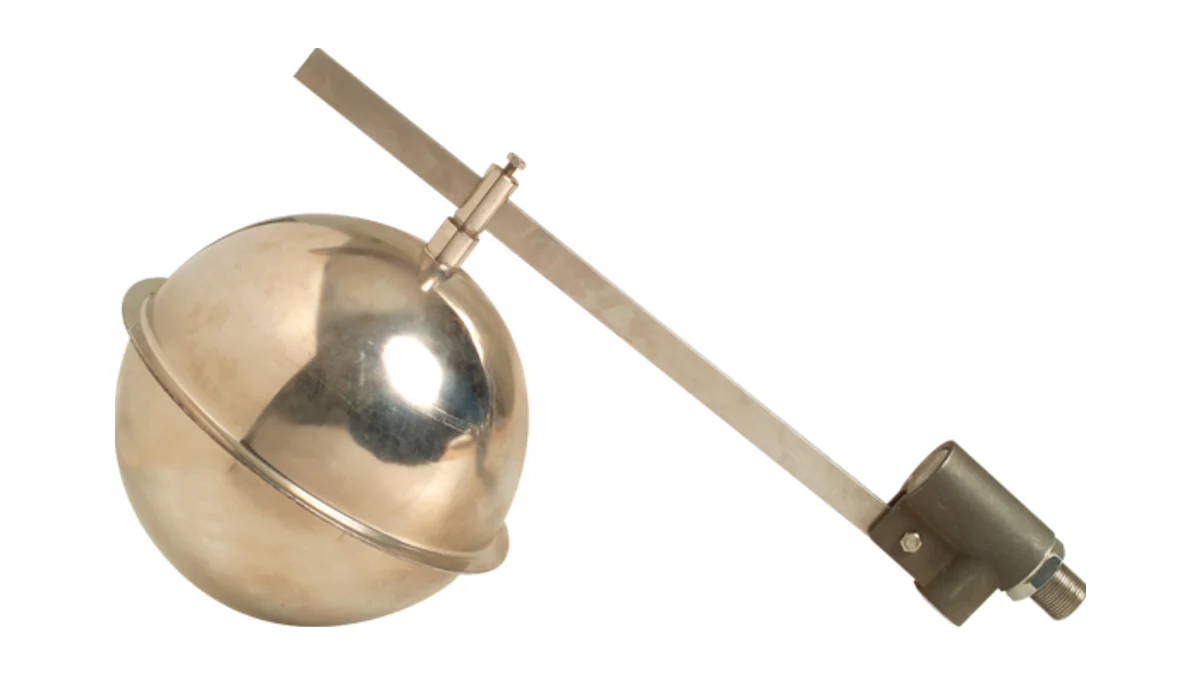
Keeping the liquid level in water tanks, process tanks and reservoirs at a set value is necessary to prevent overflow, running dry and resulting pump failures. A stainless steel tank float valve is a level control valve that mechanically opens and closes the tank’s water inlet by means of a ball floating on the liquid surface and a lever arm. It works without any electrical power.
This article explains how a stainless steel tank float valve works, its technical data, applications and installation points.
How Does a Stainless Steel Tank Float Valve Work?
The device consists of a valve body screwed into the tank wall or inlet pipe, a lever (rod) attached to it and a float ball at the end of the lever:
- When the level falls: The float drops with the liquid, the lever opens the valve and water flows into the tank.
- When the level rises: The float rises, the lever gradually throttles the valve and closes the inlet completely at the set level.
The tank is thus kept at the required level without any additional control device. The length and position of the lever determine the shut-off level.
Technical Data
The values below apply to the Ayvaz KTS-50 stainless steel tank float valve supplied by ORFA:
| Feature | Value |
|---|---|
| Body, connection piece and rod | AISI 304 stainless steel |
| Float ball | AISI 316 stainless steel (PTFE-coated optional) |
| Connection | 3/4″ or 1″ threaded |
| Float diameter | 220 mm standard, 150 mm optional |
| Max. working pressure | 6 bar standard, 8 bar with large float |
| Max. working temperature | 90 °C |
| Mounting | Horizontal or vertical |
| Fluid | Water, purified water and neutral liquids |
Customisation Options
- Float size: Can be changed on request. A larger float produces more buoyancy and therefore ensures safe closing at higher supply pressures.
- PTFE coating: For aggressive liquids the float ball can be PTFE-coated; in that case the compatibility of the body and other wetted parts must also be checked.
Advantages
- No electricity needed: Purely mechanical operation; it keeps working during power failures.
- Corrosion resistance: Stainless steel offers higher strength and longer life than plastic and brass float valves.
- Hygiene: Stainless wetted surfaces suit water tanks in food and pharmaceutical plants.
- Simple maintenance: Few moving parts.
Applications
- Industrial water tanks and reservoirs
- Boiler feed water and cooling tower tanks
- Water tanks in the food and pharmaceutical industries
- Intermediate tanks in treatment plants
- Suitable chemical tanks with a PTFE-coated float
Installation Tips
- The float’s range of movement must be free of tank walls, ladders or pipes.
- Choose a position away from turbulence caused by the incoming water, or provide calming measures; otherwise the valve may keep opening and closing.
- The supply pressure must not exceed what the float can close against (6 bar standard); fit a pressure reducing valve upstream if the mains pressure is higher.
- Fit an isolating valve on the inlet line for maintenance.
Frequently Asked Questions
What is the difference between a tank float valve and a float level switch?
A tank float valve directly opens and closes the water inlet mechanically. A float level switch opens and closes an electrical contact to control devices such as pumps, solenoid valves or alarms.
Which liquids can it be used with?
The standard model is suitable for water, purified water and neutral liquids up to 90 °C. A PTFE-coated float is available for aggressive liquids, but the compatibility of all wetted parts must be checked.
What if the mains pressure is high?
The standard float can be used up to 6 bar supply pressure, the large float up to 8 bar. At higher pressures a pressure reducing valve should be fitted on the inlet.
Conclusion
Stainless steel tank float valves provide reliable level control in water and neutral liquid tanks thanks to their simple, power-free design and corrosion-resistant materials. With the correct float size and supply pressure they work trouble-free for many years. For other models, see our Float Valves page.
Buy float valves online
Browse products on or-fa.com, our export store, see prices in USD and order online.
Buy Online →Request a QuoteAsk on WhatsAppRelated product group
Float Valves →Technical support
Talk to our team to choose the right product.
+90 224 444 67 32[email protected]
Related Articles
Let’s choose the right product for your project
Buy from our online store or request a project-specific quotation.