
What Is a Steam Separator? Operating Principle, Benefits and Applications
Learn how steam separators remove water droplets from wet steam to improve heat transfer and reduce erosion and water hammer, and where they should be used.
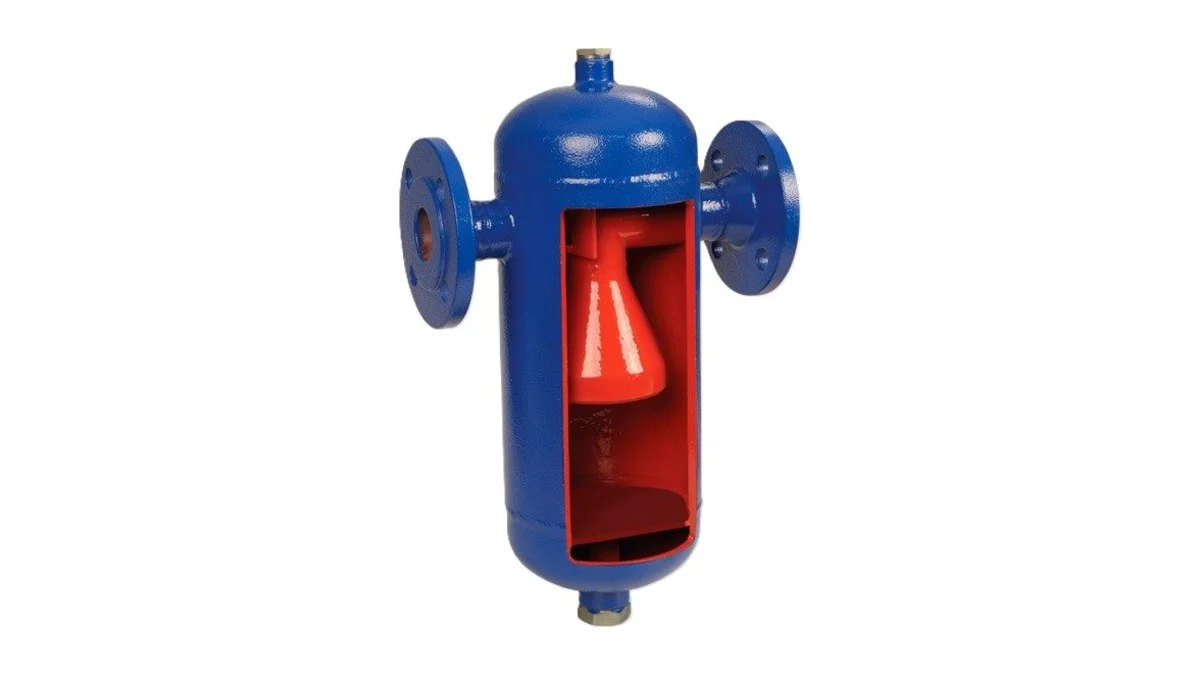
Steam is one of the most common energy carriers in industrial plants, but water droplets carried in steam lines, i.e. wet steam, impair heat transfer, cause erosion of equipment and increase the risk of water hammer. A steam separator removes water droplets and entrained particles from the steam flow so that equipment receives dry, clean steam.
This article explains how a steam separator works, the benefits it provides, where it is used and what to consider for correct installation.
What Is a Steam Separator?
A steam separator is an in-line device that removes water and moisture from the steam flow. Wet steam arises for several reasons: water carried over with steam from the boiler due to turbulence and foaming at the water surface, and condensation of part of the steam through heat loss in distribution lines. The separator removes this water from the steam and discharges it from the system via a steam trap.
How Does It Work?
Separators exploit the fact that water is far denser than steam. Two basic designs are common:
- Baffle type: Baffles inside the body force the steam to change direction several times. The heavier water droplets cannot follow these changes, strike the baffles and drain by gravity to the bottom.
- Cyclone (vortex) type: On entering the separator, steam spins downward around a conical cyclone. Centrifugal force throws liquid droplets and sediment against the body wall. Dry steam is directed from the central collecting cone to the outlet.
In cyclone separators the separated condensate and sediment collect in the large volume below a stainless separating plate, from where they are discharged via a strainer and steam trap without loss of steam.
Benefits
- Better heat transfer: Dry steam reduces water film formation on heat transfer surfaces; processes run faster and more consistently, benefiting product quality.
- Less maintenance and downtime: Erosion and corrosion caused by water droplets are reduced, cutting unplanned stoppages and maintenance costs.
- Longer equipment life: Sensitive equipment such as control valves, pressure reducing valves and turbines lasts longer on dry steam.
- Reduced water hammer risk: Removing water from the lines helps prevent the accumulation that can lead to water hammer.
- Accurate metering: Installed ahead of steam flow meters, it improves measurement accuracy.
- Simple design: No moving parts and no electrical connection; low maintenance and easy to add to existing systems.
Applications
- Boiler outlet lines (to limit carry-over of boiler water and its chemicals into the line)
- Steam distribution networks
- Upstream of steam turbines
- Upstream of control equipment such as pressure reducing valves, temperature control valves and steam meters
- Heat exchangers, ovens, radiators and sterilisers
- Inlets to equipment that needs dry saturated steam (kitchen appliances, laundry machines, presses, autoclaves, etc.)
- Compressed air and gas lines; upstream of filters and in supplies to sensitive instruments
Selection and Installation
- Size the separator on steam flow and pressure, not on line size.
- Install it as close as possible to the protected equipment, following the flow arrow.
- Take the drain from the lowest point of the separator and run it with a fall to the steam trap.
Frequently Asked Questions
What is the difference between a steam separator and a steam trap?
A separator removes water droplets entrained in the steam flow. A steam trap discharges the separated or accumulated condensate from the system without losing steam. The two work together.
Where should a steam separator be installed?
At the boiler outlet, in distribution lines and especially immediately upstream of equipment that needs dry steam, such as pressure reducing valves, control valves, steam meters and turbines.
Can a separator be used in a compressed air line?
Yes. The same separation principle is used in compressed air and gas lines to remove water and oil droplets; the model should be selected to suit the medium.
Conclusion
A steam separator is a simple yet effective device that reduces the efficiency losses, erosion and water hammer risk caused by wet steam. Correctly sized and used with a suitable steam trap, it extends equipment life and improves process quality. You can explore models of different types and capacities in our steam separators product group.
Buy steam separators online
Browse products on or-fa.com, our export store, see prices in USD and order online.
Buy Online →Request a QuoteAsk on WhatsAppRelated product group
Steam Separators →Technical support
Talk to our team to choose the right product.
+90 224 444 67 32[email protected]
Related Articles
Let’s choose the right product for your project
Buy from our online store or request a project-specific quotation.