
Steam Trap Test Valve: Checking for Steam Leaks in a Running System
A steam trap test valve lets you check a trap’s discharge visually without shutting down the system, a practical way to spot traps that are leaking steam or blocked.
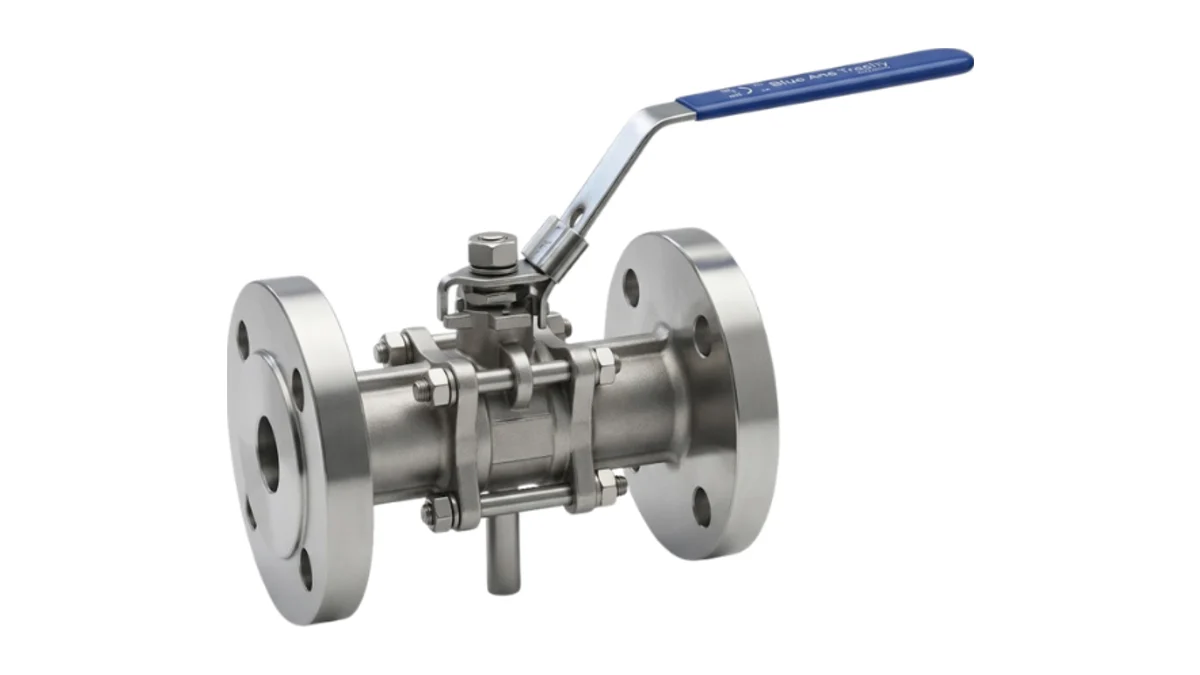
In industrial steam systems, correctly working steam traps are critical for efficiency and energy savings. A trap that fails open leaks steam and wastes energy; one that fails closed lets condensate back up, reducing the performance of the steam-using equipment. A steam trap test valve is a simple, effective device that lets you see how a trap is discharging while the system is running.
This article covers how the test valve works, how to interpret the test and what to watch for during installation.
What Is a Steam Trap Test Valve?
A steam trap test valve is a diverting valve working on the ball valve principle, installed at the trap outlet on the condensate return line. It can direct the flow from the trap in two ways:
- Normal operating position: Condensate discharged by the trap (and any leaking steam) goes to the condensate return line. The system runs normally.
- Test position: The path to the return line is closed and the valve’s test (discharge) outlet opens. The trap’s discharge is released to atmosphere through this outlet and observed.
Since the condensate return line is a closed system, it is normally impossible to see from outside whether a trap is passing steam. The test valve makes this check possible without stopping the system or removing the trap.
How to Interpret the Test
The discharge observed in the test position indicates the condition of the trap:
| Observation | Likely condition |
|---|---|
| Condensate is discharged in the manner typical of the trap type (intermittent or continuous), with some slow, cloudy flash steam at the outlet | Trap is working normally |
| A clear, high-velocity, continuous steam jet right at the outlet | Trap is leaking steam (may have failed open) |
| No discharge at all, condensate backing up in the equipment | Trap may have failed closed or be blocked; also check the strainer |
When hot condensate is discharged to atmosphere, its pressure drops and part of it re-evaporates. This flash steam is normal and should not be mistaken for leaking steam. Flash steam looks slow and cloudy, whereas live steam starts as an almost invisible, fast jet right at the outlet.
Installation Rules
- The test valve is installed downstream of the steam trap on the condensate return line.
- To prevent flash steam from misleading the test, it is recommended to connect the test valve at least half a metre downstream of the trap.
- The test outlet should point in a direction where the operator can observe safely and the discharge cannot harm anyone.
Advantages
- Easy trap testing: Trap operation is checked quickly without shutting down the system.
- Early leak detection: Traps passing steam are identified early, preventing energy waste.
- Energy savings: Timely repair or replacement of faulty traps lowers fuel consumption.
- Optimised maintenance: Only traps found to be faulty are worked on; unnecessary removal is avoided.
- Safer operation: Risks associated with steam leaks are reduced.
Technical Specifications
| Feature | Value |
|---|---|
| Connection types | Threaded, flanged |
| Nominal size | DN15 (1/2″) – DN50 (2″) |
| Maximum pressure | 40 bar |
| Maximum operating temperature | 180 °C |
| Application | All types of steam lines, downstream of steam traps |
Frequently Asked Questions
Where is a steam trap test valve installed?
At the trap outlet, on the condensate return line. Connecting it at least half a metre downstream of the trap is recommended so that flash steam does not mislead the test.
How do you tell flash steam from leaking steam?
Flash steam forms when hot condensate re-evaporates on discharge to atmosphere; it looks slow and cloudy. Leaking live steam appears as a clear, high-velocity, continuous jet right at the outlet.
Does the system need to be shut down for the test?
No. The test valve briefly diverts the flow to the test outlet while the system is running. After the test the valve is returned to its normal position.
Conclusion
A steam trap test valve is a practical way to check trap condition without shutting down the system. Early detection of steam leaks and blocked traps delivers energy savings, efficiency and safe operation. For other monitoring solutions, see our Steam Trap Control Devices page.
Buy steam trap control devices online
Browse products on or-fa.com, our export store, see prices in USD and order online.
Buy Online →Request a QuoteAsk on WhatsAppRelated product group
Steam Trap Control Devices →Technical support
Talk to our team to choose the right product.
+90 224 444 67 32[email protected]
Related Articles
Let’s choose the right product for your project
Buy from our online store or request a project-specific quotation.