
Surface Blowdown System Components and Blowdown Heat Recovery
An automatic surface blowdown system is a control loop in which measuring, control and discharge equipment work together. We look at each component and at how heat can be recovered from blowdown water.
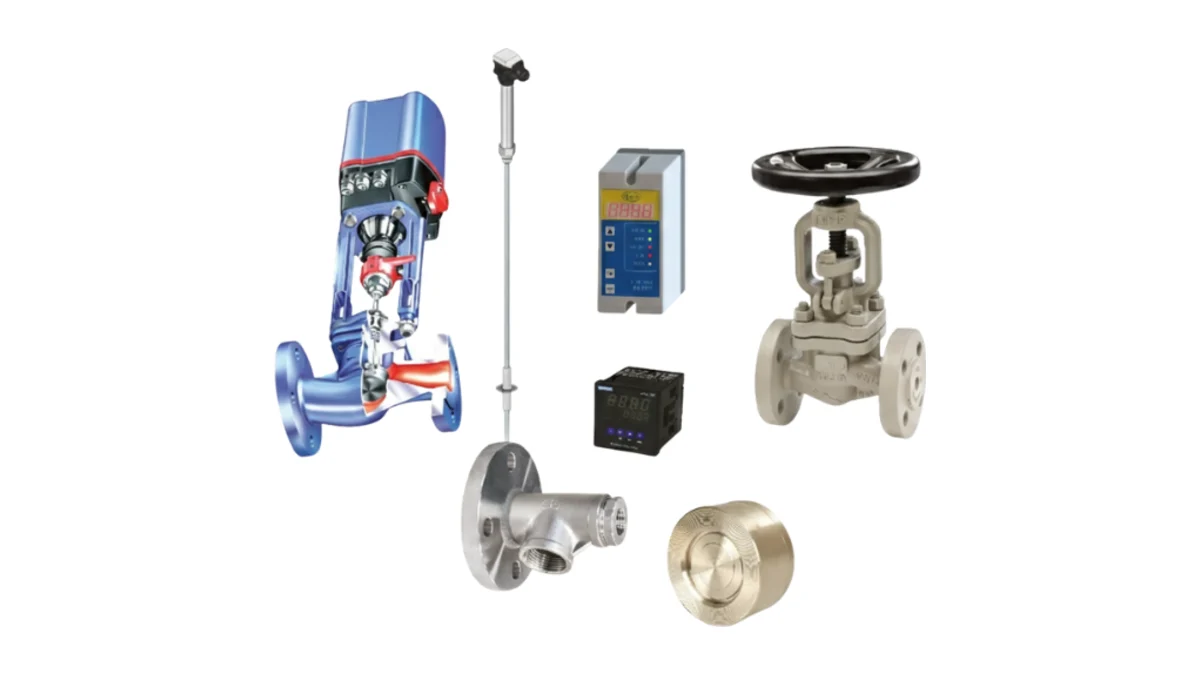
If water quality in a steam boiler is not controlled, the total dissolved solids (TDS) in the boiler water rise, leading to foaming, carryover of water with the steam, deposits and corrosion. An automatic boiler surface blowdown system monitors TDS through conductivity measurement and blows down when required. This article covers the surface blowdown system components, the control loop they form and the recovery of heat from blowdown water.
For a general introduction to surface blowdown and how it differs from bottom blowdown, see our related blog posts; here the focus is on how the system is built.
The Control Loop: How the System Works
An automatic surface blowdown system operates as a closed control loop:
- Measurement: A conductivity sensor continuously measures the dissolved solids in the boiler water. Because conductivity is proportional to TDS, it is used as a practical indicator.
- Comparison: The controller compares the measured value with the setpoint defined for the boiler.
- Discharge: When conductivity exceeds the setpoint, the blowdown valve opens and concentrated boiler water is drawn off from just below the normal water level.
- Dilution: The feed system replaces the discharged water with lower-TDS feedwater; conductivity falls and the valve closes.
Surface Blowdown System Components
| Component | Function |
|---|---|
| Conductivity sensor | Measures the conductivity of the boiler water; its measuring range must suit boiler water values. |
| Transmitter | Processes the sensor signal and passes it to the control unit. |
| PID controller | Compares the measured value with the setpoint and commands the blowdown valve. |
| Blowdown (control) valve | Opens and closes automatically on the controller’s signal, setting the amount of blowdown. |
| Control panel | Brings together the power, signal and control connections of the system components. |
| Heat recovery unit (optional) | Recovers heat from the blowdown water using a plate heat exchanger and a circulation pump. |
Recovering Heat from Blowdown Water
Water removed by surface blowdown is at the saturation temperature corresponding to the boiler’s operating pressure and carries a significant amount of energy. Instead of discharging it all, part of this energy can be recovered:
- Plate heat exchanger: The hot blowdown water preheats the boiler feedwater or make-up water.
- Circulation pump: Circulates the water to be heated through the heat exchanger.
- Flash steam: In larger systems, blowdown water can first be let down to a lower pressure in a flash vessel so that the flash steam released can also be used.
Heat recovery also helps cool the blowdown water to a safe temperature before discharge. The amount of energy that can be recovered depends on the blowdown flow rate, boiler pressure and the temperature of the water being heated.
Advantages of an Automatic Surface Blowdown System
- Boiler protection: Keeping TDS under control reduces foaming, carryover, deposits and corrosion, extending equipment life.
- Cleaner steam: Preventing carryover stops boiler water from being carried into steam lines and process equipment.
- Energy savings: Only as much blowdown as necessary takes place, avoiding unnecessary loss of hot water and fuel.
- Automatic operation and labour savings: Blowdown is controlled continuously without operator intervention.
Applications
- Steam boilers in industrial plants
- Power plants
- Manufacturing sites using process steam
The system’s pressure and temperature ratings must be selected for the boiler’s operating pressure and the saturation temperature at that pressure.
Frequently Asked Questions
What are the components of an automatic surface blowdown system?
Mainly a conductivity sensor, transmitter, PID controller, automatic blowdown valve and control panel. An optional heat recovery unit consisting of a plate heat exchanger and circulation pump can be added.
Why is conductivity measured instead of TDS?
Dissolved salts increase the electrical conductivity of water. Since conductivity can be measured continuously and quickly, it serves as a practical indicator of TDS in the boiler water.
How can heat from blowdown water be used?
Hot blowdown water can be passed through a plate heat exchanger to preheat feedwater or make-up water; in larger systems flash steam recovery can also be added.
Conclusion
An automatic surface blowdown system protects boiler water quality through accurate measurement, precise control and a reliable blowdown valve working together. With optional heat recovery, blowdown energy losses can also be reduced. See the available options on our Boiler Surface and Bottom Blowdown Systems page.
Buy blowdown systems online
Browse products on or-fa.com, our export store, see prices in USD and order online.
Buy Online →Request a QuoteAsk on WhatsAppRelated product group
Boiler Surface and Bottom Blowdown Systems →Technical support
Talk to our team to choose the right product.
+90 224 444 67 32[email protected]
Related Articles
Let’s choose the right product for your project
Buy from our online store or request a project-specific quotation.