
Vibration Absorber Metal Expansion Joint: Selection, Installation and Uses
Learn how to select and correctly install vibration absorber metal expansion joints that limit the spread of vibration from pumps, compressors and fans into the pipework.
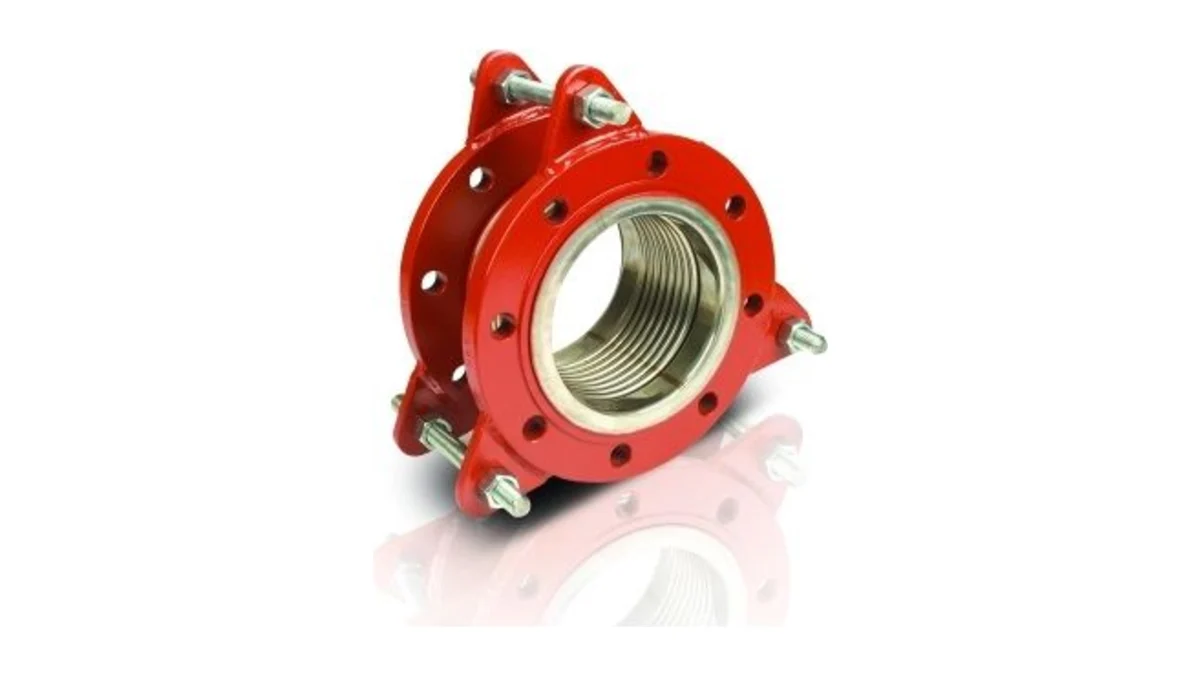
When vibration from rotating equipment such as pumps, compressors, fans and motors reaches the pipework, it loosens connections, causes fatigue cracks at welds, damages instruments and creates disturbing noise. A vibration absorber metal expansion joint uses a flexible metal bellows to reduce the spread of this vibration and noise into the pipeline, while also compensating stresses and small misalignments in the system.
This article covers the specifications of vibration absorber metal expansion joints, where and how to use them, and key installation points.
What Does a Vibration Absorber Metal Expansion Joint Do?
- Damps vibration: reduces the transmission of equipment vibration into the pipework.
- Reduces noise: limits structure-borne noise travelling along the pipe for a quieter environment.
- Balances stresses: reduces system stress and small misalignments.
- Handles heat and pressure: the metal construction allows use at temperatures and pressures unsuitable for rubber joints.
Metal or Rubber?
Both rubber and metal expansion joints are used for vibration isolation. Rubber joints are generally preferred on water lines at low to medium temperatures, while metal joints are the choice for high temperatures, steam, hot air, chemical media and other services where rubber is unsuitable.
Technical Specifications
| Property | Value |
|---|---|
| Design and manufacture | To EJMA standards; pressure and temperature ratings to DIN 2401 |
| Bellows and liner material | Stainless steel to DIN 17440 |
| End fittings | Stainless steel or carbon steel (other materials on request) |
| Connection | Rotating flanges, weld ends |
| Nominal size | Wide range starting from DN25 (1″) |
| Pressure rating | PN16 standard; custom designs for higher pressures |
| Temperature range | -196 °C to +600 °C, depending on materials |
Operating pressure depends on nominal size and operating temperature.
Correct Installation
- Install the joint as close as possible to the vibration source, at the pump or compressor suction and discharge nozzles.
- Anchor the pipe firmly on the side of the joint away from the equipment; otherwise vibration will continue into the line.
- Do not force the joint to correct misalignment and never subject it to torsion.
- Protect the bellows from sparks and weld spatter during welding.
Applications
- Air conditioning, ventilation and plumbing systems
- Air compressors
- Pump suction and discharge nozzles
- Hot air lines
- Sewage and drainage lines
- Chemical and other industrial plants
- Power machinery and marine systems
Frequently Asked Questions
Where should a vibration absorber metal expansion joint be installed?
As close as possible to the vibration source, i.e. at the pump or compressor suction and discharge nozzles, with the pipe anchored on the far side of the joint.
When is metal preferred over rubber?
On lines with high temperatures, steam, hot air or chemical media that are not compatible with rubber.
What pressures and temperatures are possible?
PN16 as standard and -196 °C to +600 °C depending on materials; custom designs are available for higher pressures.
Conclusion
Installed in the right position with proper anchoring, vibration absorber metal expansion joints extend equipment and pipework life, reduce noise and help prevent unplanned failures. For braided types and other bellows solutions, see our Metal Bellows Expansion Joints page.
Buy vibration absorber expansion joints online
Browse products on or-fa.com, our export store, see prices in USD and order online.
Buy Online →Request a QuoteAsk on WhatsAppRelated product group
Metal Bellows Expansion Joints →Technical support
Talk to our team to choose the right product.
+90 224 444 67 32[email protected]
Related Articles
Let’s choose the right product for your project
Buy from our online store or request a project-specific quotation.