
What Is a Submersible Pump? Types, Working Principle and Applications
Submersible pumps operate inside the liquid, eliminating suction problems, and are used everywhere from water supply to wastewater removal. Learn about the main types and how to choose the right one.
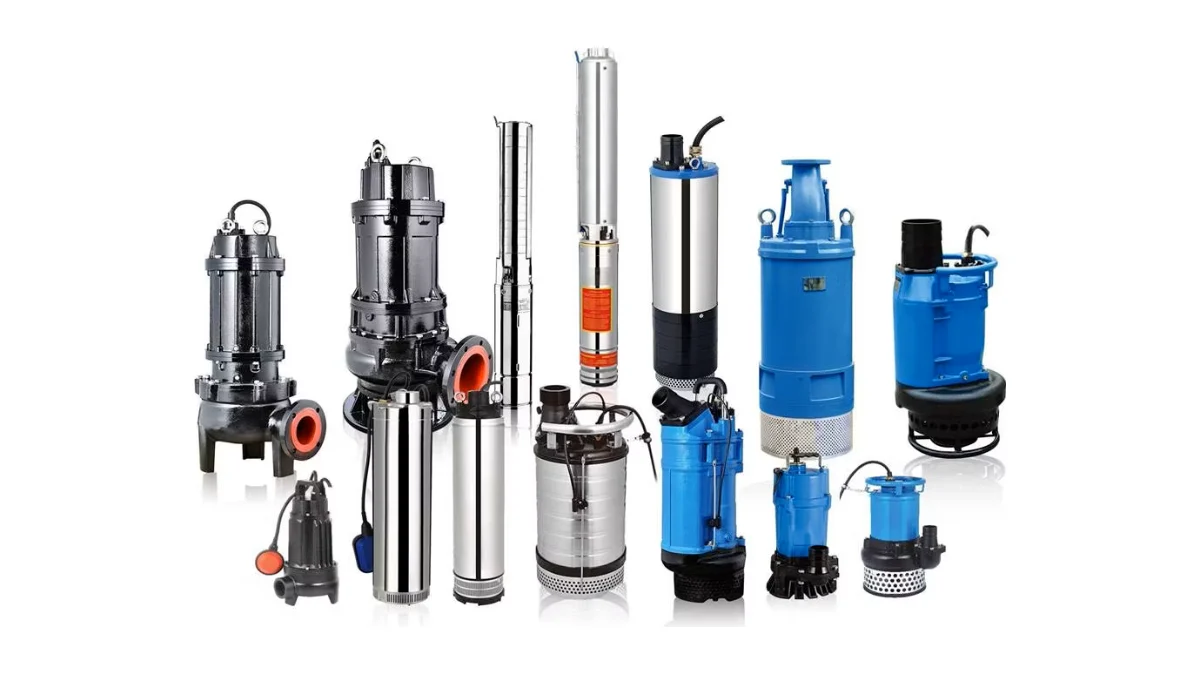
Drawing water from a well, draining a basement and lifting sewage have one thing in common: very often the most practical solution is a pump that works inside the liquid. A submersible pump combines the motor and the pump section in a single watertight unit and operates immersed in the liquid being pumped.
This article explains how submersible pumps work, their advantages, the main types and which type to choose for which application.
How Does a Submersible Pump Work?
In a submersible pump the electric motor sits in a watertight housing protected by mechanical seals and drives the impeller directly. Because the pump is in the liquid, the liquid flows to the impeller inlet by itself; there is no suction lift limit and none of the suction line problems of surface pumps. The motor is usually cooled by the liquid around it or flowing through it.
- Immersion: The pump is placed in the liquid to be pumped.
- Motor operation: The electric motor turns the impeller.
- Inflow: Liquid flows through the pump inlet to the impeller.
- Pressurisation: The impeller adds energy to the liquid by centrifugal force.
- Discharge: The pressurised liquid leaves the pump outlet into the discharge line.
Advantages
- No suction problems: Operating in the liquid removes the suction lift limit and reduces the risk of suction-related cavitation.
- Compact installation: No separate pump room or suction line is needed; suitable for narrow wells and manholes.
- Quiet operation: Running under the liquid keeps noise low.
- Wide range of applications: Many models are available for different liquids and depths.
Types of Submersible Pumps
| Type | Purpose |
|---|---|
| Submersible drainage pumps | Removing clean or slightly dirty water; emptying basements, pools and tanks. Stainless steel versions are also available. |
| Wastewater submersible pumps | Removing dirty water with solids and fibres; vortex or channel impeller models. |
| Submersible sewage pumps with cutter blade | Septic and toilet waste; shred solids and pump through small-diameter lines. |
| Deep well submersible pumps | Abstracting groundwater from boreholes; slim, multistage design. |
| Caisson well submersible pumps | Water supply from large-diameter, shallow (caisson) wells. |
Applications
- Water supply and irrigation
- Wastewater management and treatment plants
- Groundwater control and drainage
- Ornamental ponds and fountains
- Dewatering in construction and mining
- Marine and port applications
Selection Criteria
- Liquid properties: Clean water, wastewater with solids or sandy well water each need a different pump type.
- Flow and head: Calculate the total head including static lift and line losses.
- Installation: Consider well diameter, immersion depth and changes in liquid level.
- Material: Choose cast iron, stainless steel or plastic housings to suit the liquid.
- Protection: Prevent dry running with a float switch or level electrodes.
Frequently Asked Questions
What is the difference between a submersible pump and a surface pump?
A surface pump stays outside the liquid and draws it through a suction line; its suction lift is limited by atmospheric pressure. A submersible pump works inside the liquid, so there is no such limit and it can deliver water even from deep wells.
What happens if a submersible pump runs dry?
The motor cannot be cooled and the mechanical seal is not lubricated; overheating and seal damage can occur quickly. A float switch or level protection is recommended.
Which submersible pump is suitable for a septic tank?
Use cutter-blade or large free-passage wastewater submersible pumps for septic and toilet waste. Clean-water drainage pumps are not suitable for this duty.
Conclusion
Submersible pumps provide an efficient, practical solution in many applications, from clean water supply to wastewater removal. Chosen to suit the liquid and installation conditions, they deliver long and reliable service. See all models in our submersible pumps product group.
Buy submersible pumps online
Browse products on or-fa.com, our export store, see prices in USD and order online.
Buy Online →Request a QuoteAsk on WhatsAppRelated product group
Submersible Pumps →Technical support
Talk to our team to choose the right product.
+90 224 444 67 32[email protected]
Related Articles
Let’s choose the right product for your project
Buy from our online store or request a project-specific quotation.