
Double Orifice Air Release Valve: Working Principle, Benefits and Applications
Learn how double orifice (double ball) air release valves vent large volumes of air during filling and small air pockets during operation, and where they are used.
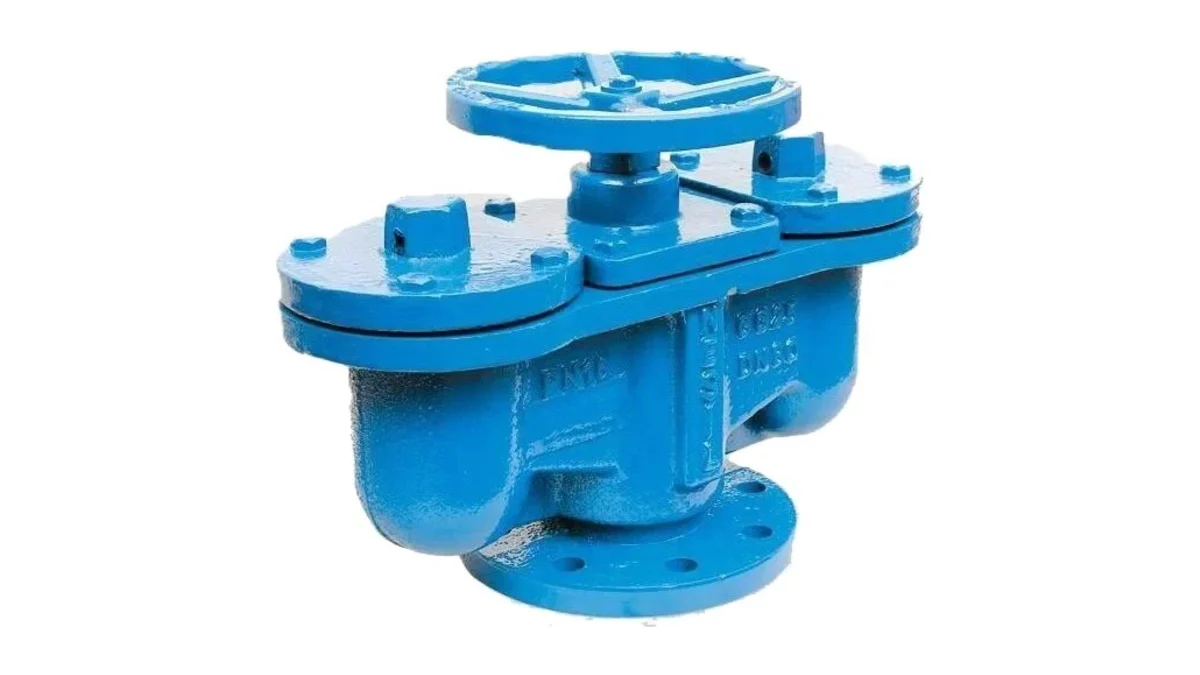
Air trapped in pipelines, especially in water transmission and distribution systems, narrows the effective flow area, reduces line capacity, makes pumps consume more energy and causes pressure fluctuations. A double orifice air release valve (also called a double ball air valve) automatically vents this air both in large volumes while the line is being filled and as small bubbles during normal operation.
This article explains how a double orifice air release valve is built, how it works, the benefits it offers and what to consider when selecting one.
What Is a Double Orifice Air Release Valve?
A double orifice air release valve combines two venting mechanisms of different sizes in a single body: two float balls and two outlets with different diameters. As a result, one device performs two tasks:
- Moving large volumes of air in and out while the line is filled or drained,
- Continuously releasing small air pockets that come out of the water and collect at high points while the line is under pressure.
Working Principle
Large ball – kinetic (large volume) venting
While the line is filled, air is expelled quickly through the large orifice. When water reaches the valve body, the large ball rises and closes this orifice. When the line is drained, or a vacuum forms due to a pipe burst or pump stop, the water level falls, the ball drops and air is drawn in through the large orifice. This reduces the risk of the pipeline being damaged by vacuum.
Small ball – automatic venting during operation
While the system operates under pressure, air released from the water accumulates at the top of the valve. When the trapped air lowers the water level, the small ball drops and opens the small orifice to release the air. Once the air is vented, the water level rises and the ball closes the orifice again. This cycle repeats automatically throughout operation.
Benefits of Double Orifice Air Release Valves
- Higher line efficiency: Eliminates air pockets so that the full pipe cross-section is available for flow.
- Protection against air locks: High venting capacity prevents the line from becoming air-locked.
- Equipment protection: Reduces air-related pressure fluctuations and surge risk, protecting pumps and pipework.
- Vacuum protection: Admits air during draining and sudden pressure drops, limiting vacuum formation.
- Quiet, stable operation: Reduces air-induced noise and vibration.
- Two functions in one device: No need to install separate kinetic and automatic air valves.
Applications
- Drinking and service water transmission and distribution lines
- Pump station discharge lines
- Agricultural irrigation systems
- Filtration and water treatment plants
- Industrial process water lines
Selection and Installation Notes
| Criterion | Explanation |
|---|---|
| Working pressure | The pressure rating must suit the highest operating pressure of the line (the double orifice air valves in the ORFA range are rated PN16). |
| Nominal size | Valve size is selected according to pipe size and filling/draining flow rates. ORFA offers double orifice air valves from DN50 to DN200. |
| Connection type | Threaded or flanged connections are available depending on size and model. |
| Medium and temperature | Body, ball and seal materials must be compatible with the medium and operating temperature; check the values in the product data sheet. |
- Install air valves at the high points of the line, at changes of gradient and at intervals along long straight runs.
- Mount the valve vertically and fit an isolating valve underneath for maintenance.
Frequently Asked Questions
What is the difference between a single and a double orifice air valve?
A single orifice air valve has one venting mechanism. A double orifice valve combines large volume venting (filling and draining) and small bubble release during operation in two separate mechanisms in one body.
Where should an air release valve be installed?
At high points where air collects, at changes of gradient, on pump discharge lines and at intervals along long straight pipelines.
Does a double orifice air valve protect against vacuum?
Yes. When the water level drops during draining or a sudden pressure drop, the large ball falls and air enters the line, limiting vacuum formation.
Conclusion
Double orifice air release valves protect line capacity by venting air during filling, draining and normal operation, and they safeguard pumps and pipes against pressure fluctuations. Selected with the right pressure rating and size and installed at the right points, they provide long, trouble-free service. Explore different types and sizes on our Air Release Valves page.
Buy air release valves online
Browse products on or-fa.com, our export store, see prices in USD and order online.
Buy Online →Request a QuoteAsk on WhatsAppRelated product group
Air Release Valves →Technical support
Talk to our team to choose the right product.
+90 224 444 67 32[email protected]
Related Articles
Let’s choose the right product for your project
Buy from our online store or request a project-specific quotation.