
Bimetallic Steam Traps: Working Principle, Benefits and Applications
Learn how bimetallic steam traps work, what makes them suitable for superheated steam and harsh operating conditions, and how to install and maintain them correctly.
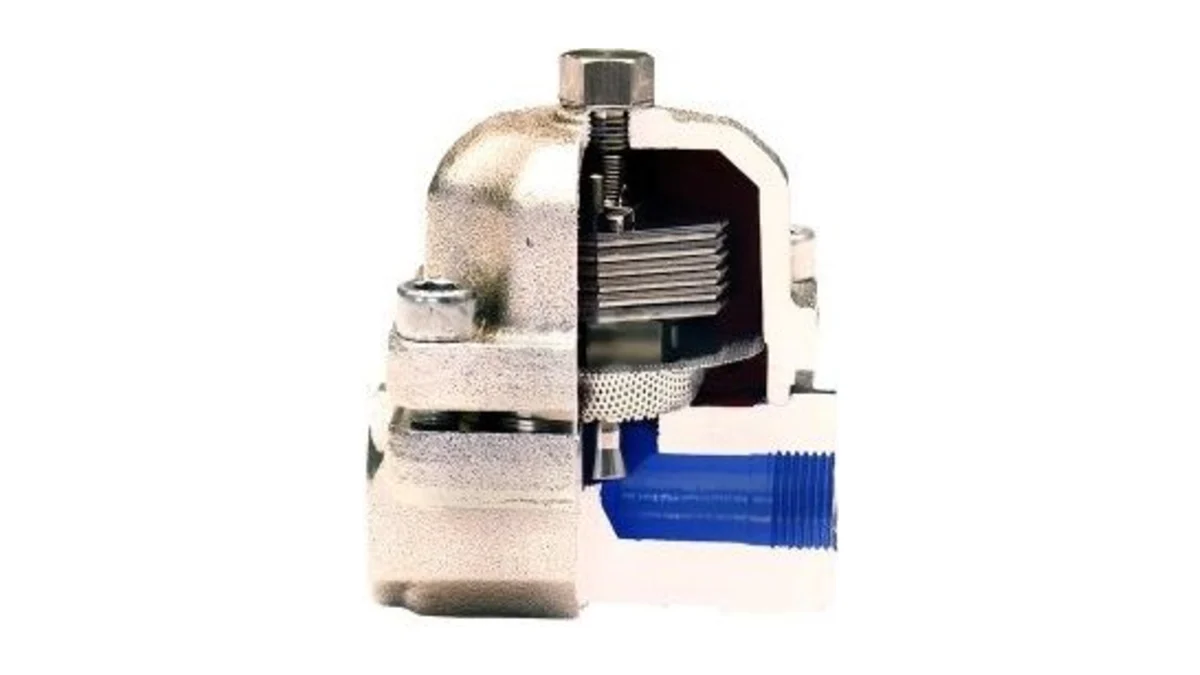
Using steam efficiently and safely is decisive for operating costs and process continuity in industrial plants. Removing the condensate that forms in steam lines without losing live steam is the job of the steam trap. A bimetallic steam trap is a rugged, adjustable trap type developed especially for superheated steam and heavy-duty operating conditions.
In this article you will find how bimetallic steam traps work, their key features, installation and maintenance rules, and the applications where they are preferred.
What Is a Bimetallic Steam Trap?
A bimetallic steam trap is a thermostatic trap operated by plates made of two metals that expand at different rates with temperature. When the plates are in contact with hot steam they bend and close the valve; when they are in contact with cooler condensate they return to their original shape and open it. Steam is held in the line while condensate and air are discharged.
Working Principle
The bimetal plates are designed to follow the saturated steam curve. The trap is typically set to open at about 15 °C below the saturation temperature of the steam. As a result:
- Condensate is discharged in a controlled way: it is released after slight sub-cooling, so part of its sensible heat is used in the system.
- Live steam loss is prevented: the valve closes as soon as hot steam arrives.
- Energy savings are adjustable: an adjusting screw lets you discharge condensate at a lower temperature.
The valve design also acts as a non-return valve to prevent reverse flow, and the trap works as an automatic frost-protection drain.
Key Features
- Robust design: no delicate internals that can be easily damaged, ensuring long and reliable service.
- Multi-function valve: acts as a check valve and discharges condensate on the thermostatic principle.
- Adjustable bimetal plates: the discharge temperature can be optimized with the adjusting screw.
- Strong construction: forged steel body and stainless steel internal strainer.
- Resistant to water hammer and frost: unaffected by severe operating conditions and freezing.
Installation and Maintenance
- Mounting position: works in any position, but horizontal installation is recommended.
- Isolation valves: install suitable isolation valves upstream and downstream for safe maintenance and replacement.
- Easy servicing: internals are easy to access for quick cleaning and inspection.
Applications
- Superheated steam lines
- Steam main end points and drip legs
- Steam headers and manifolds
- Tracer lines and steam-jacketed pipes
- Drying and pressing units
- Convectors and other heaters
Frequently Asked Questions
Can a bimetallic steam trap be used on superheated steam?
Yes. Bimetallic steam traps are designed especially for superheated steam applications and operate reliably at high temperatures.
In which position should a bimetallic steam trap be installed?
It can operate in any position; horizontal installation gives the best results.
What does the adjusting screw do?
It changes the opening temperature of the bimetal plates. Discharging condensate at a lower temperature increases energy savings.
Conclusion
Thanks to their durability, adjustable discharge temperature and resistance to water hammer, bimetallic steam traps are a reliable solution for demanding steam systems. To choose the right model for your plant, explore our bimetallic steam trap product group or contact our technical team.
Buy bimetallic steam traps
Browse products on or-fa.com, our export store, see prices in USD and order online.
Buy Online →Request a QuoteAsk on WhatsAppRelated product group
Bimetallic Steam Traps →Technical support
Talk to our team to choose the right product.
+90 224 444 67 32[email protected]
Related Articles
Let’s choose the right product for your project
Buy from our online store or request a project-specific quotation.