
ARI Y-Type Strainer: Protecting Piping Equipment from Dirt
Learn how ARI Y-type strainers protect pumps, valves and meters from dirt, how to install them correctly on steam and liquid lines and their key specifications.
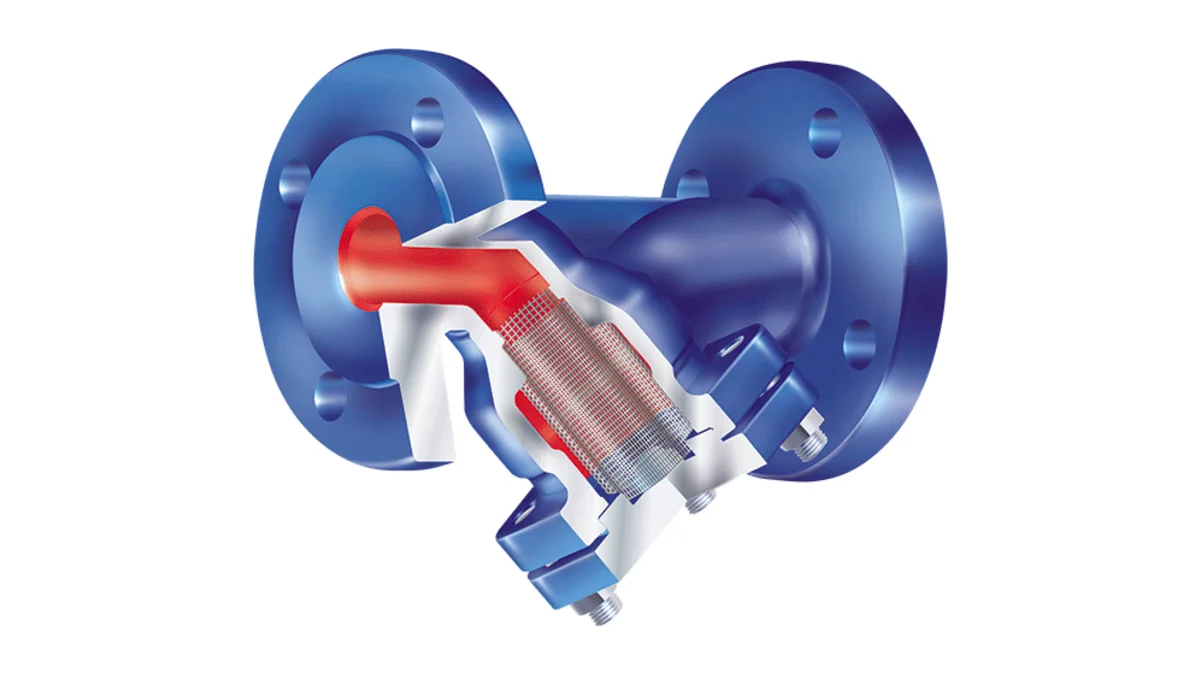
Water, steam, gas and oil carried in pipelines may contain foreign matter such as rust, scale, weld spatter and installation debris. When these particles reach valves, pumps, meters and steam traps, they cause blockages, wear on sealing surfaces and failures. The ARI Y-type strainer protects sensitive equipment by capturing solid particles in a screen element. ORFA supplies strainers from the German manufacturer ARI Armaturen to industrial plants.
This article covers the working principle, advantages, correct installation, specifications and applications of ARI strainers.
What Is an ARI Y-Type Strainer?
A strainer is an inline component that separates solid particles from the medium by means of a screen or mesh element. ARI strainers generally have a Y-pattern body. The medium enters the body and passes through the screen; particles remain inside the screen while clean medium continues down the line. Collected dirt is removed by opening the screen cover.
Advantages
- Equipment protection: Protects sensitive and expensive equipment such as meters, pumps, control valves, pressure reducing valves and steam traps from foreign matter.
- System efficiency: Prevents blockages and helps the system operate as designed.
- Easy maintenance: The screen can be removed for cleaning or replacement without taking the body out of the line.
- Wide range: Various body materials and screen mesh options suit different media, temperatures and pressures.
- Reliability: The robust body ensures long service life.
Correct Installation
- Flow direction: Install the strainer according to the arrow on the body.
- Liquid lines: On horizontal lines, install with the screen pocket pointing downwards so that dirt collects in the pocket.
- Steam and gas lines: On horizontal steam lines, it is recommended to install the screen pocket on its side (in the horizontal plane). This prevents condensate from collecting in the pocket and reduces the risk of water hammer.
- Location: Install immediately upstream of the equipment to be protected.
- Maintenance access: Leave enough clearance on the cover side to remove the screen.
Specifications
| Feature | Options (depending on series) |
|---|---|
| Body material | Grey cast iron (EN-JL1040), SG iron (EN-JS1049), cast steel (1.0619), cast stainless steel (1.4408) |
| Screen material | Stainless steel |
| Connection | Flanged, butt-weld ends |
| Nominal size | Y-pattern DN15 – DN300; straight-through pattern DN250 – DN500 |
| Pressure rating | PN6, PN16, PN25, PN40 |
| Maximum temperature | Grey cast iron 300 °C, SG iron 350 °C, stainless steel 400 °C, cast steel 450 °C |
| Screen mesh size | Various options according to application |
Pressure and temperature limits vary with model, size and material; please check the technical data of the specific product before selecting.
Applications
- Power generation
- Refineries and petrochemical plants
- Chemical industry
- Food plants
- Paper mills
- Steam systems
- Water distribution systems
- Compressed air systems
Frequently Asked Questions
How should a Y-strainer be installed on a steam line?
On horizontal steam lines, install the screen pocket in the horizontal plane (on its side). This prevents condensate from collecting in the pocket and reduces the risk of water hammer.
How do I know when a strainer needs cleaning?
When the pressure difference across the strainer increases, the screen is starting to block. Fitting pressure gauges at the inlet and outlet or following a regular inspection schedule is recommended.
Which equipment should be protected by a strainer?
Install strainers immediately upstream of dirt-sensitive equipment such as control valves, pressure reducing valves, steam traps, pumps, meters and solenoid valves.
Conclusion
ARI strainers are essential inline components that reduce failure risk and operating costs by protecting piping equipment from dirt. Choosing the right model, material, mesh size and installation position ensures trouble-free operation. For other options, explore our Y-type strainers product group.
Buy flanged Y-type strainers online
Browse products on or-fa.com, our export store, see prices in USD and order online.
Buy Online →Request a QuoteAsk on WhatsAppRelated product group
Y-Type Strainers →Technical support
Talk to our team to choose the right product.
+90 224 444 67 32[email protected]
Related Articles
Let’s choose the right product for your project
Buy from our online store or request a project-specific quotation.