
Boiler Bottom Blowdown Valve: Function, Operation and Correct Use
A boiler bottom blowdown valve discharges the sludge and sediment collecting at the lowest point of a steam boiler in short, fast openings, protecting the boiler and keeping heat transfer surfaces clean.
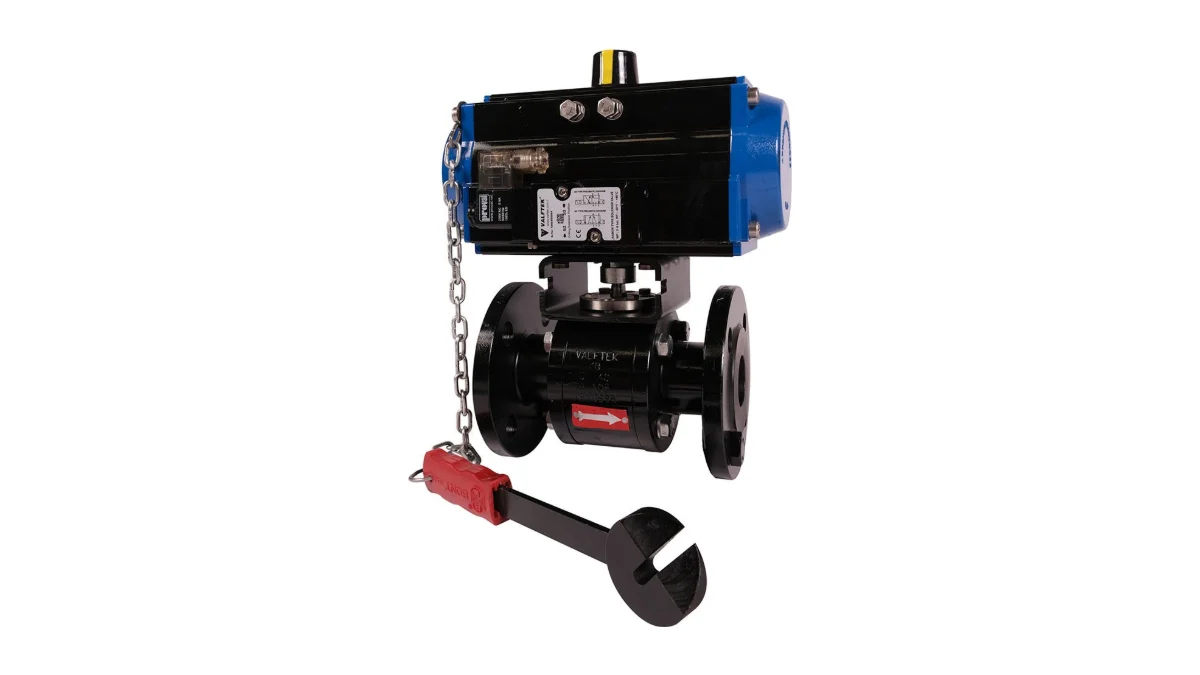
As water evaporates in a steam boiler, the substances carried in with the feedwater stay behind. Some remain dissolved, while insoluble matter and solids precipitated by water treatment gradually settle at the bottom of the boiler as sludge and sediment. A boiler bottom blowdown valve is the valve used to remove these deposits regularly from the lowest point of the boiler.
This article explains what the bottom blowdown valve does, how manual and automatic versions work, and how bottom blowdown should be carried out correctly.
What Is a Boiler Bottom Blowdown Valve?
The bottom blowdown valve is fitted to the blowdown outlet at the bottom of the boiler. When it opens at set intervals, boiler pressure drives the accumulated sludge and sediment out together with some boiler water. On manual valves the operator does this; on automatic versions a timer or the boiler control system opens and closes the valve according to a set programme.
Bottom blowdown is not the same as surface blowdown: surface blowdown controls the concentration of total dissolved solids (TDS) in the boiler water, while bottom blowdown removes solids that have settled out. In a well-run boiler house the two complement each other.
Why Is Bottom Blowdown Necessary?
- Protects heat transfer: Sludge on the boiler bottom and around heating surfaces impairs heat transfer and increases fuel consumption.
- Prevents local overheating: Deposits on heating surfaces can stop the metal from being cooled properly and cause thermal stress.
- Reduces corrosion risk: Areas under sludge are more prone to corrosion; regular removal lowers this risk.
- Extends boiler life: A clean boiler operates safely and efficiently for longer.
How an Automatic Bottom Blowdown Valve Works
An automatic bottom blowdown valve usually consists of a timer, an actuated ball valve and the control equipment that drives the actuator. The sequence is:
- Sediment build-up: Sludge and sediment collect at the bottom of the boiler during operation.
- Timing: At the preset interval the timer sends an opening signal to the actuator.
- Rapid opening: The actuator opens the ball valve quickly and fully; the sudden flow scours the settled sludge.
- Discharge: Boiler pressure pushes the sludge and sediment into the blowdown line.
- Closing: When the set blowdown time has elapsed, the valve closes automatically.
Correct Bottom Blowdown Practice
The effectiveness of bottom blowdown depends far more on how quickly and fully the valve opens than on how long it stays open. The scouring effect comes from the high-velocity flow in the first moments after opening. Therefore:
- Bottom blowdown should be short (typically a few seconds) with the valve fully open. Keeping it open longer does not remove significantly more sludge; it only wastes hot water and energy.
- Blowdown frequency and duration should be set according to feedwater quality, the water treatment programme and boiler load, as advised by the water treatment specialist or boiler manufacturer.
- Blowdown water is hot and under pressure; it must not be discharged directly to the drain but cooled and released safely through a suitable blowdown vessel.
- During manual blowdown, never leave an open valve unattended; automatic systems eliminate this risk.
Advantages of an Automatic Bottom Blowdown Valve
- Regular, repeatable blowdown: Every blowdown has the same duration and interval, independent of operator attention.
- Energy and water savings: Short, controlled openings lose less hot water than unnecessarily long manual blowdowns.
- Labour savings: No staff time is needed for manual blowdown.
- Safer operation: Operators need to work less near the hot, pressurised blowdown line.
Applications
Boiler bottom blowdown valves are found in almost every facility that runs steam boilers:
- Industrial plants in sectors such as food, textiles, chemicals and automotive
- Power plants
- Manufacturing sites using process steam
The valve’s pressure rating, temperature rating, material and end connections must be selected for the boiler’s operating pressure and blowdown outlet. Because saturated steam temperature rises with pressure, the valve’s temperature rating must cover the saturation temperature at the boiler’s operating pressure.
Frequently Asked Questions
What is the difference between bottom and surface blowdown?
Surface blowdown controls the concentration of total dissolved solids (TDS) in the boiler water and is usually continuous or controlled by conductivity measurement. Bottom blowdown removes sludge and sediment that has settled at the bottom of the boiler using short, rapid openings.
How long should a bottom blowdown valve stay open?
A full opening of a few seconds is normally sufficient. The scouring effect occurs in the first moments after opening; keeping the valve open longer only increases water and energy losses.
How often should bottom blowdown be carried out?
It depends on feedwater quality, the water treatment programme and boiler load. The correct interval should be set by the water treatment specialist or boiler manufacturer, and the automatic system’s timer programmed accordingly.
Can blowdown water go straight to the drain?
No. Blowdown water is at high temperature and pressure. It should be depressurised and cooled in a blowdown vessel before being discharged.
Conclusion
A boiler bottom blowdown valve removes sludge and sediment from the bottom of a steam boiler, protecting heat transfer, boiler safety and equipment life. Regular bottom blowdown with short, fast openings, especially when applied by an automatic system, makes boiler operation both safe and economical. Explore suitable valves and systems on our Boiler Surface and Bottom Blowdown Systems page, or contact the ORFA team for technical support.
Buy blowdown systems online
Browse products on or-fa.com, our export store, see prices in USD and order online.
Buy Online →Request a QuoteAsk on WhatsAppRelated product group
Boiler Surface and Bottom Blowdown Systems →Technical support
Talk to our team to choose the right product.
+90 224 444 67 32[email protected]
Related Articles
Let’s choose the right product for your project
Buy from our online store or request a project-specific quotation.