
Booster Set Selection: How to Choose the Right Booster Pump
A poorly chosen booster set leads to low pressure, high energy use and short equipment life. Select the right system step by step based on flow, pressure, water source and control type.
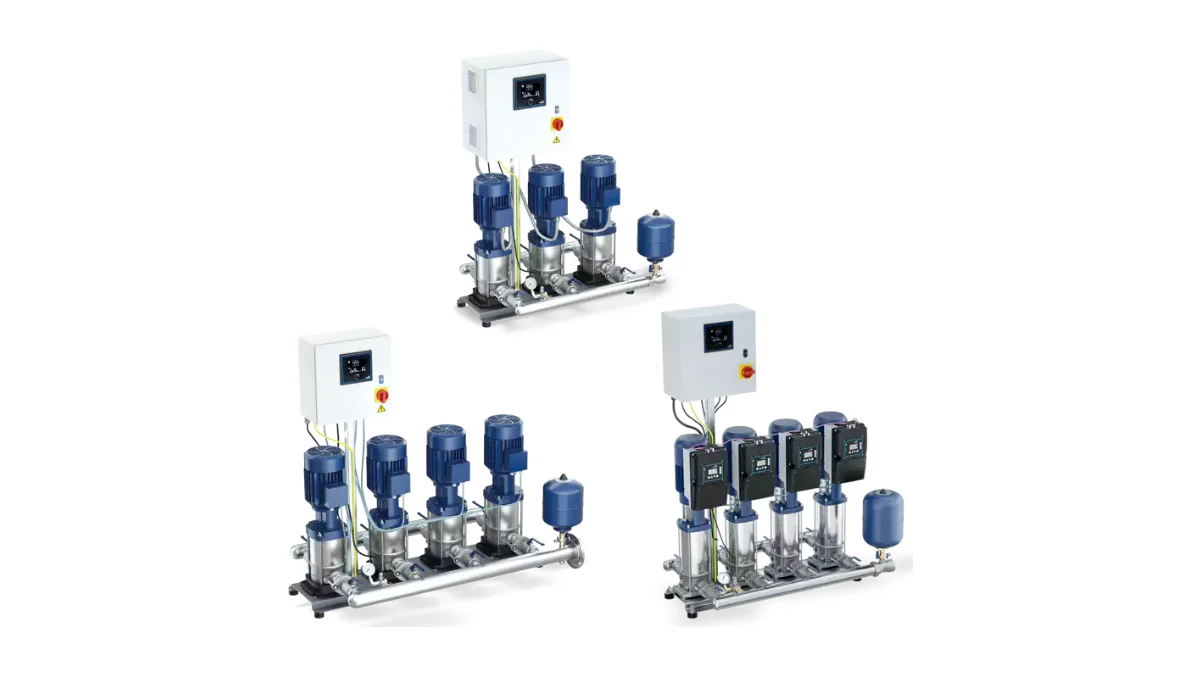
In homes, workplaces and industrial plants, water must reach every point of use at adequate pressure for both comfort and process efficiency. Where mains or tank pressure is insufficient, booster sets (also called hydrophores) meet this need. If booster set selection is not done correctly, however, the system may deliver too little pressure, the pumps may start and stop too often, energy consumption rises and equipment life is shortened.
This guide explains step by step what information to gather and which criteria to assess when choosing a booster set for your needs.
1. Determine the Water Demand (Flow Rate)
The first step is to determine the maximum amount of water the installation will need at the same time. Taps and mixers, appliances such as washing machines and dishwashers, and garden irrigation are taken into account. Since not all outlets are used simultaneously, the total is corrected with a simultaneity (diversity) factor. The result is the design flow, usually expressed in m³/h or L/min.
2. Calculate the Required Pressure
The pressure the booster set must provide has three components:
- Static height: The height between the booster set and the highest point of use. A 10 metre water column corresponds to about 1 bar; for a storey height of about 3 metres this means roughly 0.3 bar per floor.
- Pipe losses: Friction losses from pipe length, diameter, bends and valves.
- Residual pressure: The pressure required at the furthest and highest point of use for appliances to work properly.
3. Assess the Water Source and Suction Conditions
- Storage tank: The most common arrangement; the booster set is fed from a water tank.
- Well: Suction lift is limited for surface pumps (in practice usually 7-8 m). For deeper wells, filling a tank with a submersible pump is preferred.
- Mains: Direct suction from the mains is subject to local water authority rules; in most installations water is first collected in a tank.
The length and diameter of the suction line, and whether the pump is above the water (suction lift) or below it (flooded suction), also affect the selection.
4. Decide on the Number of Pumps and the Type
| Type | When is it suitable? |
|---|---|
| Single-pump booster set | Detached houses and small workplaces where demand is low and redundancy is not critical. |
| Multi-pump booster set | Apartment blocks, housing complexes, hotels, hospitals and plants where demand is high and variable and supply interruptions are unacceptable. |
| Cascade (on/off) control | Simple design and low initial cost; pressure fluctuates within a band. |
| Variable speed (frequency inverter) control | Constant pressure, energy savings at part load and quieter operation. |
5. Check the Pump Curve
The characteristic curve of the selected booster pump must deliver the required pressure at the calculated design flow. A duty point in the efficient region of the curve reduces energy consumption and wear. An oversized pump wastes energy and causes frequent starts and stops.
6. Size the Pressure Vessel
A diaphragm pressure vessel prevents the pump from running continuously for small draw-offs and limits the number of starts. Vessel volume is more critical in cascade-controlled systems; variable speed systems usually need a smaller vessel.
7. Protection, Materials and Service
- Dry-run protection: Protect the pump with a tank level float switch or pressure switch.
- Materials: For drinking water, stainless steel pump casings and manifolds provide long life.
- Service and spare parts: Spare parts availability and ease of service matter throughout the operating life.
- Total cost: Consider initial investment together with energy and maintenance costs.
Frequently Asked Questions
How many bar does an apartment building booster set need?
The required pressure is calculated from the number of floors (about 0.3 bar per floor), pipe losses and the residual pressure required at the top-floor outlet. There is therefore no single fixed value; the calculation must be made for each building.
Should I choose a single-pump or multi-pump booster set?
A single-pump set is sufficient where demand is low and short interruptions are acceptable. Multi-pump sets should be chosen for buildings with high, variable demand where redundancy matters.
Why does my booster pump start and stop too often?
The most common causes are loss of pre-charge pressure or a failed membrane in the pressure vessel, an undersized vessel and leaks in the installation. Frequent starting shortens motor and seal life.
Conclusion
Correct booster set selection relies on calculating flow and pressure accurately, assessing the water source and suction conditions and choosing the right number of pumps and control type. A booster set chosen this way runs efficiently, quietly and for a long time. Explore single and multi-pump options in our booster sets and hydrophores product group.
Buy booster sets online
Browse products on or-fa.com, our export store, see prices in USD and order online.
Buy Online →Request a QuoteAsk on WhatsAppRelated product group
Booster Sets and Hydrophores →Technical support
Talk to our team to choose the right product.
+90 224 444 67 32[email protected]
Related Articles
Let’s choose the right product for your project
Buy from our online store or request a project-specific quotation.