
Flash Steam System: Recovering Energy from Condensate
When hot, high-pressure condensate passes to a lower pressure, part of it re-evaporates. A flash steam system recovers this steam, saving fuel and water.
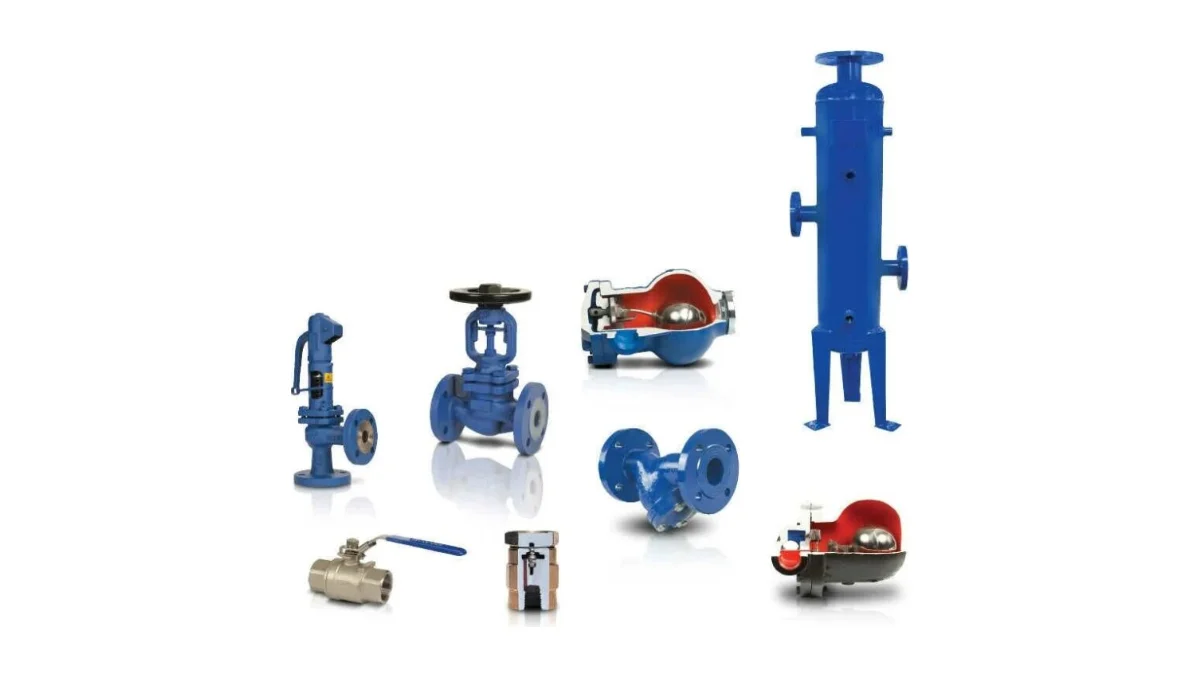
Industrial plants are energy-intensive, so energy efficiency is vital for both competitiveness and environmental responsibility. A flash steam system is an effective way to recover a significant share of the energy that is usually wasted in steam-using plants.
This article explains how flash steam forms, how a flash steam system works, the benefits it brings and where it is used.
What Is Flash Steam?
Condensate leaving steam-heated equipment is at the saturation temperature for that pressure. At 10 bar(g), for example, condensate is at about 184 °C. When it passes through a steam trap into a lower-pressure line, it carries more energy than water can hold at the lower pressure. The surplus energy causes part of the condensate to re-evaporate instantly. The steam produced in this way is called flash steam.
The proportion of flash steam is calculated as follows:
- Flash steam fraction = (h1 − h2) / hfg2
Here h1 is the enthalpy of the high-pressure condensate, h2 is the enthalpy of saturated water at the lower pressure and hfg2 is the latent heat of evaporation at the lower pressure. When condensate at 10 bar(g) is discharged to atmospheric pressure, about 16% of its mass turns into flash steam. This steam contains a large share of the energy carried by the condensate.
How Does a Flash Steam System Work?
- Condensate collection: Hot condensate from high-pressure equipment is routed through steam traps to a flash vessel.
- Pressure drop and evaporation: In the flash vessel, held at a lower pressure, part of the condensate turns into flash steam.
- Separation: Steam and the remaining condensate are separated in the vessel. Steam leaves from the top into the low-pressure steam line, while condensate leaves from the bottom through a steam trap (usually a float trap) into the condensate return line.
- Reuse: The low-pressure steam is used for applications such as air heater batteries, feed tank heating or preheating. The remaining condensate is returned to the boiler, saving water and energy.
Benefits of a Flash Steam System
- Energy recovery: Energy that would otherwise escape to atmosphere with the condensate is recovered, covering part of the plant’s energy demand and cutting fuel costs.
- Water savings: Recovering flash steam and condensate reduces make-up water demand and water treatment costs.
- Sustainability: Lower fuel consumption reduces emissions and environmental impact.
- Safer workplace: Less steam plume escapes from condensate tank vent pipes.
- Low maintenance: Flash vessels have few moving parts and are simple, long-lasting systems.
Applications
- Power plants: Energy recovery in condensate systems.
- Chemical plants: Processes that produce large amounts of hot condensate.
- Oil refineries: Steam systems with high condensate loads.
- Food and beverage industry: Recovering energy from condensate produced by sterilisation, cooking and cleaning processes.
- Textile industry: Steam-intensive processes such as dyeing and drying.
- Pulp and paper industry: Steam-intensive drying processes.
Frequently Asked Questions
What is the difference between flash steam and live steam?
Live steam is generated directly in the boiler. Flash steam forms when hot condensate re-evaporates on passing to a lower pressure; as steam, it is identical to live steam at the same pressure.
How much flash steam can be recovered?
It depends on the initial condensate pressure and the flash vessel pressure. For example, when condensate at 10 bar(g) is discharged to atmospheric pressure, about 16% of its mass turns into flash steam. The higher the flash vessel pressure, the lower this proportion.
Which plants are suitable for a flash steam system?
Plants that use high-pressure steam, produce large and steady amounts of condensate and also have a demand for low-pressure steam.
Conclusion
A flash steam system recovers the energy in hot condensate, reducing fuel and water consumption in a sustainable, economical way. The ORFA Endüstriyel Mamüller San. ve Tic. A.Ş. team provides technical support in choosing the right equipment for your flash steam system. For the steam traps and condensate equipment used in flash steam systems, explore our Steam Traps product group.
Buy steam traps online
Browse products on or-fa.com, our export store, see prices in USD and order online.
Buy Online →Request a QuoteAsk on WhatsAppRelated product group
Steam Traps →Technical support
Talk to our team to choose the right product.
+90 224 444 67 32[email protected]
Related Articles
Let’s choose the right product for your project
Buy from our online store or request a project-specific quotation.