
Full Lift Safety Valve: Operating Principle, Selection and Installation
Learn the definition of full lift safety valves, how they differ from proportional valves, their advantages, selection criteria and correct installation rules.
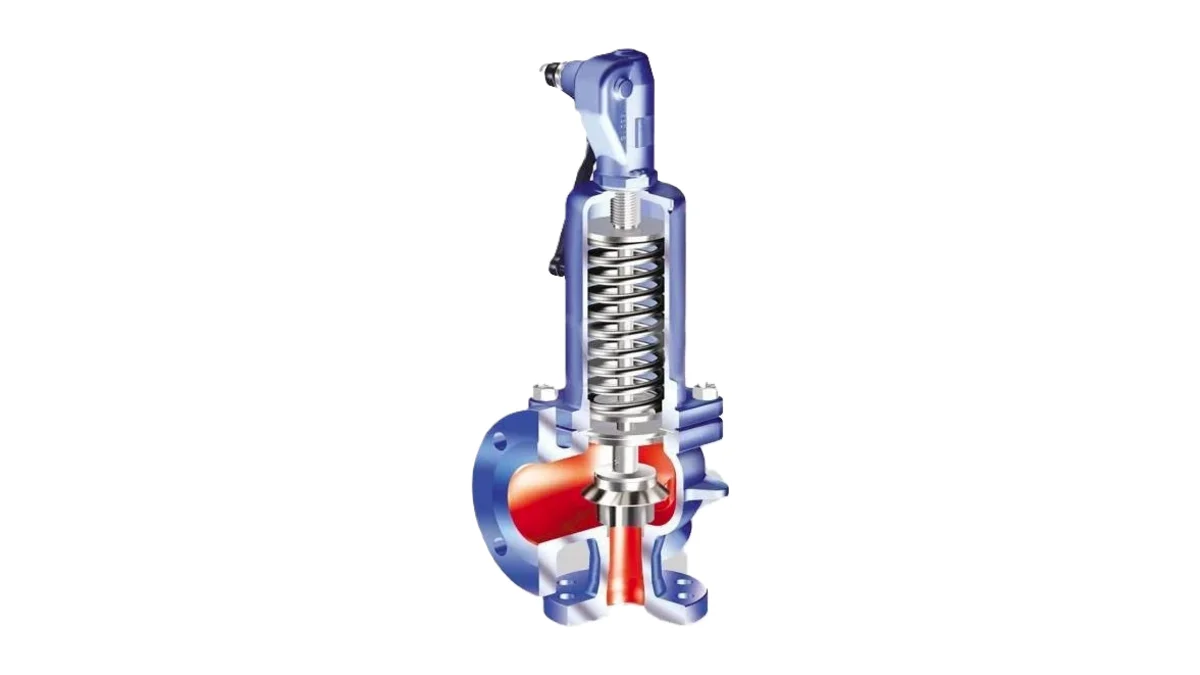
Steam boilers, pressure vessels and process lines can exceed their allowable pressure because of a fault, control failure or an external heat source. In that case safety valves are the last line of defence. A full lift safety valve is a type of safety valve that, once set pressure is reached, snaps open with only a small pressure rise to its full stroke (full lift), thereby providing high relieving capacity.
This article explains the definition of a full lift valve, how it differs from proportional and normal lift valves, and what to consider in selection and installation.
What Is a Full Lift Safety Valve?
A safety valve consists of a disc pressed onto the seat by a spring. When the force of system pressure on the disc exceeds the spring force, the disc lifts and the medium is discharged. When pressure falls somewhat below set pressure (blowdown), the valve recloses.
According to the definition in the German AD 2000-Merkblatt A2 and the former TRD 421 rules, full lift (Vollhub) safety valves, after starting to open, snap open within a pressure rise of no more than 5% to the full lift limited by design. The proportional movement before the snap opening must not exceed 20% of the total lift. This behaviour is produced by the special lifting ring geometry around the disc: once flow starts, the effective area under the disc increases and the disc is pushed up quickly.
Comparison of Lift Types
| Type | Opening behaviour | Typical use |
|---|---|---|
| Full lift | After opening, snaps to full lift within a pressure rise of no more than 5% | Steam boilers, steam and gas lines, systems needing high relieving capacity |
| Normal lift | Reaches the required lift within a pressure rise of no more than 10% | General-purpose applications |
| Proportional lift | Opens gradually as pressure rises | Mainly liquids and applications with variable relief flow |
Advantages
- High relieving capacity: Thanks to the full lift, more flow can be discharged for the same nominal size, so the required capacity can be met with a smaller valve.
- Fast response: Snap opening at set pressure brings pressure under control quickly.
- Clear opening and closing: Distinct opening and closing behaviour reduces wear on seating surfaces from throttling.
- Reliable design: The simple spring-loaded design works reliably for many years with proper maintenance.
Technical Features and Options
- Connection: Usually flanged inlet and outlet; the outlet is larger than the inlet to allow free discharge.
- Nominal size: Approximately DN15 – DN150 and above, depending on model.
- Pressure rating: PN16, PN25, PN40 or higher depending on system pressure.
- Body material: Grey cast iron, ductile iron, cast steel or stainless steel depending on temperature and medium.
- Bonnet/cap types: With lifting lever (open or gastight) or gastight cap without lever; steam boilers usually require a lifting lever.
- Certification: In pressure equipment applications the valve must comply with and be certified to the relevant standards and directives (e.g. EN ISO 4126-1, PED).
Selection Criteria
- Set pressure: Determined by the maximum allowable pressure of the protected equipment.
- Required relieving flow: Calculated for the worst case, such as full boiler output or a failed pressure reducing valve.
- Medium and temperature: Material and type are selected according to whether the medium is steam, gas or liquid and its temperature.
- Sizing: The valve is sized to the relevant standard (e.g. EN ISO 4126-1) using the manufacturer’s certified discharge coefficient.
- Back pressure: Back pressure in the discharge line must not exceed the limit allowed for the valve type.
Installation Rules
- Install the valve upright and as close as possible to the protected equipment.
- Keep the inlet line short; as good practice, inlet pressure loss should not exceed 3% of set pressure, otherwise the valve may chatter.
- Do not fit an isolating valve between the safety valve and the protected equipment (except special arrangements permitted by regulations).
- Support the discharge line so it does not load the valve, route it to a safe location and drain it at its lowest point.
Applications
- Power generation: Steam boilers, superheaters and pressurised systems
- Refineries and petrochemical plants: Process vessels and gas lines
- Chemical industry: Reactors and pressure vessels (with materials suited to the medium)
- Food plants: Steam and compressed air systems
- Paper mills: Steam distribution systems and drying cylinders
Frequently Asked Questions
What is the difference between full lift and proportional lift safety valves?
A full lift valve snaps to full lift within a pressure rise of no more than 5% after opening, while a proportional valve opens gradually as pressure rises. Full lift valves are preferred for steam and gas applications needing high relieving capacity, proportional valves mainly for liquids.
How often should a safety valve be tested?
Test and inspection intervals depend on national regulations, operating conditions and manufacturer recommendations. On valves with a lifting lever, periodic manual lifting is a practical way to check that the valve is not stuck.
Can a safety valve be used instead of a pressure reducing valve?
No. A safety valve is a protective device that acts only in an overpressure situation; pressure reducing valves must be used for continuous pressure control.
Conclusion
With their sudden, full opening behaviour, full lift safety valves offer high relieving capacity and play a critical role in the safety of pressurised systems, especially steam boilers. Correct set pressure, correct sizing and installation in line with the rules are essential for the safety of both equipment and personnel. Explore other safety valve types on our Safety Valves page.
Buy full lift safety valves online
Browse products on or-fa.com, our export store, see prices in USD and order online.
Buy Online →Request a QuoteAsk on WhatsAppRelated product group
Safety Valves →Technical support
Talk to our team to choose the right product.
+90 224 444 67 32[email protected]
Related Articles
Let’s choose the right product for your project
Buy from our online store or request a project-specific quotation.