
Steam Main Air Vents: Venting Air from Steam Lines and Correct Installation
Air trapped in steam mains slows heat-up and causes corrosion. See how thermostatic air vents fitted at the end of the main work and how to install them correctly.
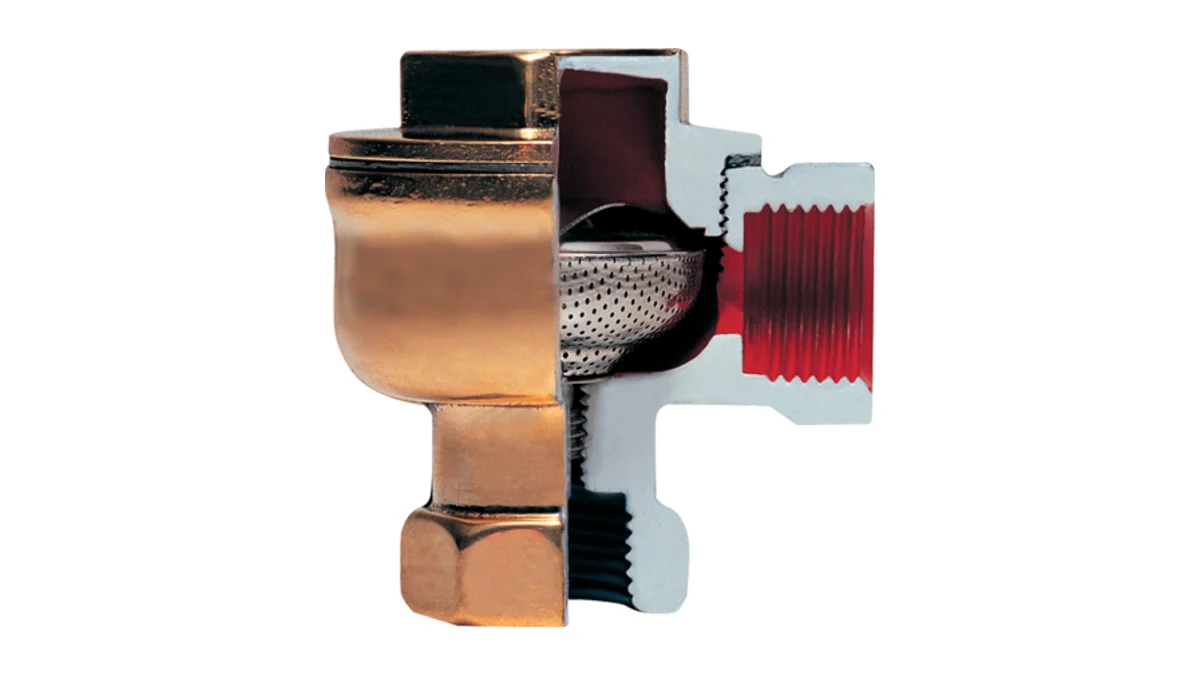
In industrial steam systems, air is an invisible but costly problem: it delays heat-up, lowers steam temperature and accelerates corrosion. A steam main air vent automatically discharges the air that collects at the end of steam mains, so that the line fills with steam quickly and at full temperature.
This article covers where the air in steam mains comes from, how an air vent works on the line, the features of a model that can also serve as a steam trap in low-pressure applications, and what to watch for during installation.
Where Does the Air in Steam Mains Come From?
When a steam main and its equipment are first put into service, the system is completely full of air. When the steam supply is shut off, the steam in the line condenses, the internal pressure drops and air is drawn back in. Gases dissolved in the boiler feedwater are also carried into the line with the steam. Incoming steam pushes this air ahead of it towards the end of the line.
Problems Caused by Air
- Corrosion: Oxygen and carbon dioxide dissolve in the condensate, return with it to the boiler and cause corrosion in pipes, valves and other equipment, shortening system life and raising maintenance costs.
- Lower temperature: A steam-air mixture is cooler than pure steam at the same pressure, which reduces heat transfer and wastes energy.
- Longer heat-up: Air trapped at the end of the line slows the advance of the steam and lengthens start-up.
How Does a Steam Main Air Vent Work?
Automatic thermostatic air vents are normally used on steam mains. The vent is fitted at the end of the main and works as follows:
- When cold it is open and discharges cold air and wet steam-air mixture.
- As the mixture approaches steam temperature, the thermostatic element expands and the vent closes.
- When air collects again, the temperature falls and the vent reopens.
Use as a Steam Trap at Low Pressure
The steam main air vent supplied by ORFA is also a thermostatic steam trap and is particularly suitable for low-pressure applications:
- Besides automatic air venting, it discharges condensate intermittently or continuously depending on the load.
- It can be used on steam irons in the garment and textile industry, steam radiators and low-pressure steam units.
- Its difference from the thermostatic steam trap of the same series is its angle-pattern body.
Materials and Technical Data
| Feature | Value |
|---|---|
| Body and cover | Brass |
| Internals | AISI 304 stainless steel |
| Connection | Threaded |
| Nominal size | DN15 (1/2″) |
| Maximum pressure | 10 bar |
| Maximum operating temperature | 150 °C |
Installation and Maintenance
- End of main: Fit the vent at the end of the main where air collects, above the condensate drain point (drain pocket and steam trap).
- Cooling leg: Connect it with a short, uninsulated pipe so the air can cool and be sensed.
- Isolating valve: Install a suitable isolating valve upstream so maintenance and replacement can be done safely.
- Periodic checks: If heat-up takes longer or the temperature at the end of the main is low, check that the vent is working.
Frequently Asked Questions
Where should a steam main air vent be installed?
Where air collects: at the end of the steam main and at the point of equipment furthest from the steam inlet. It is usually placed above the drain point at the end of the main.
Can this device be used instead of a steam trap?
The model supplied by ORFA also works as a thermostatic steam trap and can drain condensate in low-pressure applications such as irons and radiators. For high-pressure duties or large condensate loads, a suitable steam trap type should be selected.
What happens if air is not vented?
Heat-up takes longer, steam temperature drops, heat transfer falls and dissolved gases returning to the boiler with the condensate accelerate corrosion.
Conclusion
Steam main air vents automatically remove air from steam lines, shortening start-up, improving heat transfer and reducing corrosion risk. Correctly located and installed, they work reliably for many years. See all models in our air vents for steam circuits product group.
Buy steam air vents online
Browse products on or-fa.com, our export store, see prices in USD and order online.
Buy Online →Request a QuoteAsk on WhatsAppRelated product group
Air Vents for Steam Circuits →Technical support
Talk to our team to choose the right product.
+90 224 444 67 32[email protected]
Related Articles
Let’s choose the right product for your project
Buy from our online store or request a project-specific quotation.