
Steam Solenoid Valves: Working Principle, Selection and Installation
Steam solenoid valves open and close steam flow quickly and automatically on an electrical signal. Learn how they work, how to choose seals and body materials, and how to install them for a long life.
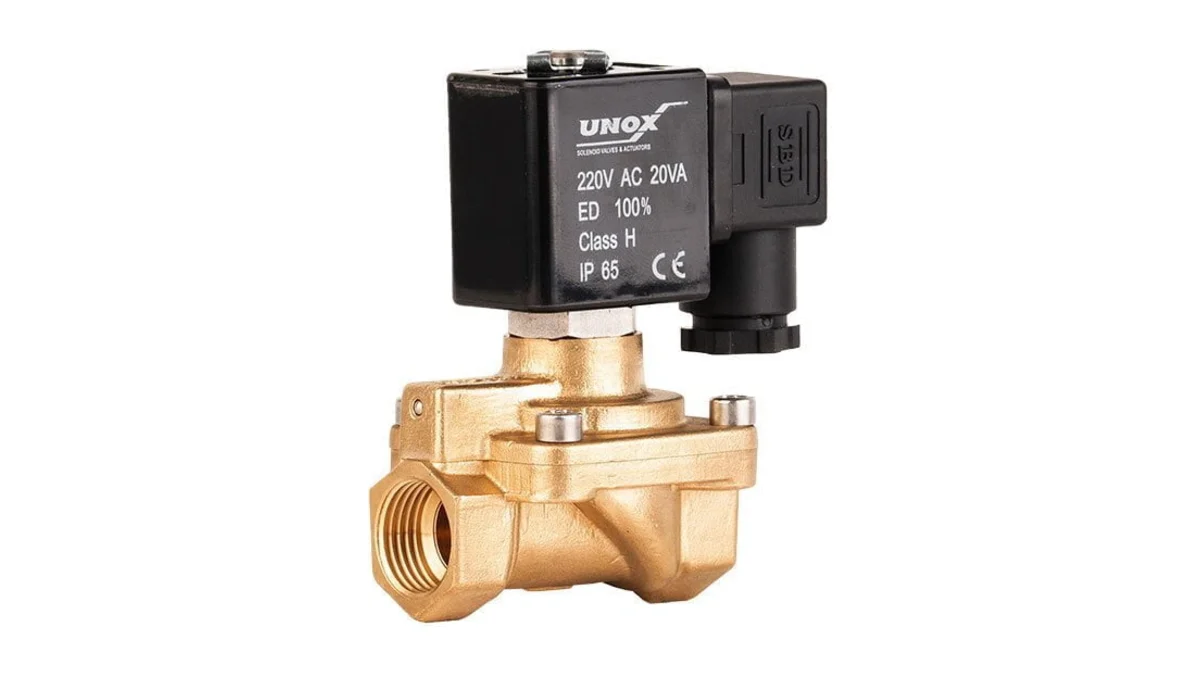
In industrial plants, steam is the main energy carrier for many processes such as heating, cooking, sterilisation and pressing. Running these processes efficiently and safely depends on opening and closing the steam flow quickly and at the right moment. A steam solenoid valve is an electromechanical valve built from high-temperature materials that controls steam flow automatically on an electrical signal.
This article explains how steam solenoid valves work, how they differ from general purpose solenoid valves, the selection criteria, applications and installation essentials.
What Is a Steam Solenoid Valve?
A steam solenoid valve opens and closes the flow of high-temperature media such as steam and hot water by means of a piston mechanism actuated by a solenoid coil (electromagnet). Unlike general purpose solenoid valves, its body, piston and seals are made from materials that withstand steam temperature and pressure, typically with PTFE seals.
Working Principle
- Electrical signal: Voltage is applied to the coil.
- Magnetic field: The coil creates a magnetic field that lifts the plunger (core).
- Pilot and piston movement: In pilot-operated valves, the plunger first opens a small pilot orifice; the pressure above the piston is relieved and line pressure lifts the piston, opening the main orifice.
- Flow: Steam passes through the valve to the point of use.
- Return: When power is removed, the spring pushes the plunger back, the pilot closes and the piston shuts the main orifice (normally closed type).
Pilot-operated valves need a certain minimum differential pressure between inlet and outlet to work properly. Where differential pressure is close to zero, direct-acting or assisted-lift models should be selected.
Advantages
- Fast, automatic control: Opens and closes instantly on an electrical signal.
- Automation-ready: Easily integrated with thermostats, timers or PLCs.
- Energy savings: Steam is supplied only when needed, avoiding unnecessary consumption.
- Reliability: High-temperature materials ensure a long service life.
- Versatility: Different connection sizes, body and seal materials suit a range of applications.
Applications
- Heating systems, steam supply to heat exchangers and heater batteries
- Textile industry: dyeing machines, ironing and pressing units
- Food and beverage industry: cooking kettles, sterilisation and cleaning systems
- Industrial laundries and dry-cleaning machines
- Autoclaves and steam sterilisers
- Automation around steam boilers
Selection Criteria
| Criterion | Description |
|---|---|
| Connection | Usually threaded; size chosen according to pipe size and required capacity. |
| Pressure | Body pressure rating and the valve’s operating pressure range (minimum and maximum differential pressure) must suit line conditions. |
| Temperature and seal | PTFE is the most common seal for steam; maximum temperature depends on the model and must exceed the saturated steam temperature. For example, the CEME 9013–9019 and Tork S2083 pilot-operated models in the ORFA range use PTFE seals and are rated for fluid temperatures up to 180 °C and 1–10 bar differential pressure; 180 °C corresponds to saturated steam at about 9 bar(g). |
| Body material | Brass or stainless steel; stainless is preferred where hygiene or corrosion resistance is required. |
| Function | Normally closed (NC) is the most common; normally open (NO) versions are also available. |
| Coil | Voltage (e.g. 220 V AC or 24 V DC), protection class (typically IP65) and a coil class suitable for high temperatures. |
Frequently Asked Questions
Can a general purpose solenoid valve be used on a steam line?
No. The NBR or EPDM seals and coils of general purpose valves are not designed for steam temperatures and will soon start leaking. Steam lines require steam solenoid valves with PTFE seals and high-temperature coils.
Why does a steam solenoid valve not close fully?
The most common causes are a pilot orifice or seat blocked by dirt, a worn seal and water hammer from condensate collecting upstream of the valve. A strainer and a steam trap upstream largely prevent these problems.
Does a pilot-operated steam solenoid valve work at low pressure?
Pilot-operated valves use line pressure to lift the piston and need a minimum differential pressure. For applications with very low differential pressure, choose a direct-acting or assisted-lift valve.
Conclusion
Steam solenoid valves control steam flow quickly, automatically and reliably, contributing to process efficiency and energy savings. A valve selected for the right pressure range, seal material and coil, and protected by a strainer and steam trap, will run trouble-free for many years. Browse the models in our steam solenoid valves product group, or contact ORFA at +90 224 444 67 32 or [email protected] for selection support.
Buy steam solenoid valves online
Browse products on or-fa.com, our export store, see prices in USD and order online.
Buy Online →Request a QuoteAsk on WhatsAppRelated product group
Steam Solenoid Valves →Technical support
Talk to our team to choose the right product.
+90 224 444 67 32[email protected]
Related Articles
Let’s choose the right product for your project
Buy from our online store or request a project-specific quotation.