
What Is a Steam Trap? Function, Operating Principle and Types
A plain-language summary of what a steam trap does in a steam system, why it is needed, and the basic operating principles of mechanical, thermostatic and thermodynamic traps.
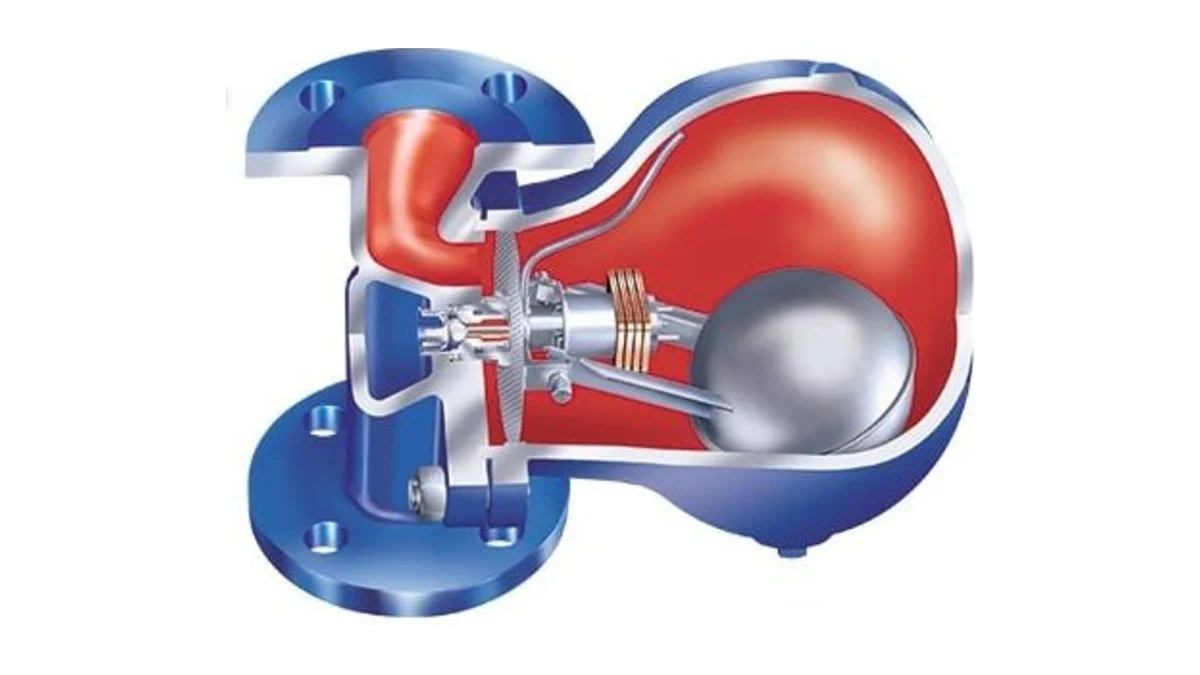
In industrial plants, steam is a powerful energy carrier used for heating, drying, sterilisation and many other processes. As steam gives up its heat it condenses into water, known as condensate. So, what is a steam trap? A steam trap is an automatic valve that discharges condensate and air from a steam system while preventing steam from escaping.
This article explains, at a basic level, what a steam trap does, why it is needed, how it works and the main types.
What Does a Steam Trap Do?
Condensate forms continuously in steam lines and steam-using equipment. If it is not removed, it covers heating surfaces, collects at the bottom of pipes and causes a range of problems. A steam trap discharges this condensate automatically, delivering these benefits:
- Energy efficiency: Prevents heating surfaces from waterlogging and stops live steam escaping, so steam energy is used efficiently.
- Less corrosion: Condensate combined with air, especially dissolved oxygen and carbon dioxide, accelerates corrosion. Removing condensate and air reduces this risk.
- Equipment protection: Prevents condensate from accumulating in equipment and reduces the risk of failure.
- Process safety: Reduces the risk of water hammer caused by condensate in the lines being picked up by the steam.
How Does a Steam Trap Work?
Every steam trap has a mechanism that can tell steam and condensate apart. Steam traps fall into three main groups according to the physical property used for this:
| Group | Difference it detects | Example types |
|---|---|---|
| Mechanical | Density difference between steam and condensate | Float, inverted bucket |
| Thermostatic | Temperature difference between steam and condensate | Balanced pressure (capsule), bimetallic |
| Thermodynamic | Difference in flow behaviour (velocity and pressure) of steam and condensate | Disc thermodynamic |
Types of Steam Traps
Float steam traps
Condensate collecting in the body lifts the float and opens the discharge valve. They discharge condensate continuously as it forms and are unaffected by sudden and wide pressure changes, making them ideal for temperature-controlled systems.
Thermostatic steam traps
They respond to condensate temperature, opening when condensate cools below saturation temperature and closing when steam arrives. They make some use of the sensible heat in condensate and vent air well.
Thermodynamic steam traps
Incoming condensate lifts the disc and is discharged. As hot condensate passes to the lower-pressure outlet, flash steam forms; its high-velocity flow under the disc lowers the pressure there, while steam filling the chamber above the disc presses it onto the seat and closes the trap. They stand out for their compact, robust construction.
Where Are Steam Traps Used?
- Drain points and ends of steam mains
- Heat exchangers, heater batteries and tanks
- Drying cylinders, presses and irons
- Tracer lines
- Sterilisers and autoclaves
Frequently Asked Questions
What happens without a steam trap?
Condensate builds up on heating surfaces and in pipes; heat transfer falls and the risk of water hammer and corrosion rises. A valve left open to drain condensate would also pass live steam, causing serious energy loss.
Which steam trap type is used most?
There is no single right type. Thermodynamic traps are common for mains drainage, float traps for heat exchangers and thermostatic traps for tracer lines; selection should always be based on the application.
Do steam traps also remove air?
Many do. Thermostatic traps vent air well, and float traps usually include a thermostatic air vent. Where large amounts of air collect, a separate air vent may also be used.
Conclusion
Steam traps are essential components for using steam efficiently and safely. By discharging condensate and air while holding back steam, they save energy, protect equipment and improve process safety. Browse all trap types in our steam traps product group, or ask the ORFA technical team for help choosing the right one.
Buy steam traps online
Browse products on or-fa.com, our export store, see prices in USD and order online.
Buy Online →Request a QuoteAsk on WhatsAppRelated product group
Steam Traps →Technical support
Talk to our team to choose the right product.
+90 224 444 67 32[email protected]
Related Articles
Let’s choose the right product for your project
Buy from our online store or request a project-specific quotation.