
What Is an Actuator? Working Principle, Types and Applications
An actuator converts electrical, pneumatic or hydraulic energy into mechanical motion. This guide covers how actuators work, the main types and how to choose the right one.
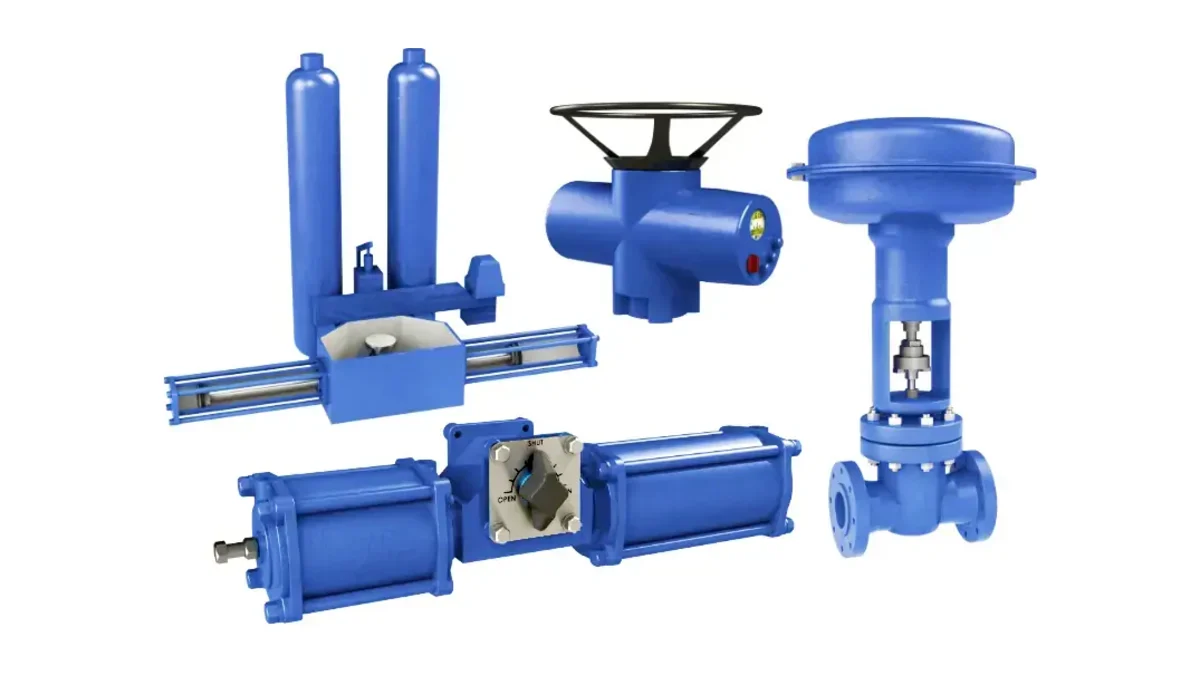
Industrial automation makes production processes more efficient, precise and safe, and actuators are the muscle that does the physical work in the field. So, what is an actuator? In short, it is a device that converts energy into mechanical motion in response to a control signal, performing tasks that range from opening and closing a valve to moving a machine axis.
This article explains how actuators work, how they are classified by energy source and type of motion, where they are used and what to consider when selecting one.
What Is an Actuator?
An actuator is a device that produces mechanical motion using an energy source such as electricity, compressed air or pressurised fluid (hydraulics). A control system (a PLC, thermostat, pressure switch, control panel, etc.) makes the decision, and the actuator turns that decision into physical movement, such as opening or closing a valve, positioning a damper or guiding a robot arm.
How Actuators Work
Actuators operate on different principles depending on their energy source:
- Electric actuators: Generate motion through an electric motor and gear train (or a solenoid). They offer precise position control and need no compressed air supply.
- Pneumatic actuators: Use compressed air to drive a piston or vane mechanism. They are fast, simple and robust.
- Hydraulic actuators: Move pistons with pressurised fluid, usually hydraulic oil. They deliver very high force and torque from a compact unit.
Types of Actuators
Actuators are classified by two main criteria: the type of motion they produce and the energy source they use.
By Type of Motion
- Linear actuators: Produce back-and-forth motion. They are used where the valve stem moves axially, as in gate, globe and control valves.
- Rotary actuators: Produce rotational motion. They are common on quarter-turn (90°) valves such as ball and butterfly valves.
By Energy Source
| Type | Energy source | Key feature | Typical use |
|---|---|---|---|
| Electric | Electricity | Precise positioning, easy integration | Plants without compressed air, modulating control |
| Pneumatic | Compressed air | Fast operation, simple and durable design | Process valves, fast on/off duty |
| Hydraulic | Pressurised oil | Very high force and torque | Large valves, heavy machinery |
Where Are Actuators Used?
Actuators are found in almost every area of industrial automation:
- Valve control (ball, butterfly and globe valves)
- Damper control in HVAC systems
- Robotics and production lines
- Packaging machines
- CNC machine tools
- Flight control surfaces in aviation
How to Choose an Actuator
- Torque or force requirement: The actuator must meet the demand of the valve or mechanism under its most severe operating condition, with a safety margin.
- Available utilities: If the plant has compressed air, a pneumatic actuator is often practical; otherwise an electric actuator is usually the better fit.
- Control mode: Decide whether simple on/off operation is enough or modulating control at intermediate positions is needed.
- Fail-safe behaviour: Whether the valve must open, close or stay in place on loss of power or air directly affects the choice.
- Ambient conditions: Temperature, humidity, dust and hazardous areas must be considered when selecting the housing and protection rating.
ORFA Actuator Solutions
ORFA Endüstriyel Mamüller San. ve Tic. A.Ş. supplies a range of actuator types and models for different applications and requirements. Our team provides technical support on choosing the right actuator and helps you identify the most suitable solution for your application.
Frequently Asked Questions
What does an actuator do?
An actuator converts energy into mechanical motion according to a signal from the control system. Its most common industrial use is opening, closing and positioning valves automatically.
What is the difference between electric and pneumatic actuators?
An electric actuator is driven by an electric motor and offers precise positioning without compressed air. A pneumatic actuator runs on compressed air; it is faster and simpler, but requires a compressed air supply on site.
Which valves use rotary actuators?
Rotary actuators are used on quarter-turn valves that open and close with a 90° rotation, such as ball valves and butterfly valves.
Conclusion
Actuators are one of the core components of modern industrial automation. Selecting the right type and size for the application directly improves the efficiency, accuracy and safety of your processes. To explore electric and pneumatic actuators and valve gearboxes, visit our Actuators and Gear Operators product group.
Buy actuators and gear operators online
Browse products on or-fa.com, our export store, see prices in USD and order online.
Buy Online →Request a QuoteAsk on WhatsAppRelated product group
Actuators and Gear Operators →Technical support
Talk to our team to choose the right product.
+90 224 444 67 32[email protected]
Related Articles
Let’s choose the right product for your project
Buy from our online store or request a project-specific quotation.