
Balancing Valves

A balancing valve sets or holds the flow measurably so that each branch in heating and cooling circuits receives its design flow.
It is used to balance riser, floor and terminal unit circuits. The product range includes threaded static balancing valves (PN25, 1/2″–2″), flanged static valves (PN16, DN100–DN300) and cartridge dynamic balancing valves (PN16, DN65–DN300).
Main Applications
- Heating riser and floor circuits
- Chilled water distribution lines
- Fan coil and AHU circuits
- Heat exchanger secondary circuits
- District heating substations
- Flow balancing of existing systems
Technical Data
| Types | Static (threaded and flanged), dynamic (cartridge) (product range) |
|---|---|
| Threaded static | 1/2″, 3/4″, 1″, 1 1/4″, 1 1/2″, 2″; PN25 (product name) |
| Flanged static | DN100 – DN300; PN16 (product name) |
| Dynamic | DN65 – DN300; PN16, cartridge (product name) |
| Measurement | Test points (static types, depending on model) |
| Pre-setting | By handwheel (static types, depending on model) |
| Fluid | Heating and chilled water, glycol water (depending on model) |
| Temperature | Depending on model |
Material Options
| Part | Static balancing valve | Dynamic balancing valve | Combined (pressure-independent) valve |
|---|---|---|---|
| Operation | Manual pre-set, set by measurement | Cartridge holds the flow | Flow setting + control valve |
| Connection | Threaded or flanged | Flanged (cartridge) | Depending on model |
| Pressure class | PN25 threaded / PN16 flanged | PN16 | Depending on model |
| Typical use | Constant-flow circuits | Branches with varying pressure | Motorised terminal control |
Which material? A static valve creates a fixed resistance after setting, while a dynamic valve holds the flow even as differential pressure changes. Pressure classes are taken from product names; temperature and flow ranges are confirmed per model.
Advantages
Balanced Distribution
- Design flow to each branch
Energy Saving
- Pump and boiler efficiency
Measurable Setting
- Test points (static)
Wide Size Range
- From 1/2″ to DN300
Construction and Design Features
- Body with setting cone or cartridge
- Pre-setting handwheel (static)
- Test points (depending on model)
- Threaded or flanged connection
Send the circuit flow, size, pressure class and type; we will confirm a suitable balancing valve from stock.
How to Choose?
- Size and connectionChoose line size and threaded or flanged connection.
- Pressure classChoose PN16 or PN25 for system pressure.
- Fluid and temperatureState heating, chilled or glycol water.
- Choose the typeStatic for constant flow, dynamic where pressure varies.
Complementary Products
Why ORFA?
Types of Balancing Valves

Dynamic Balancing Valves
Dynamic balancing valves keep the flow constant regardless of pressure changes in the system.
Details →
Combined Balancing Valves
Combined balancing valves bring balancing and control functions together in one body.
Details →
Static Balancing Valves
Static balancing valves set the flow in heating and cooling circuits to a manually adjusted value.
Details →Other HVAC Valves

Diaphragm Safety Valves
Diaphragm safety valves open when the set pressure is exceeded and protect closed heating systems against overpressure.
Details →
Linear Valves
Linear valves are two-way or three-way globe type HVAC control valves used together with an actuator.
Details →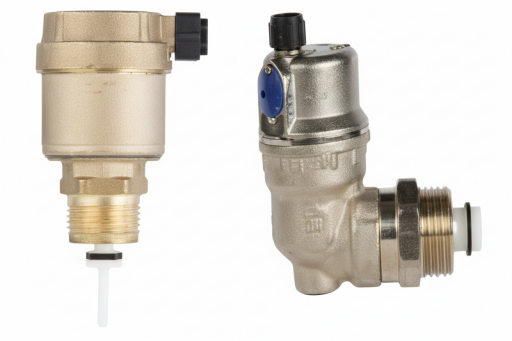
Automatic Air Vents
Automatic air vents release air trapped in heating and cooling installations automatically by means of a float mechanism.
Details →
Radiator Valves
Radiator valves are fitted to radiator supply and return connections to shut off or adjust the heating water.
Details →
Rotary Valves
Rotary valves are HVAC control valves operating with rotary movement, used with an actuator for mixing and diverting.
Details →Get a quote for your project
Our sales team will prepare the best solution for your needs.