
Metal Bellows Valve: A Low-Maintenance Answer to Stem Leakage
Metal bellows valves use a stainless steel bellows between stem and medium to stop leakage along the stem, giving safe, low-maintenance operation on steam and thermal oil lines.
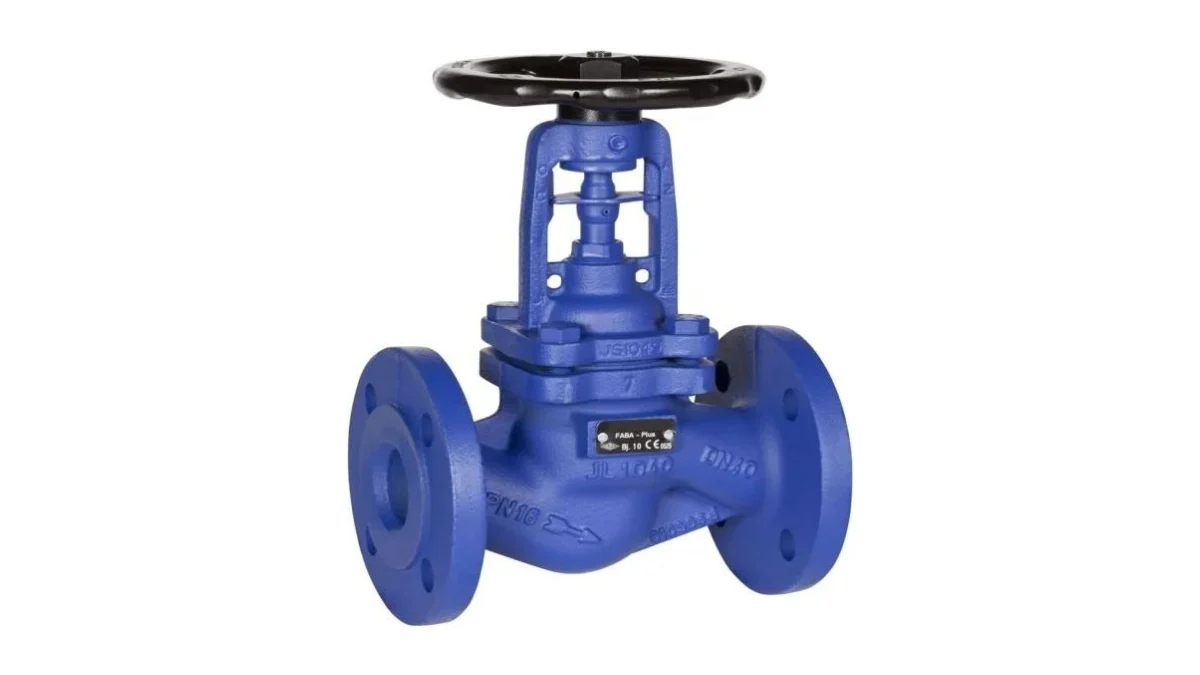
One of the most sensitive points of any industrial valve is where the stem leaves the bonnet. On conventional valves this area is sealed with gland packing, which wears over time, needs retightening or replacing, and can let steam or medium escape in the meantime. A metal bellows valve separates the stem completely from the medium with a flexible metal bellows fitted between stem and bonnet, preventing stem leakage with a mechanical barrier.
This technology is preferred especially for steam, high-temperature water, thermal (diathermic) oil and media where leakage creates a hazard or energy loss.
How Does a Metal Bellows Valve Work?
Metal bellows valves are usually of globe (seated) design. One end of the bellows is sealed to the stem and the other to the body/bonnet. As the stem moves axially during opening and closing, the bellows extends and contracts like an accordion; the medium stays inside the bellows and cannot reach the stem and packing area.
A graphite packing is also fitted above the bellows. It acts as a second sealing layer in case the bellows is ever damaged.
Materials and Design Features
| Component | Material options |
|---|---|
| Body | Grey cast iron (EN-GJL-250), ductile iron (EN-GJS-400-18-LT), cast steel (GP240GH) |
| Bellows | Stainless steel X6CrNiMoTi17-12-2 (1.4571) |
| Seat and disc | Wear-resistant 13% chromium stainless steel |
| Back-up seal | Graphite packing |
| Face-to-face | According to EN 558-1 |
The body material is chosen according to process pressure and temperature. Cast iron bodies have lower temperature and pressure limits; for high-temperature steam and thermal oil service, cast steel bodies are preferred for their resistance to thermal shock and high operating stresses. Always check the permitted pressure-temperature ratings of each body material in the product catalogue.
Seat tightness is tested to EN 12266-1; in this standard, leakage rate A means no visible leakage for the duration of the test.
Advantages
- Reduced maintenance: The bellows largely eliminates the need to retighten or replace packing periodically, cutting downtime.
- Energy savings: Prevents the often unnoticed energy losses caused by stem leakage on steam and hot water lines.
- Environment and safety: Stops hazardous or hot media escaping to the surroundings.
- Long-lasting shut-off: A hardenable chromium stainless steel seat and disc resist wear even at high differential pressures.
- Two-layer protection: The bellows and graphite packing form two separate sealing barriers.
Applications
- Steam power plants and steam distribution lines
- Thermal (diathermic) oil circuits
- High-temperature and hot water systems
- Chemical plants, refineries and petrochemicals
- Shipbuilding
- Food and automotive industries
- Lines carrying neutral media such as compressed air and glycol
Face-to-face dimensions to EN 558-1 allow easy replacement of existing valves built to the same standard.
Frequently Asked Questions
How does a metal bellows valve differ from a packed valve?
On a packed valve, stem sealing relies solely on the packing, which wears over time. On a metal bellows valve, a stainless steel bellows completely separates the stem from the medium, and the graphite packing serves as a back-up seal.
Which media are metal bellows valves used for?
Steam, high-temperature water, thermal oil, compressed air, glycol and other media where leakage causes energy loss or a safety risk. Materials must be selected for the medium, pressure and temperature.
Which body material should be chosen for a thermal oil line?
Cast steel (GP240GH) is usually preferred for its high-temperature and thermal shock resistance. Check the permitted values at operating temperature and pressure in the catalogue before selection.
Conclusion
By sealing the stem with a double barrier of bellows and graphite packing, metal bellows valves improve operational safety and reduce energy losses and maintenance. With the right body material and pressure rating they offer a long-lasting solution for steam and thermal oil lines. See the options on our Metal Bellows Valves page.
Buy metal bellows valves online
Browse products on or-fa.com, our export store, see prices in USD and order online.
Buy Online →Request a QuoteAsk on WhatsAppRelated product group
Metal Bellows Valves →Technical support
Talk to our team to choose the right product.
+90 224 444 67 32[email protected]
Related Articles
Let’s choose the right product for your project
Buy from our online store or request a project-specific quotation.