
Thermostats

Thermostats are mechanical control devices that change over a contact when the set temperature is reached, switching a pump, burner, heating element, fan or alarm circuit. The category covers panel-mounted capillary types, immersion types fitted into a boiler pocket, surface thermostats sensing from the pipe wall and double-contact coiled models.
Sensing takes place through a liquid-filled bulb and its capillary tube; as the temperature rises, expansion of the liquid moves the contact mechanism. Needing no separate power supply, this design switches 250 V circuits directly, with scale options from −30 °C up to 300 °C.
Main Applications
- Burner control according to boiler water temperature in heating boilers
- Switching pumps or heating elements on and off in calorifiers and tanks
- Circulation pump control from the pipe surface on hot water flow lines
- Applications in the 0–40 °C range such as incubators, greenhouses and stores
- Coil protection with frost protection thermostats in ducted air systems
- Control in the 210–300 °C range on high-temperature process equipment
Technical Data
| Operating principle | Liquid-expansion sensor (bulb and capillary) |
|---|---|
| Setting ranges (capillary) | 0/40, 0/90, 0/120, 0/300, 64/210 °C and −30/+34.5 °C |
| Setting ranges (immersion) | 0/90 °C and 40/210 °C |
| Differential (immersion) | 4 K ±1 (0/90 °C) · 9 K ±2 (40/210 °C) |
| Contact | Single-pole double-throw (SPDT); double-contact types available |
| Contact rating | 10(2.5) A / 250 V (immersion type) |
| Capillary length | 1000 mm; 2 m capillary type available |
| Rigid bulb (immersion) | 7 × 8 mm; 50 / 100 / 200 mm length |
| Capillary bulb (immersion) | Ø6 × 95 mm |
| Degree of protection | IP40 (immersion type) |
| Max. ambient temperature | 80 °C (immersion type) |
| Cable entry | M20 × 1.5 gland (immersion type) |
Material Options
| Part | Capillary panel type | Immersion (boiler) type | Surface type |
|---|---|---|---|
| Sensing element | Liquid-filled bulb + capillary | Liquid-filled rigid bulb | Depending on model |
| Bulb / capillary | 1000 mm capillary; bulb size depending on model | 7 × 8 mm bulb, brass sheath | Sensor in contact with the pipe surface |
| Contact | SPDT | SPDT · 10(2.5) A / 250 V | Depending on model |
| Protection | Depending on model | IP40 · ambient max. 80 °C | Depending on model |
| Mounting | Panel or appliance body | 1/2″ pocket · M20 × 1.5 gland | Strap fitting on the pipe |
Note: Bulb size, body material and degree of protection of capillary panel and surface types vary by model; immersion type values are taken from the manufacturer data sheet. Fixed-setting types for burner safety are on the limit thermostats page.
Advantages
No power supply
- Sensing works by liquid expansion, no separate supply is needed.
- The contact can be wired directly into a 250 V circuit.
Changeover contact
- The SPDT contact allows heating or cooling control with one device.
- Double-contact types manage two separate circuits.
Remote sensing
- With a 1000 mm capillary the knob stays in the panel and the bulb in the process.
- The 2 m capillary option eases remote mounting.
Scale variety
- Different ranges from −30 °C to 300 °C.
- Narrow-range types allow finer adjustment.
Construction and Design Features
- Liquid-filled bulb and capillary tube
- Setting spindle and scaled knob
- SPDT contact block and terminals
- Brass-sheathed rigid bulb on the immersion type
- Sensing section in contact with the pipe surface on the surface type
Send us the setting range, capillary length, mounting method and load to be switched via the Request a Quote form and we will select the right thermostat with you.
How to Choose?
- Define the mountingWhether it is fitted in a panel, a boiler pocket or on a pipe surface determines the type.
- Choose the scalePrefer a scale whose limits are not close to the operating point.
- Check the differentialThe gap between switching on and off (for example 4 K) determines how often it cycles.
- Compare the contact loadIf the current of the controlled device exceeds the contact rating, the thermostat should drive a contactor coil.
- Measure the capillary lengthChoose a 1 m or 2 m capillary according to the distance between bulb and setting point.
Complementary Products
Why ORFA?
Types of Thermostats
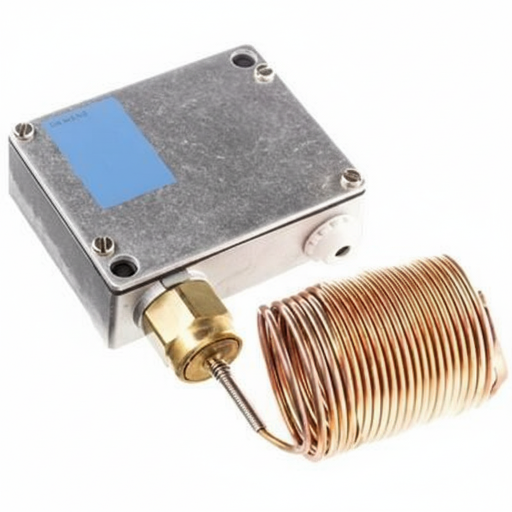
Frost Protection Thermostats
Frost protection thermostats protect air and water coils from freezing by reacting when temperature falls.
Details →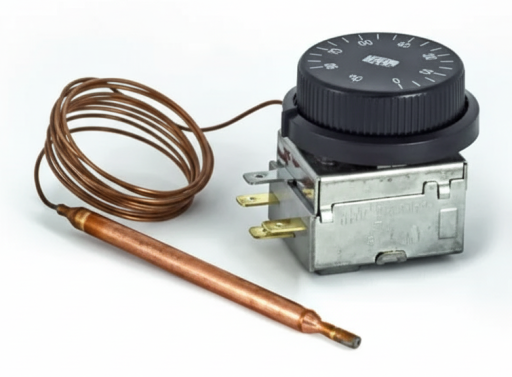
Capillary Thermostats
Capillary thermostats sense temperature through a capillary bulb and switch a contact at the set value.
Details →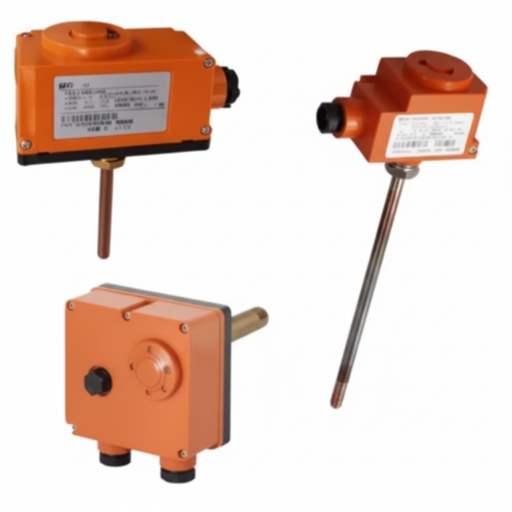
Boiler Thermostats
Boiler thermostats control the burner or pump to keep boiler water at the set temperature.
Details →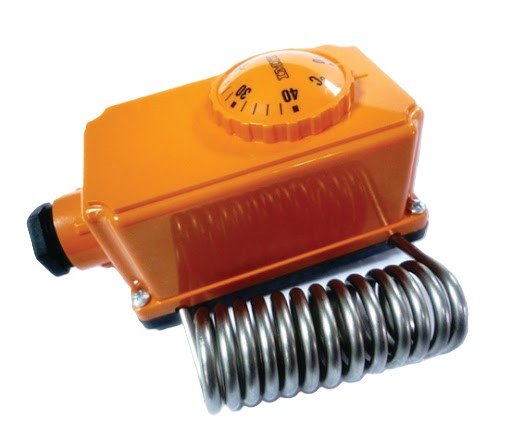
Incubator Thermostats
Incubator thermostats keep the temperature in incubators steady and precise.
Details →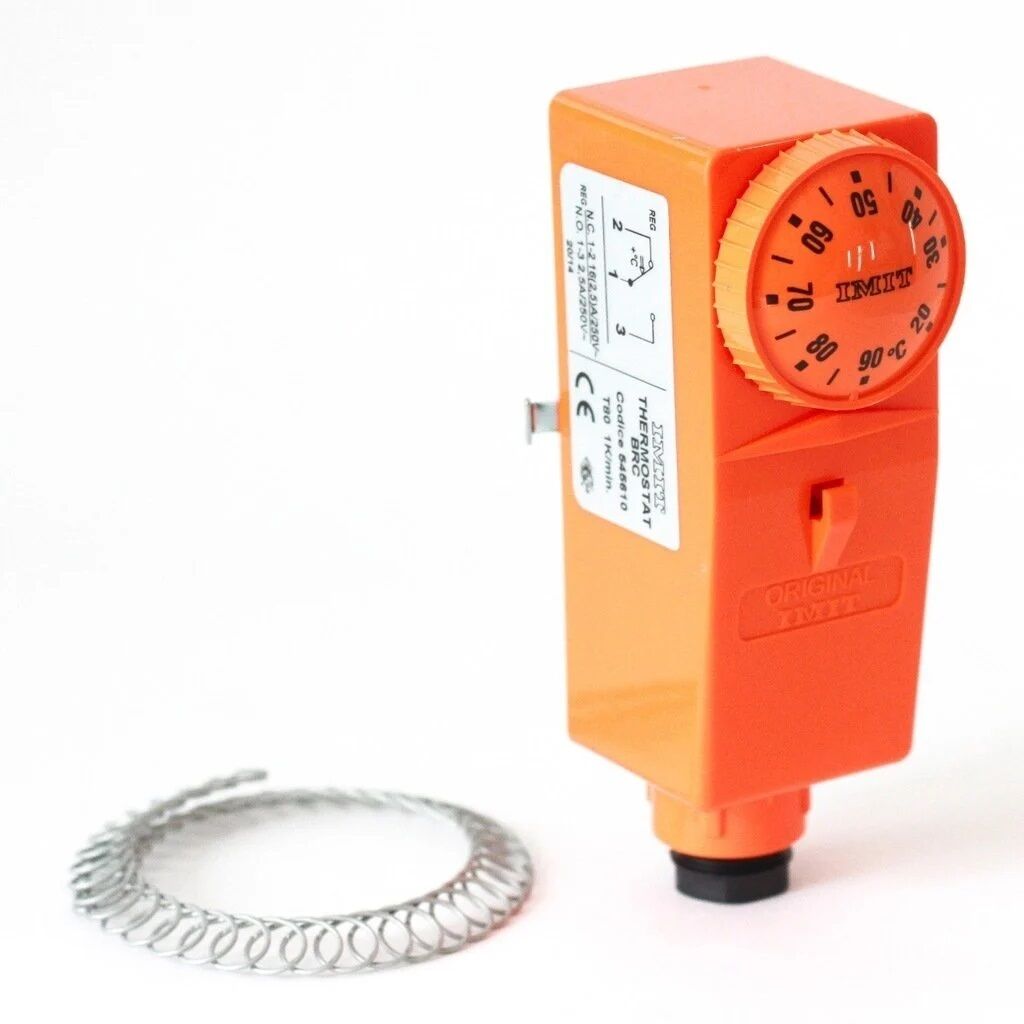
Surface Thermostats
Surface thermostats sense temperature through contact with a pipe or surface and switch a contact.
Details →Other Temperature Measurement and Control Equipment

Temperature Controllers
Temperature controllers keep the process at the desired temperature by controlling heaters, coolers or valves based on the sensor value.
Details →
Temperature Sensors – Thermocouples
Temperature sensors and thermocouples measure process temperature and send an electrical signal to a controller or indicator.
Details →
Thermometers
Thermometers are instruments that show the temperature in pipelines, tanks and boilers on site.
Details →Get a quote for your project
Our sales team will prepare the best solution for your needs.