Heat Exchangers

Plate heat exchangers transfer heat between two fluids without mixing them. The narrow channels formed between thin corrugated stainless plates create turbulent flow, giving high heat transfer in a small volume; they separate the boiler from the installation in central heating, domestic hot water, pool, cooling and steam heating circuits.
Gasketed plate heat exchangers work at 25 bar with AISI 316, titanium or Hastelloy plates and EPDM, NBR or Viton gaskets; they can be opened for cleaning and extended by adding plates. Brazed units form a compact, gasket-free block of AISI 316L plates brazed with copper or nickel, operating up to 30 bar within a −196 / +200 °C design range.
Main Applications
- Central heating and district heating substations
- Instantaneous domestic hot water
- Pool water heating and cooling
- Water heating with steam (steam-type exchangers)
- Process cooling, chillers and heat recovery
Technical Data
| Types | Gasketed (dismountable) · brazed (compact) |
|---|---|
| Gasketed working / test pressure | 25 bar / 37.5 bar |
| Brazed design / test pressure | 30 bar / 45 bar (small model) |
| Brazed design temperature | −196 … +200 °C |
| Plate material | Gasketed: AISI 316, titanium, Hastelloy · Brazed: AISI 316L |
| Gasket options | EPDM, EPDM-HT, NBR, H-NBR, Viton, Viton-G |
| Brazing material | Copper or nickel |
| Connection (gasketed) | 1¼” threaded (small model) … 2″ threaded/flanged and above |
| Connection (small brazed model) | Max. 3/4″ threaded; 7/8″ brazed connection |
| Small brazed model size | 73 × 203 mm; depth 9 + 2.3 × number of plates (mm) |
| Capacity | By plate count and type; e.g. 35 kW for the small brazed model |
| Certificates | CE, ISO, TSE |
Material Options
| Component | Gasketed plate heat exchanger · 25 bar | Brazed plate heat exchanger · 30 bar |
|---|---|---|
| Plates | Stainless AISI 316 / 316L; optional titanium or Hastelloy | Stainless AISI 316L |
| Sealing | Gaskets: EPDM, EPDM-HT, NBR, H-NBR, Viton | No gaskets; copper or nickel brazing |
| Frame | Carbon steel or stainless steel front and rear frame | Single block with the plate pack |
| Connection nozzles | Carbon steel, stainless steel or plastic | Stainless, threaded or brazed ends |
| Carrying and tightening | Carrying bars, studs, nuts and washers | — |
Which type? Choose the gasketed type where cleaning and maintenance are needed, where dirty or hard water circulates and where capacity may be increased later; plates can be added and gaskets renewed. In clean circuits, tight spaces and refrigerant applications, the brazed type is economical and compact. Choose the nickel-brazed version for fluids incompatible with copper, and a gasketed unit with titanium plates for pool and sea water. A strainer at the inlet prevents plate fouling.
Advantages
High Efficiency
- Strong heat transfer through turbulent flow.
- Large capacity in a small volume.
Compact Design
- Far less space than shell-and-tube units.
- Very light block with the brazed type.
Expandable
- Capacity increased by adding plates on gasketed units.
- Can be opened for cleaning.
Material Choice
- AISI 316, titanium, Hastelloy plates.
- Gasket selection by fluid.
Wide Temperature Range
- From −196 °C to +200 °C on brazed units.
- Steam and refrigerant applications.
Construction and Design Features
- Corrugated stainless plate pack
- Front and rear frame, carrying bars and tightening studs on gasketed units
- Single block brazed with copper or nickel on brazed units
- Threaded or flanged connection nozzles
- Counter-current channel arrangement
Send us the inlet and outlet temperatures and flows of the heating and heated fluids, or the required capacity, and the allowable pressure drop via the Request a Quote form; we will calculate the right exchanger with its plate count.
How to Choose?
- Collect thermal dataCapacity (kW), inlet-outlet temperatures and flows of both circuits.
- Choose the typeGasketed for maintenance and expansion; brazed for compact, clean circuits.
- Define materialsPlate (AISI 316, titanium) and gasket (EPDM, NBR, Viton) by fluid.
- Check pressure dropFinalise plate count and connection size with a pressure drop suited to the pump.
Complementary Products
Why ORFA?
Related Blog Articles (6)
All articles on this topic →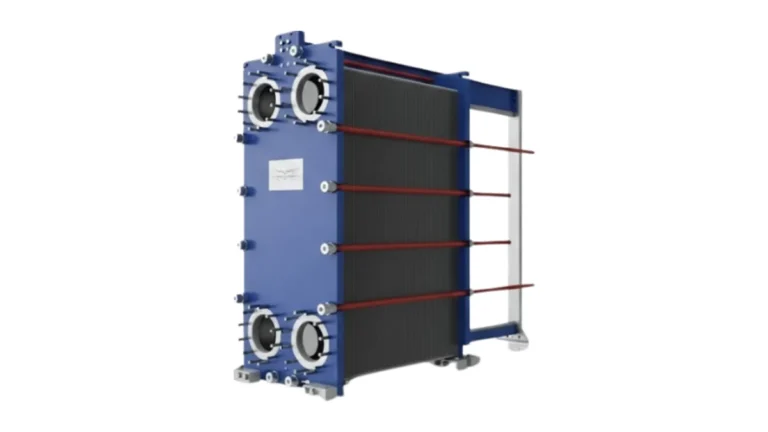 Gasketed Plate Heat Exchanger Installation, Commissioning, and Maintenance GuideInstallation steps, commissioning rules, CIP and mechanical cleaning, and troubleshooting of common failures in gasketed plate heat exchangers.Read more →
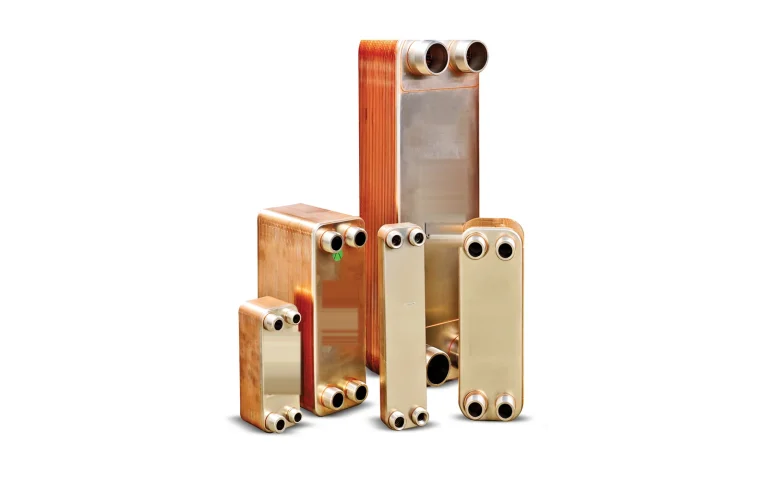 Brazed Plate Heat Exchanger: Working Principle, Applications, and Proper SelectionEssential information on the working principle of brazed plate heat exchangers, differences from gasketed types, applications, material selection, and proper sizing.Read more →
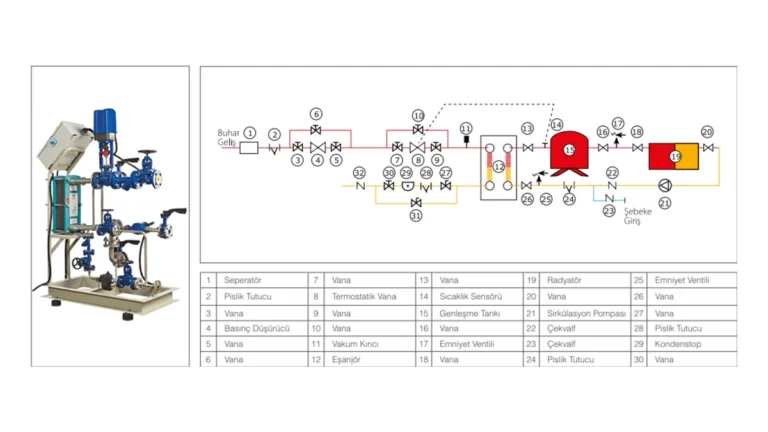 Producing Heating Water from Steam with a Plate Heat ExchangerHow is heating water produced from steam with a plate heat exchanger? Learn the operating principle, required valves and steam trap equipment, and design…Read more →
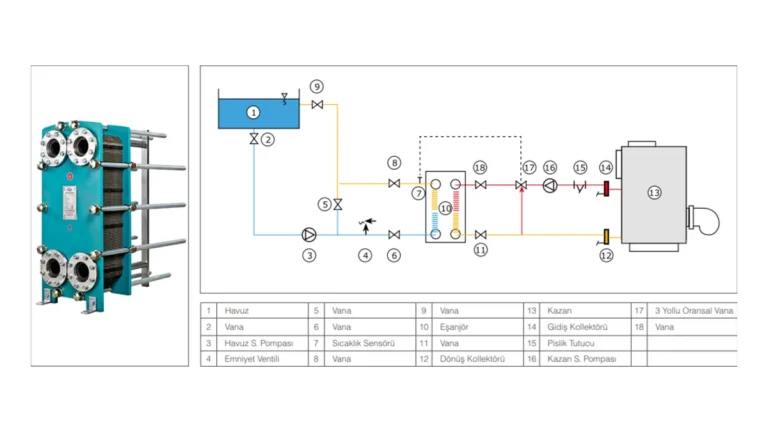 Pool Heating Systems with Plate Heat Exchangers: Operating Principle and Correct InstallationHow is a plate heat exchanger used for pool heating? Learn the operating principle, bypass connection, plate material selection and temperature control.Read more →
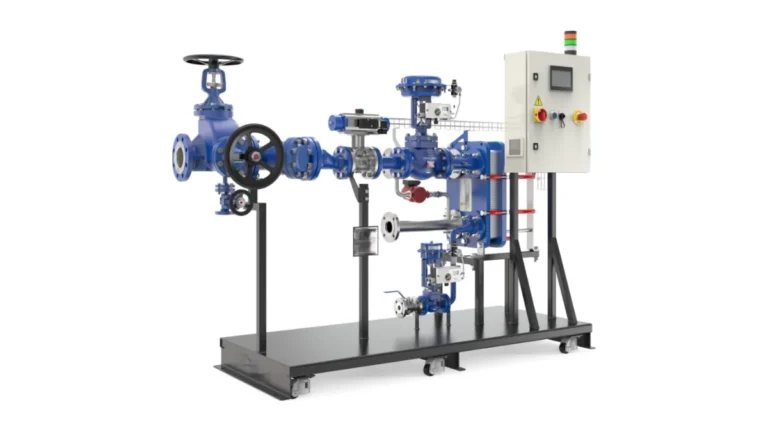 Packaged Heat Exchanger System: Components, Operation and ApplicationsWhat is a packaged heat exchanger system? Learn the components, operating principle and applications of pre-assembled plate heat exchanger units with controls.Read more →Plate Heat Exchangers: Operating Principle, Types and AdvantagesHow does a plate heat exchanger work? Explore gasketed, brazed and welded types, the role of turbulent flow, material and gasket selection, and maintenance.Read more →