
Capacitive Level Sensors
A capacitive level sensor measures how the electrical capacitance between the probe and the tank wall changes with the material level around the probe. With no moving parts it also works in sticky, foamy or solids-laden materials.
Switch models for point detection have relay outputs; transmitter models for continuous measurement give 4–20 mA. The store range includes capacitive switches with 10 cm and 250 mm probes and a capacitive transmitter.
Main Applications
- Oil, fuel and solvent tanks
- Acid and alkaline solutions
- Flour, plastic granule and powder silos
- Sticky and foamy process liquids
- Boiler feed and proportional control
Technical Data
| Output | Switch: 1 NO/NC relay, 5 A / 250 V AC; transmitter: 4–20 mA |
|---|---|
| Supply | Switch 24 V DC; transmitter 9–36 V DC |
| Min. dielectric constant | 1.6 |
| Connection material | AISI 304; optional AISI 316 |
| Insulation | PTFE, PFA; optional PEEK, ceramic |
| Operating pressure | −1 … 100 bar (by model) |
| Operating temperature | −40 … +150 °C; 200 °C with cooling extension, PEEK 230 °C, ceramic 400 °C |
| Housing | PBT (IP66), aluminium or stainless (IP65) |
| Probe type | Insulated or bare rod, cable, with reference electrode |
| Stock probe lengths | 10 cm, 250 mm (product range) |
Material Options
| Part | Standard | High temperature / aggressive |
|---|---|---|
| Connection | AISI 304 | AISI 316 |
| Insulation | PTFE or PFA | PEEK or ceramic |
| Housing | PBT, IP66 | Aluminium or stainless, IP65 |
| Temperature | −40 … +150 °C | 230 °C (PEEK), 400 °C (ceramic) |
Which material? A capacitive sensor is calibrated to the dielectric constant of the measured material; if different materials alternate in the same tank, recalibration may be needed. For sticky materials choose a probe type that tolerates build-up.
Advantages
Liquids and Solids
- Two applications with one technology
No Moving Parts
- Low maintenance
Wide Temperature
- 400 °C with ceramic insulation
Switch or Transmitter
- Relay or 4–20 mA
Construction and Design Features
- Insulated or bare measuring probe
- Process connection
- Electronics housing
- Relay or analogue output terminal
Write the material, tank height and whether point or continuous measurement is required; we will define the probe and output together.
How to Choose?
- Define the materialIdentify liquid or solid and its dielectric value.
- Choose the measurementPick a switch for point and a transmitter for continuous level.
- Select the probeChoose insulation suited to build-up and temperature.
- Plan calibrationSet empty and full during commissioning.
Complementary Products
Why ORFA?
Other Level Control Devices
Alarm and Remote Monitoring Devices
Alarm and remote monitoring devices report the level status in tanks and wells by audible, visual or remote notification.
Details →
Glass Tube Level Gauge
Glass tube level gauges allow the liquid level inside a tank to be seen directly through a transparent glass tube.
Details →
Electric Level Float Switches
Electric level float switches float with the liquid level, change contact and operate a pump or alarm.
Details →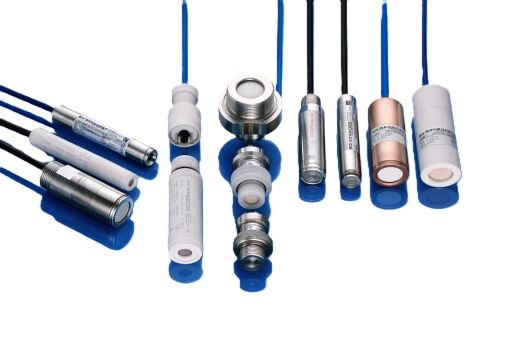
Hydrostatic Level Transmitters
Hydrostatic level transmitters measure level from the pressure of the liquid column and provide a continuous signal.
Details →Solids Level Switches
Solids level switches detect the level of powder and granular materials in silos and bunkers.
Details →
Boiler Proportional Level Controllers
Boiler proportional level controllers continuously measure the water level in steam boilers and adjust the feed water proportionally.
Details →
Boiler Level Switches
Boiler level switches detect low and high water levels in steam boilers and control the burner, pump or alarm.
Details →
Boiler Feed Water Level Controls
Boiler feed water level controls start and stop the feed pump according to the water level in the steam boiler.
Details →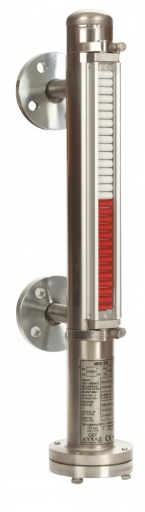
Magnetic Level Indicators
Magnetic level indicators show the tank level by transferring the movement of a magnetic float to external indicator flaps.
Details →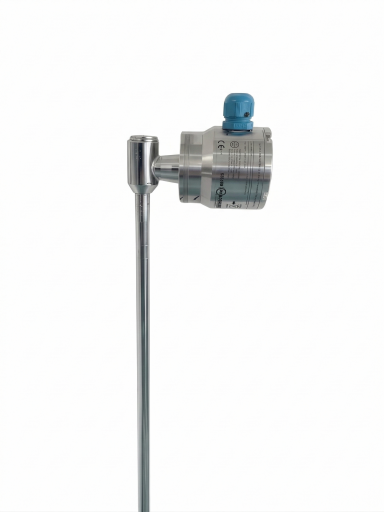
Magnetic Level Transmitter
Magnetic level transmitters convert the position of a magnetic float into a continuous electrical signal.
Details →
Stainless Steel Level Switch
Stainless steel level switches are float level switches with stainless steel bodies suitable for corrosive and hot liquids.
Details →
Plastic Level Switches
Plastic level switches are economical float switches used in water and mild chemical tanks.
Details →Radar Level Transmitters
Radar level transmitters measure the level of liquids and solids without contact and provide a continuous signal.
Details →
Reflex Glass Level Gauges
Reflex glass level gauges show the liquid level clearly in steam boilers and pressure vessels.
Details →
Level Indicators
Level indicators allow the liquid level in tanks and vessels to be monitored on site.
Details →
Level Control Panels and Sensors
Level control panels and sensors are control systems that automatically start and stop pumps according to the level in tanks and wells.
Details →
Liquid Level Electrodes
Liquid level electrodes detect the level of conductive liquids by electrode contact and send a signal to the level relay.
Details →
Float Level Switches
Float level switches change contact by means of a float moving with the liquid level and control a pump or alarm.
Details →Float Valves
Float valves open when the water level in a tank drops and close when it is full, keeping the level mechanically.
Details →
Tank Level Switches
Tank level switches signal at set levels in storage tanks to control filling, emptying and alarms.
Details →Get a quote for your project
Our sales team will prepare the best solution for your needs.